Showing posts with label characters. Show all posts

Thursday, October 30, 2014

Doing Your Best: The Lessons of Jack Skellington


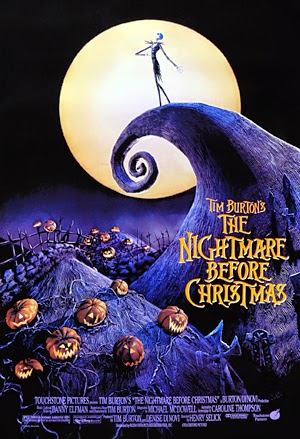
When it comes to family-friendly Halloween classics, it's pretty hard to top The Nightmare Before Christmas. It tells the tale of Jack Skellington, the resident Pumpkin King of Halloween Town -- a city populated by friendly witches, vampires, ghosts, and monsters, whose job it is to create the Halloween holiday each year. As the annual Halloween celebrations wind down to a close, we discover that Jack, while great at his job, is feeling stuck in a rut. Isn't there more to life than the same old chills and thrills?

So Jack can't believe his good fortune when he stumbles onto a magical portal that takes him to the land of Christmas Town. He doesn't exactly understand what it is about the place that makes him feel such a warm and happy glow, but he's eager to share the wonders of Christmas with his fellow Halloween Town citizens. And, before he knows it, he's struck with an even better idea: what if, this year, he takes over the Christmas holiday himself?


After sending Halloween Town's best trick-or-treaters to find (that is, kidnap) Santa Claus from Christmas Town, Jack and his fellow scarers begin putting together their own version of Christmas: spiderweb-decorated Christmas trees, Venus-Fly-Trap Christmas wreaths, and presents that range from zombie rubber ducks to haunted toy dolls. They're convinced their take on Christmas will be the perfect way to improve the holiday -- and that the children around the world will find their surprises frightfully delightful. Unfortunately, sometimes even the most well-meaning of plans don't quite work out ...

Released in 1993, the film was animated with stop-motion techniques; instead of drawings, the characters were sculpted and then posed frame-by-frame to achieve the illusion of animated motion. The movie itself is a musical, with ten songs by composer Danny Elfman framing the backbone of the story. With an original storyline, intricately sculpted sets, and colorful, quirky, wholly engaging characters, it's a beautifully unique movie that is a quirky joy to watch.

While I find the animation bizarrely charming, and the music delightfully catchy, the real heart of the story, for me, lies in the character of Jack Skellington. Because as it turns out, Jack is not just a somewhat surprising Everyman character -- he's also got a truly inspiring lesson lying at the heart of his story.


Sure, he's a skeletal pumpkin king whose job description includes scaring the wits out of people whenever he can manage it -- but it's hard not to relate to Jack's opening lament. Who hasn't grown weary of the daily grind now and again, and found themselves in need of rekindling the enthusiasm they once had for the day-to-day challenges of life?

Jack's delight in discovering Christmas is an easy thing to relate to, too. We can all understand his sudden enthusiasm for this new world, and for the happiness -- inexplicable as he finds it -- that the Christmas spirit gives him. He doesn't understand it, but he loves it just the same.

So you almost cheer him on when he gets it in his skull to take on the holiday himself -- despite all evidence to the contrary that he'll be able to pull it off. It's not just that he doesn't understand how to make Christmas come alive; it's also that he doesn't seem particularly good at it. Still, Jack doesn't let the odds stand in his way. Believing whole-heartedly in what he and his fellows have created, he sets off with a happy heart to bring a Halloweenified Christmas to children the world over.

And he fails abysmally.


The children of the world (not to mention their parents) hate Halloweentown's Christmas gifts. Jack's Christmas flight ends in miserable defeat, and it takes a newly-released Santa Claus to right the chaos Jack has inadvertently created.

His failure doesn't come as a surprise -- not even to Jack himself, once he stops to think it over. The residents of Halloween Town had never quite grasped the concept of Christmas to begin with ("Nobody really understood," he laments to his ghost dog, Zero). Jack himself had struggled to understand Christmas, and as he'd never truly been able to explain it, it's unsurprising that his fellow Halloween citizens didn't get it either. It's only to be expected that Jack's Christmas "nightmare" proves such a disaster.

And yet, despite that failure -- Jack ultimately decides that he's not sorry that he tried. "I did my best!" he exclaims, clearly proud that he "at least ... left some stories they can tell." (Which is certainly true.) Best of all, it was in preparations and celebration of his Halloween-ified Christmas that Jack felt like himself again.

Ultimately, the joy for Jack came not from whether or not he succeeded, but in the attempt itself. And in a world where winning is often held up as the only goal of value, it's a timely reminder that there's worth to be had simply in trying.


And I asked old Jack,
"Do you remember the night
When the sky was so dark,
And the moon shone so bright?

"When a million small children,
Pretending to sleep,
Nearly didn't have Christmas at all,
So to speak?

"And would, if you could,
Turn that mighty clock back
To that long, fateful night --
Now, think carefully, Jack!

"Would you do the whole thing
All over again,
Knowing what you know now,
Knowing what you knew then?"

And he smiled, like the old
Pumpkin King that I knew,
Then turned, and asked softly of me,
"Wouldn't you?"


Happy Halloween!


-- Request the film on DVD from the Catalog
-- Request the film on Blu-ray from the Catalog
-- Request the soundtrack on CD from the Catalog
-- Request the original picture book by Tim Burton from the Catalog


-- Post by Ms. B

Thursday, June 26, 2014

Monsters Inc.


This June 20th marked the 39th anniversary of one of the most classic monster movies of all time. Based on an original novel by Peter Benchley, Jaws was a smash hit that briefly held the record of the world's highest-grossing film (Star Wars would claim the top spot just a few years later). With an Oscar-winning score, and one of the most famous film lines in Hollywood history ("You're gonna need a bigger boat"), this story of a great white shark terrorizing the tourists of Amity Island arguably invented the modern-day summer blockbuster.

But "Bruce" (the nickname given to the giant, animatronic shark used in shooting the film) was not the first great movie monster, and certainly not the last. Read on to see our top five picks of the film world's most famous -- and infamous -- movie monsters.


-- Request the film "Jaws" from the Catalog

-- Request the book "Jaws" from the Catalog


5. The Alien


Killer aliens have been a dime a dozen in Hollywood for decades, showing up in everything from The Avengers to Independence Day. But for the ultimate in alien monsters, the title character of director Ridley Scott's Alien series is surely in the top spot.

These monsters have a complex -- and completely horrifying -- growth cycle, implanting their eggs inside human hosts only to have their baby "chestbursters" live up to their names in gruesome and bloody film spectacle. Luckily, Sigourney Weaver's tough-as-nails Ellen Ripley is exactly the heroine needed to keep these Aliens, and their Queen, at bay.

Still, even with Ripley on the side of humanity, this is one movie monster you wouldn't want to meet!

-- Request "Alien" from the Catalog

-- Request "Aliens" from the Catalog

-- Request "Alien 3" from the Catalog

-- Request "Alien Resurrection" from the Catalog


4. Cujo

From artist Laz Marquez


He didn't start out a monster. Before being bitten by a rabid bat, Cujo was a sweet and good-natured St. Bernard, who wanted nothing more than to be a good dog and please his masters. Of course, it's precisely his gentle nature that makes Cujo's transformation from family friend to rabid beast so horrifying.

Both the film and the original Stephen King novel follow the story of Donna Trenton and her young son, Tad. Though Cujo is not the Trentons' dog, it is Donna and Tad who end up trapped in a stalled car, facing off against the now-monstrous Cujo. With no way out and no way to contact help, it becomes a race against time for Donna to get herself and her young son to safety. And if you think you know how the story ends, well ...

-- Request the book from the Catalog

-- Request the film from the Catalog


3. Gizmo


This cuddly little stuffed animal doesn't look deserving of a place on a list of classic monsters. But that's the thing about gremlins: if you want to keep them cute and cuddly, there's three very specific rules to follow. Don't get them wet, don't expose them to bright lights -- and, whatever you do, no matter how much they beg, never feed them after midnight.

But, of course, nobody wants a monster movie where everything goes according to plan. When young Billy Peltzer fails to follow the rules about his new pet, hilarity -- and horror -- promptly ensue. While it's a bit of family-friendly fare for older kids, this movie is notable for helping to bring about the classification of a new movie rating: PG-13.

-- Request "Gremlins" from the Catalog


2. King Kong


He's not completely monstrous -- maybe just a little misunderstood. Kong, a giant gorilla living a solitary life on a little-visited island, is captured by an ill-intentioned filmmaker who plans to bring Kong back to New York City and show him off as "the eighth wonder of the world."

This goes off about as well as can be expected, and the only thing which keeps Kong from bringing down the whole city is a squadron of fighter jets ... and Ann Darrow, the beautiful actress who Kong wants only to protect. The film ends with another line that lives on in movie history: "Oh, no, it wasn't the airplanes ... it was Beauty killed the Beast."

-- Request the classic film from the Catalog

-- Request the 1976 remake from the Catalog

-- Request the 2005 remake from the Catalog


1. Godzilla


With 28 films made by the Japanese production company Toho Studios (and several more American adaptations), Godzilla is arguably the most famous movie monster of all time. Originally appearing on the silver screen less than a decade after the World War II atomic bombings of Hiroshima and Nagasaki, Godzilla himself served as a metaphor for the horrors of nuclear power. Awakened and fueled by nuclear energy, Godzilla had catastrophic effects on the cities he attacked.

At least, at first. As time went on, and Godzilla became embedded in the public consciousness, the character saw a shift -- changing from mindless monster to unlikely hero. These days, a Godzilla movie is more likely to show this dinosaur-like creature fighting off other monstrous "enemies" and saving the humans around him -- as can be seen in the new blockbuster film released this summer.

(And no, we don't speak of the 1998 Matthew Broderick film. We just don't.)

-- Request the original 1954 film from the Catalog

-- Request "Mothra vs. Godzilla" from the Catalog

-- Request "Godzilla vs. King Ghidorah" from the Catalog

-- Request  "Godzilla: Final Wars" from the Catalog


-- Post by Ms. B 

Thursday, August 22, 2013

Captains and Crews


This past August 19th would have been Star Trek creator Gene Roddenberry's 92nd birthday. For two sci-fi geeks like us, that's all the excuse we need to talk a little Trek!

In honor of the occasion, we're presenting you with our highly-subjective list of the Top 10 Greatest Trek Characters. (Feel free to weigh in at the comments with the names we missed!)


-- Captain Jean-Luc Picard (Star Trek: The Next Generation)

 "It is possible to commit no mistakes and still lose. That is not a weakness. That is *life*."

TRACY: When Star Trek: The Next Generation debuted in 1987, Gene Roddenberry was looking to have a very different crew than the one on Star Trek. And that started with the Captain. While there is no disputing the allure and charm of Captain Kirk, Jean-Luc Picard is a much different character. Picard is an intelligent, thoughtful leader. Where Kirk often was ready to jump into any adventure, Picard likes to think about his options first. He is a first-class negotiator who will follow the Prime Directive (no interference with developing alien civilizations) at almost any cost.

Some people have stated that Picard is a cold fish, but I believe that is the farthest thing from the truth. He may keep his emotions more hidden than many, but he is devoted to the well-being and safety of all those aboard the Enterprise. As seen in many episodes of The Next Generation, his crew is just as devoted to him and will risk their lives for him. This is most evident when Picard is assimilated by the Borg, a hostile alien race, in Season 3. This experience will also shape Picard and will haunt him for a very long time.


-- Captain James T. Kirk (Star Trek -- 2009 Film Series)

"There's greatness in you, but there's not an ounce of humility."

MS. B: I know, I know. Chris Pine's turn as Captain Kirk in the rebooted Star Trek films series will never hold a candle to the actor who created the role in the original series. But hear me out.

Jim Kirk has always been the kind of guy who bends the rules as needed and is likely to favor action over words. But the new film franchise has given movie-goers a chance to see how Kirk became the character as they've always known him to be. Pine's Kirk starts out brash and hot-headed, but as his story progresses, he's placed into situations where learning humility and responsibility are necessary -- not just to make him less insufferable, but to ensure the safety of the crew that depends on him. The fact that he's willing to learn these lessons for the sake of his crew, more than for the sake of himself, results in a character that truly earns the title of "captain."

With added layers of depth, and a true character arc, Pine's Captain Kirk is both fun to watch and utterly relatable. The result is a character that has become one of my very favorite Trek captains. 

(Just don't tell William Shatner.)


-- Chief Engineer Montgomery "Scotty" Scott (Star Trek -- 2009 Film Series)

"I like this ship!  It's *exciting*!"

TRACY: As a fan of the original Star Trek series, I was a little hesitant to see the reboot in 2009 by J.J. Abrams. However, I was quickly won over by all of the characters, but most especially by Scotty. In the film, Scotty is not an original member of the Enterprise. Kirk finds Scotty and his alien friend Keenser at a Starfleet base on a snow-covered planet, where Scotty has been "exiled" for his attempt to beam an admiral's prized beagle to an unknown location. 

Scotty's start in the reboot might be a bit different from his origin story in the original series, but he's just as resourceful an engineer. Through his transwarp-beaming theories, he's able to beam Kirk and himself onto the Enterprise and, therefore, help save the day. Scotty has always had to be resourceful, but in Star Trek: Into Darkness, we also get to see a man who stands up for what he thinks is right, and who also gets to have a wee bit more adventure than his Original Series character ever did. 


-- Dr. Julian Bashir (Star Trek: Deep Space Nine)

"The eternal optimist."
"Guilty as charged."

MS. B: Deep Space Nine has long been regarded as the black sheep of the Trek family. With its darker themes and shades-of-gray characterizations, it's a somewhat unusual series in a franchise whose focus has always been on celebrating the best aspects of humanity. Which is precisely what made Julian Bashir such a beloved character of mine.

At the start of the show, Dr. Bashir is a newly graduated doctor whose bright-eyed enthusiasm and cheerful audacity grates at the nerves of more than a few of his co-workers. Some of his never-say-die optimism is a result of his naivety -- and, indeed, over the seasons, Bashir has his deepest morals and convictions challenged time and time again. But despite his experiences, Bashir never loses sight of his belief in the best of people, always keeping his "Starfleet ideals" firmly intact.


-- First Officer Spock (Star Trek and Star Trek -- 2009 Film Series)

"I have been, and always shall be, your friend."

TRACY: Okay, I have two Spocks here. But I couldn't pick between the two! I find them both so fascinating!

As first officer to James Kirk, Spock (from the original series) is a balance to Kirk's more devil-may-care attitude. But he is also Kirk's must trusted friend and advisor. Spock can always be relied upon to provide the most logical answer to any question or situation. Spock and Kirk, in the reboot, have a rocky start to their friendship. But this too turns into a trusted friendship, after some advice to reboot Spock from original series Spock. Throughout the original series/films and the new series of films, that friendship is at the heart of these stories.

Spock is the son of Sarek, a Vulcan dignitary, and Amanda, a human. This dichotomy of cultures is a struggle that Spock faces on a constant basis. Vulcans are a logical species who suppress their emotions -- while humans are an emotional and, often times, volatile species. Spock seems to want to deny the part of him that is human, the part that does not always suppress his emotions. But when faced with the loss of people very dear to him, we see Spock let his emotions get the better of him, like many humans would do in the same situation. 


-- Lieutenant Commander Data (Star Trek: The Next Generation)

"Do you consider yourself superior to humans?" 
"I am superior, sir, in many ways. But I would gladly give it up to be human." 

MS. B: Partly inspired by the writings of sci-fi author Isaac Asmiov, Data would quickly develop into a wholly original character. An officer on the Enterprise, Data is an android -- a robot that appears to be human, but who is tougher, stronger, and faster than any human could ever be. With a computer for a brain, Data's also got the ability to make calculations that are always immediate and accurate, although it also leaves him unable to master the more subtle intricacies of human behavior and emotion.

For all his superior abilities, Data's fondest wish remains to be human. Throughout the seven-season run (and four feature films) of The Next Generation, Data never ceases striving towards what may be an unreachable goal. Still, it is his unfailing determination to rise to such challenges that reminds viewers of what being human is all about.


"I've told you what you must do. You have only your trust in me to help you decide to do it."

TRACY: Guinan is one of the most interesting and compelling characters in all of the Star Trek universe. When Guinan joins the Enterprise, she is already over 600 years old. She comes from a race of listeners, which helps her in her capacity as hostess/bartender of the ship's lounge, Ten Forward. 

She is also an old and very special friend of Captain Picard's. Actually, they both say that their relationship goes beyond friendship. Picard trusts her advice, like he trusts no other. Many times he has taken her advice when it seemed to go against his better judgment. But, in the end, Guinan's intuition usually is right. 


-- Garak (Star Trek: Deep Space Nine)

"The truth is usually just an excuse for a lack of imagination."

MS. B: Originally intended as a spear carrier on Deep Space Nine, Garak would evolve to become one of the most complex and intriguing characters in the history of Trek. A shop owner on the DS9 space station, Garak is trapped on the station after being exiled from his home planet. Precisely why he is in exile, however, is a mystery. So is his previous occupation, in which he was probably a spy, despite his insistence that he's never been more than a "plain, simple tailor." 

Tailor or spy, there's no denying that Garak always knows more than he's telling -- especially since he's not about to tell the truth when a lie will do. And as layers of his past are gradually revealed, the audience is still not always sure exactly whose side Garak is on. Mysterious, complex, and with an unbeatable sense of humor, Garak remains a favored character of many Deep Space Nine fans.


"Sir, I protest! I am not a merry man!"
TRACY: As a Klingon, Worf would never have been able to serve upon the Enterprise of the original series. In the 23rd century, humans and Klingons were enemies. But a century later, there was a fragile peace that allowed Worf to become a member of Starfleet. Worf is a complex character that struggles with his upbringing on Earth by humans who adopted him as a child, his place as an officer on the Enterprise, and his natural intensity as a Klingon. 

Despite what seems like his great annoyance with humans, he develops very strong and meaningful relationships with many of his crew mates. One of those was with Security Officer Natasha Yar, who was somewhat of a role model for him when he unexpectedly had to take on her position after her untimely death. His friendship with Counselor Deanna Troi also has a profound affect on him throughout the years, as she gives him a calm and reassuring person to turn to.


-- Major Kira Nerys (Star Trek: Deep Space Nine)


"Your faith seems to have led you to something of a contradiction."
"I don't see it as a contradiction."

MS. B: The second-in-command on Starfleet's Deep Space Nine space station, Major Kira Nerys is a Bajoran -- a people who have just come out of a forty-year period of being occupied by an alien race. Kira herself had a rough childhood, growing up in a refugee camp and losing both her parents at a young age. When we meet her on the station, she is tough, guarded, and very, very angry.

Over the course of the series, Kira works away at the anger, sadness, and fear left in her from her days as a Resistance fighter, gradually overcoming her pain with help from both her friends and her strong religious faith. The definite character arc and development that Kira is given makes her one of the most complex and compelling figures in the series -- an honor afforded to few other female Trek characters.


-- Post by Tracy and Ms. B

Thursday, August 8, 2013

Animated Animals

Odie, from the Garfield comic strip


I love my superhero comic books, but I also love a good comic strip -- those laugh-out-loud stories told through text and art that appear in the pages of the newspapers (and, increasingly, online).

In honor of the anniversary of Odie (who first appeared in newspaper pages on August 8, 1978), I thought I'd take a look at five of the most famous, influential, and unforgettable cartoon creatures to grace the pages of the funny pages:


5. Pogo Possum


He's served as inspiration to a generation of comic artist heavy hitters -- and found time to become the official "state 'possum" of Georgia. The star of the comic strip Pogo, this 'possum is the creation of cartoonist Walt Kelly, whose strip ran in newspapers for nearly 30 years.

Kelly, who was both strongly interested in politics and liberal, often wove his political philosophies into the fabric of his strip, using wit and humor to lighten the results. (Pogo's picture popped up on buttons during the 1952 presidential election, along with the motto, "I go Pogo.")

Pogo Possum lives in the marshes, along with such friends and neighbors as Albert the Alligator, Howland Owl, and Porky Pine. Amiable and good-natured -- and desiring to stay out of trouble -- Pogo's pals often get him into trouble for him, not in the least in continually pestering him to run for president. (Hey, it's an allegory.)

Never heard of the strip before?  You probably know one of the quotes. In 1970, Kelly designed a Pogo poster for Earth Day. It read, "We have met the enemy -- and he is us."

-- Read some sample strips here

-- Request collections of Pogo


4. Snowy 


Created in 1929, The Adventures of Tintin is the work of a Belgian artist who went by the pen name Hergé. The artist modeled Tintin on a previous character he'd created (Totor, an adventurous Boy Scout, who had been the subject of his own comic strip when Hergé was in high school). A former reporter, Tintin is a detective who is something of an Indiana Jones -- touring the globe to foil criminals, recover treasure and artifacts, and occasionally save the world. Many of Tintin's adventures were based on real-world events (like space exploration and international politics).

While Tintin is surrounded by a large cast, his most faithful companion is Snowy, a fox terrier dog. Smart, heroic, and definitely still doglike, Snowy accompanies his master on all of his adventures, and saves Tintin's life on more than one occasion. (He's only got one real fear: spiders!)  And, like many comic strip animal creations, Snowy can talk -- though often he only speaks to Tintin.

The character was named after Hergé's first girlfriend (her nickname was "Milou," which was Snowy's name in the original French versions of the comic).

-- Read more about Tintin at the official website

-- Request collections of The Adventures of Tintin

-- Request The Adventures of Tintin animated series on DVD

-- Request Stephen Spielberg's animated film The Adventures of Tintin on DVD or Blu-ray


3. Hobbes


If this were a more subjective list, Hobbes would've claimed the Number One spot on this list for me!  Named for the seventeenth-century philosopher Thomas Hobbes, this talking tiger is one half of the duo that make up Bill Watterson's wholly-awesome comic strip, Calvin and Hobbes. Premiering in 1985 and running for ten years, the strip gained a devoted fan following for its stories about childhood, friendship, and the magic of the imagination.

Hobbes himself is a plush toy, owned by six-year-old Calvin. When Calvin and Hobbes are on their own, Hobbes is drawn as a walking, talking tiger; when other characters enter the room, however, Hobbes is drawn as an ordinary plush toy. The nature of exactly what Hobbes is, is something the strip is always careful not to resolve. As explained by Watterson: Calvin sees his stuffed toy one way, and the rest of the world sees Hobbes another way. Hobbes's nature is, plainly put, a subjective look at reality.

Hobbes himself -- as seen by Calvin -- is smart, sharp, witty, and terribly proud of not being human. (He's decidedly a "wild animal," with one of his favorite activities being sneaking up on Calvin and pouncing on him.) With his wry, quiet wisdom, he's also a good compliment to Calvin's zany and mischievous personality -- making him the best friend and tiger a kid could hope for.


Hobbes: As seen by Calvin, and by the rest of the world


-- Request collections of Calvin and Hobbes

-- Request the book Looking for Calvin and Hobbes: The Unconventional Story of Bill Watterson and His Revolutionary Comic Strip by Nevin Martell


2. Garfield


He's lazy, hates Mondays, and loves lasagna. You don't have to read Jim Davis's comic strip to know about Garfield, the fat and lazy orange cat belonging to one Jon Arbuckle.

First appearing in 1978, the strip has been in circulation ever since. The strip was a quick success, going on to become the most syndicated strip in the world (appearing in over 2,500 newspapers across the world). Inspiring Saturday morning cartoon series and even movies, Garfield also reigns supreme in merchandizing, appearing on everything from notebooks and t-shirts to coffee mugs and plush toys hanging in car windows. Not bad for a "lazy" cat!

(You can also check out the truly unusual website Garfield Minus Garfield, which offers a unique, post-modern take on the comic strip -- and the weirdly philosophical misadventures of Jon Arbuckle.)

-- Request collections of Garfield

-- Request Garfield the animated series on DVD

-- Request the live-action/animated films Garfield starring Bill Murray on DVD or Blu-ray


1. Snoopy


We've talked before about the appeal of Charles Schulz's Peanuts strip, and no where is that more evident than in the strip's most popular character: Snoopy. A beagle dog owned by the hapless Charlie Brown, Snoopy has a love for writing, his bird-pal Woodstock, and, most of all, dinnertime.

While not as "talkative" as Snowy, Snoopy -- like Garfield -- speaks at least to the audience, courtesy of some handy thought bubbles. (Woodstock seems to be able to understand him most of the time, too.) Of course, this authorial canine doesn't really need the spoken word to communicate: parading up to Charlie Brown with his own dinner bowl in his teeth seems to get the message across pretty clearly.

The character was inspired, in part, by Schulz's childhood dog, Spike (which happens to be the name of Snoopy's brother). Like Hobbes and Calvin, Snoopy serves as a good counterpart to his anxious, somewhat sad owner, with Snoopy always cheerful, confident, and ready to enjoy life -- particularly when snoozing atop his red dog house.

-- Request collections of Peanuts

-- Request Peanuts cartoons on DVD


-- Post by Ms. B 

Wednesday, December 5, 2012

Stranger Than Fiction


Where do writers get their ideas from?  Author Neil Gaiman has said, "You get ideas from daydreaming. You get ideas from being bored. You get ideas all the time. The only difference between writers and other people is we notice when we're doing it." Stephen King put it this way: "I get my ideas from everywhere. But what all of my ideas boil down to is seeing things ... in a new and interesting way, and then adding the question 'What if?' 'What if' is always the key question."

Most writers will tell you that, while they may not base all their characters on people they know, real life is still the best source of inspiration one can ask for. You're heard me mention, for instance, that Arthur Conan Doyle based his famous detective character, Sherlock Holmes, on a real person: Dr. Joseph Bell, a professor at Edinburgh University. But Conan Doyle is hardly the only author to find such real-life inspiration for his characters.

So in honor of Dr. Bell's 175th birthday (he was born on December 2), check out our list of seven famous fictional characters who were all inspired by real-life counterparts. A few entries may surprise you!


Lady Macbeth - Macbeth

Among William Shakespeare's most famous characters, Macbeth was based on a real historical figure -- a Scottish king who reigned in the mid-11th century. (The play was not written until the 17th century.) The real Macbeth did not have much in common with his literary counterpart, however -- right down to the fact that his wife, Gruoch of Scotland, was nothing like the treacherous villain of Shakespeare's play. (You can read more about the real Macbeth here.)

For the character of Lady Macbeth, Shakespere is thought to have found inspiration from another real-life historical figure. In the 10th century, King Duff of Scotland was murdered by the servants of one Captain Donwald. Donwald had tried to convince the king to issue pardons to certain rebellious friends and family members. The king had refused -- and Donwald's wife persuaded the captain to kill him.


* *


One of the trio of children in Harper Lee's To Kill a Mockingbird, Dill Harris is based on a real-life childhood friend of Lee's: Truman Capote. Capote spent time visiting his aunts in Monroeville, Alabama, and it was on such visits that Capote and Lee first became friends.

Lee and Capote remained friends into adulthood, and Capote was inspired to base two of his own characters on Lee: Idabel Thompkins and Ann "Jumbo" Finchburg. The literary pals would go on to collaborate together on research for a true crime book about a Kansas murder, but their friendship was shaken when Capote failed to give Lee credit for her part in their investigations. (Read more about that here.)


* *


Winnie the Pooh, When We Were Very Young

The famous inhabitants of the Hundred Acre Wood (or Ashdown Forest, for you purists) were the creation of children's author A. A. Milne, who was also an essayist, a playwright, a poet, and an adult novelist. You might already know that Milne based the character of Christopher Robin on Milne's own son (also named Christopher) -- but there was a real-life basis for Christopher Robin's ursine companion, too.

Lieutenant Harry Coleborn was a young veterinarian, who purchased an orphaned bear cub in the town of White River, Ontario. The bear -- named "Winnipeg" after the bear's birthplace -- initially served as something of a mascot to Coleborn's army regiment during the first World War. Winnie was eventually taken to the London Zoo, where Christopher Milne spotted her. Delighted with the bear, he promptly changed his own teddy bear's name from "Edward" to "Winnie-the-Pooh" in honor of Winnipeg. The rest is history.

(The original Edward/Winnie teddy bear can still be seen at the New York Public Library.) 


* *


Sally Bowles - Cabaret


The musical Cabaret started life as the 1939 novel Goodbye to Berlin, was adapted into the play I Am a Camera in 1951, and was finally brought to Broadway in 1966. The story takes place in 1921 Berlin, where Sally Bowles is the star of the Kit Kat nightclub. The musical is loved for its blending of the bright decadence of the 30s with the air of political tension and growing upheaval as Europe stood on the brink of a world war. Sally herself is an unbreakably robust character, even with the darker tone that looms ahead.

When it came to the original novel, author Christopher Isherwood had factual inspiration for more than just his setting. The character of Sally Bowles herself is modeled after a young Englishwoman that Isherwood met while in Berlin. Her name was Jean Ross, and, in real life, she was a political radical, who was described as being much different from her fictional counterpart by those who knew her. (Read more about Jean Ross and Christopher Isherwood here.)


* *


Harry Callahan - Dirty Harry

The serial killer Scorpio is the first villain to appear in Clint Eastwood's Dirty Harry series. Part of Scorpio's modus operandi was to send ransom demands to the police, threatening to commit a murder a day until he was paid off. Most fans know that Scorpio was based on a real criminal: California's Zodiac serial killer. Like Scorpio, the Zodiac killer also sent mocking notes to the police force (and the press) with information about upcoming crimes. (One such note said Zodiac would hijack a school bus, which was re-enacted in the film.)

But less well-known is that Harry Callahan himself was inspired by a real person. Eastwood's Callahan was inspired by David Toschi, the detective in charge of the Zodiac investigation.


* *


The Soup Nazi - Seinfeld

"No soup for you!" might be one of the most famous quotes to come out of hit NBC sitcom Seinfeld's nine-season run. It's uttered by the "Soup Nazi," the owner of a new soup stand that Kramer has been raving about. But when Jerry, George, and Elaine decide to give the place a try, Jerry reminds them that they have to be sure to follow the strict rules of procedure the owner lays out to customers. The trio doesn't manage it -- which means, well, No Soup.

As ludicrous as it sounds, the Soup Nazi is based on a real person (if slightly exaggerated). Al Yeganeh is a soup vendor who first opened his New York City restaurant, the Soup Kitchen International, in 1984. People lined up down the block to taste Yeganeh's creations -- but, due to either his temperament or the crowded lines, rules at the Soup Kitchen International were strict. ("Pick the soup you want!" "Have your money ready!") 

The Soup Nazi wasn't the only Seinfeld character based on a real person. Kramer was inspired by a real-life neighbor of the show's co-creator, Larry David. And George Costanza was based on David himself.


* *


Professor Snape (and the Weasleys) - Harry Potter

It's semi-common knowledge among Harry Potter fans that the insufferable Professor Gilderoy Lockhart -- his defining characteristics are his enormous ego and his utter incompetence -- was based upon a real person. (Author J.K. Rowling won't say who.) But while Lockhart was the only real-life person Rowling fully based one of her characters on, there was another Hogwarts professor who was at least partially inspired by a real-life figure: Severus Snape.

When asked about the character in an interview, Rowling commented, "Snape is the ... very sadistic teacher, loosely based on a teacher I myself had, I have to say."

It turns out that Rowling was talking about John Nettleship, a chemistry teacher (quite appropriate, as Snape teaches Potions class). Nettleship was initially surprised to find out the connection; he found out when reporters came knocking on his door to ask him about it. But he eventually came to embrace the connection in good humor. (Read more about Nettleship here.)


-- Post by Ms. B