Showing posts with label writers. Show all posts

Wednesday, April 23, 2014

Birthday Bard


This year, April 23rd marked the 450th birthday of William Shakespeare -- or, at least, marked the day when the world chose to celebrate it. (The Bard was born in 1564, but his exact day of birth remains a mystery.)

We don't know much about William Shakespeare. (I recommend Bill Bryson's excellent biography Shakespeare: The World as Stage, for as comprehensive a look as one can take at the famous playwright.) One thing, however, we can be certain about: his stories, characters, and poetry remain as popular, relatable, and relevant today as they did over four centuries ago.

So in honor of the Bard's big day, I'm here to recommend some personal Shakespearean favorites.


Comedy: Much Ado About Nothing


"There is a kind of merry war betwixt Signior Benedick and [Beatrice]: they never meet but there's a skirmish of wit between them."

In Shakespeare's time, the word "nothing" -- pronounced as noting -- was also used to refer to gossip and hearsay. It's an appropriate reference for a story that follows the paths of two couples who have their worlds turned upside-down by the power of rumor. But it happens in two very different ways: while young Claudio is tricked into leaving his beloved Hero standing at the alter, the more worldly Benedick and Beatrice are tricked into the discovery that their feelings for one another run more deeply than expected.  For both couples, however, happiness is an obtainable goal -- but it will take work, wit, and some outside help for everyone to find their way.


One of the most recent versions of the play was directed by Joss Whedon (creator of Buffy the Vampire Slayer and Firefly, as well as the director of Marvel's blockbuster film The Avengers). But I'll always be partial to Kenneth Branagh's 1993 release, in which Branagh (who directs the film) plays Benedick opposite Emma Thompson's Beatrice.

-- Request Joss Whedon's Much Ado About Nothing
-- Request Kenneth Branagh's Much Ado About Nothing


Runner-Up: The Tempest


Try this 2010 production, which stars Helen Mirren in the traditionally male role of Prospero. A sorcerer, Prospero uses magic (and some old-fashioned manipulation) to conjure a storm and bring about the downfall of Antonio (Prospero's treacherous brother) -- while restoring Prospero's daughter, Miranda, to her rightful inheritance.

-- Request The Tempest


History: Henry IV, Part 1


"I'll so offend, to make offence a skill;
Redeeming time when men think least I will."

Coming-of-age stories are particular favorites of mine. So I was bound to enjoy 1 Henry IV -- which, despite its name, is the first of three Shakespearean plays that focus on the character of Prince Hal (who will himself go on to become King Henry V of England).

The first part of Henry IV shows us a prince who has gained a reputation for himself as a bungling slacker (his father, King Henry IV, informs his court that he rather desperately wishes Prince Hal was not actually his son). But Hal always has the intention of shaping up once the chips are down -- despite the machinations of Falstaff, Hal's mentor, who hopes to keep the prince exactly as he is.

Hal joins his father on the battlefield in the play's final act, the two fighting to defeat a challenge to Henry IV's throne (a throne that will, after all, one day be Hal's). For some great battle sequences -- and truly fine acting -- look no further than this 2012 release from the Hollow Crown series, featuring Jeremy Irons, Tom Hiddleston, and Simon Russell Beale.

-- Request Henry IV, Part 1


Runner-Up: Richard II


I'm partial to last year's staged version from the Royal Shakespeare Company, starring David Tennant (of Doctor Who fame) in the title role. It'll be released to DVD next month; in the meantime, try the version from the Hollow Crown set, starring Ben Whishaw as the vain, selfish king whose overthrow and downfall is as necessary as it is heartbreaking.

-- Request Richard II


Tragedy: Othello


"O, beware, my lord, of jealousy; 
it is the green-eyed monster which doth mock the meat it feeds on."


I've got a soft spot for Othello, my first-ever Shakespeare play. Othello is a general in the Venetian army; Iago is one of his trusted soldiers and a right-hand man. But not quite "right-hand" enough to suit Iago himself -- and when Othello promotes Cassio over Iago as his new lieutenant, Iago decides then and there to take his revenge.

What follows is a story spinning out from the machinations of one of the most evil villains in all of literature. What makes Iago so chilling (and so undeniably brilliant) is his skill in using half-truths to spin the worst lies imaginable -- lies which come to sound all the more convincing and plausible.

Jealous himself of Cassio's promotion, Iago turns jealousy into a weapon wielded against those around him. Iago may be the catalyst, but what makes the play a tragedy is that Othello ultimately becomes his own worst enemy, allowing jealousy to manipulate him as deftly as Iago himself does. The 1995 version, starring Laurence Fishburne and Kenneth Branagh, remains my favorite adaptation.

-- Request Othello


Runner-Up: Hamlet


If it wasn't for Othello, there's no question in my mind that Hamlet would be my favorite of the tragedies. The world seems to agree: it's probably the most popular of all of Shakespeare's plays, and definitely one of the most-often performed. Take your pick!

-- Request a version of Hamlet


Sonnet: Number Eighteen (Listen to it read online here)


Shall I compare thee to a summer's day? 
Thou art more lovely and more temperate:
Rough winds do shake the darling buds of May,
And summer's lease hath all too short a date: 
Sometime too hot the eye of heaven shines,
And often is his gold complexion dimm'd; 
And every fair from fair sometime declines,
By chance, or nature's changing course, untrimm'd;
But thy eternal summer shall not fade
Nor lose possession of that fair thou ow'st;
Nor shall Death brag thou wander'st in his shade,
When in eternal lines to time thou grow'st; 
So long as men can breathe or eyes can see,
So long lives this, and this gives life to thee. 


Click here to hear Joss Whedon's version of "Sigh No More," 
a song from the pages of "Much Ado About Nothing."


-- Post by Ms. B 

Tuesday, April 8, 2014

Staff Recommendation #28: "Hyperbole and a Half: Unfortunate Situations, Flawed Coping Mechanisms, Mayhem, and Other Things That Happened" by Allie Brosh


by Allie Brosh


It began as a blog. The website Hyperbole and a Half is a collection of stories from the life of its creator, Allie Brosh. While there are hundreds of blogs that could fit that description, Brosh's stands out for three reasons: her hilarious writing style, her quirky but utterly fun artwork, and the fact that she can tell a good story.

Her illustrated tales are a mixture of childhood remembrances, adventures from her day-to-day experiences, and reflections on herself and on life in general. Many of her stories are laugh-out-loud hilarious -- such as when she's remembering her beloved dinosaur costume or her childhood fondness for cake. But she's not afraid to tackle more serious fare -- such as her courageous two-part tale detailing her struggles with depression. (In fact, if I have any criticism for the book at all, it's that she is far too hard on herself for what she sees as her personal shortcomings.)

When turning her stories into a book, Brosh plucked several classic entries from her website for publication. But there is also a plethora of new material in the book, including an ill-begotten hiking trip from her childhood and the truth behind her lifelong love of hot sauce. The book was as delightful a read as her webpage stories have been, and I'm already hoping a sequel might be in the works.

Want to try a few of her tales?  Here are five of my favorites (just click on the title to read the story on her website):


1. The Milk Crisis of 2005


Before I was a librarian, I spent nine months working as a waitress. That memorable experience gives me a special appreciation for this story: a simple, heartwarming tale that rapidly turns into full-blown horror. (Of the most humorous kind.) A cautionary tale for anyone contemplating a career in the food service industry.


2. Texas

Brosh's first trip to Texas was somewhat ill-timed. Having grown up in the frigid Northwest, the beginning of summer was not a good time to make her first trip down south -- particularly not to compete in a regional track meet. Factor in a fever, fireflies, and a few inadequately-sympathetic teammates, and it's a recipe for certain disaster.


3. The Party


Dental surgery and birthday parties don't mix. Little Allie's not about to let that stop her. All she has to do is prove to her mother that she's sufficiently recovered from her surgery sedation to make it to her friend's birthday party. What could go wrong?  (This one's included in the book.)


4. Sneaky Hate Spiral


Perhaps you've already read the children's book Alexander and the Terrible, Horrible, No Good, Very Bad Day. Here's another look into days like that.


5. Dogs Don't Understand Basic Concepts Like Moving


As a long-time dog owner, I'm admittedly biased when it comes to our canine companions. And nothing tickles my funny bone like a great dog story. So I couldn't resist this tale, in which Brosh and her boyfriend must transport their two dogs -- one smart as a whip and highly neurotic, the other a gentler soul who still manages to cause all manner of mischief -- to their new home. Complete with 2 a.m. wake-ups, sled dog booties, and a Bon Jovi shout-out, this is easily my favorite of Allie Brosh's stories. (Also included in the book.)


-- Post by Ms. B 

Thursday, May 2, 2013

No Place Like Home

Pittsburgh, and Western Pennsylvania, have not been the setting of many books or films until the last 20 years or so. Our area is not as popular as, say, New York, Chicago, or Los Angeles. There might even be more made up-places that get used as story settings, rather than authors placing their stories in Pittsburgh (though that's just pure conjecture).

According to a 2010 Pittsburgh Post-Gazette article, the first book to use Western PA as a locale was Modern Chivalry by Hugh Henry Brackenridge, published in 1792. Unfortunately, it seems that this didn't start any kind of trend of writers wanting to explore the intricacies of the area. By the late 20th century, however, it started to slowly change.


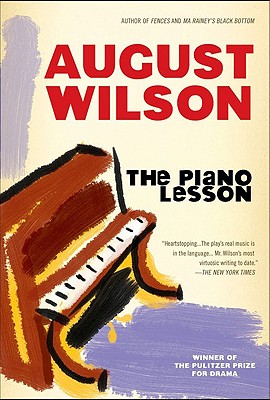
One of the most successful writers to use Pittsburgh as a setting was Pulitzer Prize winner August Wilson (April 27, 1945). Born Frederick August Kittel in the Hill District neighborhood of Pittsburgh, he made a name for himself with his Pittsburgh Cycle of plays. Of the ten plays in the cycle (one for each decade of the 20th century), all but one are set in Pittsburgh. The first play, Ma Rainey's Black Bottom, took place in Chicago in 1927, but was based on musicians that Wilson knew while growing up in Pittsburgh.


Wilson was one of six children born to Daisy (Wilson) and Frederick August Kittel. His father was a German immigrant who did not live with or support the family; he was a baker by trade, but often out of work. Wilson's mother was the biggest influence on his life. She worked as a cleaning woman to support the family and provided a loving, but strict, home for Wilson and his siblings. He lived much of his life in the then-racially diverse Hill District neighborhood. This is where he got much of the inspiration for his stories.


Wilson dropped out of school after ninth grade, due to the racist treatment he felt he was receiving. Instead, he spent his time at the Carnegie Library of Pittsburgh's main branch, where he immersed himself in the writings of African-American authors. After a stint in the Army in the early 60s, Wilson returned to Pittsburgh. He bought a used typewriter, moved out of his mother's house and started writing.

He started out writing poetry but eventually moved on to plays. His involvement in the Black Power movement, and his neighbors and friends in Pittsburgh, greatly influenced his writing. When he moved to Minnesota in 1977, and was no longer surrounded by a large black community, he turned to those people and places he knew in his youth.


While Wilson did write other plays, his main focus after 1984 was on his Pittsburgh Cycle plays. While none of the ten plays opened in New York (most opened at the Yale Repertory Theatre), they all eventually were produced there. He earned two Pulitzer Prizes, one for Fences (1987) and the other for The Piano Lesson (1990). He earned numerous New York Drama Critics Circle Awards and won the Tony for Best Play in 1987 for Fences. These plays focus on the African American experience throughout the 20th century. While many of the issues raised are familial in nature, the stories tend to be about issues of black identity, of those that embrace their African past, and those that have turned away from it.

While Wilson never lived in Pittsburgh again (he died in Seattle in 2005), the city and its people were always a part of him.


To read any of Wilson's plays:
Pittsburgh Cycle Plays

To watch a television production:
Television broadcast of The Piano Lesson (DVD)

Additional information:
Interviews with August Wilson (DVDs)

August Wilson: Pittsburgh Places in His Life and Plays by Laurence A. Glasco and Christopher Rawson

Also, be sure to take time to visit the August Wilson Center for African American Culture located in downtown Pittsburgh.


And here are a few select titles from some other Pittsburgh and Western Pennsylvania authors who use our area for the setting of their works:

Tawni O'Dell -- For a dark, but, at times, humorous, look at life in rural Pennsylvania, start with Back Roads. Her other works are also set in the same area.

Kathleen George -- For mysteries, start the Richard Christies series with Taken. Also, be sure to take a look at Pittsburgh Noir, a collection of short stories edited by George.

Jennifer Haigh -- Set in fictional Bakerton, PA, Baker Towers follows the lives of one coal mining family in Western Pennsylvania. Recently published is News From Heaven, a series of short stories about Bakerton.

Michael Chabon --  This award-winning novelist's first books, The Mysteries of Pittsburgh and Wonder Boys, are set in Pittsburgh.


-- Post by Tracy

Wednesday, December 5, 2012

Stranger Than Fiction


Where do writers get their ideas from?  Author Neil Gaiman has said, "You get ideas from daydreaming. You get ideas from being bored. You get ideas all the time. The only difference between writers and other people is we notice when we're doing it." Stephen King put it this way: "I get my ideas from everywhere. But what all of my ideas boil down to is seeing things ... in a new and interesting way, and then adding the question 'What if?' 'What if' is always the key question."

Most writers will tell you that, while they may not base all their characters on people they know, real life is still the best source of inspiration one can ask for. You're heard me mention, for instance, that Arthur Conan Doyle based his famous detective character, Sherlock Holmes, on a real person: Dr. Joseph Bell, a professor at Edinburgh University. But Conan Doyle is hardly the only author to find such real-life inspiration for his characters.

So in honor of Dr. Bell's 175th birthday (he was born on December 2), check out our list of seven famous fictional characters who were all inspired by real-life counterparts. A few entries may surprise you!


Lady Macbeth - Macbeth

Among William Shakespeare's most famous characters, Macbeth was based on a real historical figure -- a Scottish king who reigned in the mid-11th century. (The play was not written until the 17th century.) The real Macbeth did not have much in common with his literary counterpart, however -- right down to the fact that his wife, Gruoch of Scotland, was nothing like the treacherous villain of Shakespeare's play. (You can read more about the real Macbeth here.)

For the character of Lady Macbeth, Shakespere is thought to have found inspiration from another real-life historical figure. In the 10th century, King Duff of Scotland was murdered by the servants of one Captain Donwald. Donwald had tried to convince the king to issue pardons to certain rebellious friends and family members. The king had refused -- and Donwald's wife persuaded the captain to kill him.


* *


One of the trio of children in Harper Lee's To Kill a Mockingbird, Dill Harris is based on a real-life childhood friend of Lee's: Truman Capote. Capote spent time visiting his aunts in Monroeville, Alabama, and it was on such visits that Capote and Lee first became friends.

Lee and Capote remained friends into adulthood, and Capote was inspired to base two of his own characters on Lee: Idabel Thompkins and Ann "Jumbo" Finchburg. The literary pals would go on to collaborate together on research for a true crime book about a Kansas murder, but their friendship was shaken when Capote failed to give Lee credit for her part in their investigations. (Read more about that here.)


* *


Winnie the Pooh, When We Were Very Young

The famous inhabitants of the Hundred Acre Wood (or Ashdown Forest, for you purists) were the creation of children's author A. A. Milne, who was also an essayist, a playwright, a poet, and an adult novelist. You might already know that Milne based the character of Christopher Robin on Milne's own son (also named Christopher) -- but there was a real-life basis for Christopher Robin's ursine companion, too.

Lieutenant Harry Coleborn was a young veterinarian, who purchased an orphaned bear cub in the town of White River, Ontario. The bear -- named "Winnipeg" after the bear's birthplace -- initially served as something of a mascot to Coleborn's army regiment during the first World War. Winnie was eventually taken to the London Zoo, where Christopher Milne spotted her. Delighted with the bear, he promptly changed his own teddy bear's name from "Edward" to "Winnie-the-Pooh" in honor of Winnipeg. The rest is history.

(The original Edward/Winnie teddy bear can still be seen at the New York Public Library.) 


* *


Sally Bowles - Cabaret


The musical Cabaret started life as the 1939 novel Goodbye to Berlin, was adapted into the play I Am a Camera in 1951, and was finally brought to Broadway in 1966. The story takes place in 1921 Berlin, where Sally Bowles is the star of the Kit Kat nightclub. The musical is loved for its blending of the bright decadence of the 30s with the air of political tension and growing upheaval as Europe stood on the brink of a world war. Sally herself is an unbreakably robust character, even with the darker tone that looms ahead.

When it came to the original novel, author Christopher Isherwood had factual inspiration for more than just his setting. The character of Sally Bowles herself is modeled after a young Englishwoman that Isherwood met while in Berlin. Her name was Jean Ross, and, in real life, she was a political radical, who was described as being much different from her fictional counterpart by those who knew her. (Read more about Jean Ross and Christopher Isherwood here.)


* *


Harry Callahan - Dirty Harry

The serial killer Scorpio is the first villain to appear in Clint Eastwood's Dirty Harry series. Part of Scorpio's modus operandi was to send ransom demands to the police, threatening to commit a murder a day until he was paid off. Most fans know that Scorpio was based on a real criminal: California's Zodiac serial killer. Like Scorpio, the Zodiac killer also sent mocking notes to the police force (and the press) with information about upcoming crimes. (One such note said Zodiac would hijack a school bus, which was re-enacted in the film.)

But less well-known is that Harry Callahan himself was inspired by a real person. Eastwood's Callahan was inspired by David Toschi, the detective in charge of the Zodiac investigation.


* *


The Soup Nazi - Seinfeld

"No soup for you!" might be one of the most famous quotes to come out of hit NBC sitcom Seinfeld's nine-season run. It's uttered by the "Soup Nazi," the owner of a new soup stand that Kramer has been raving about. But when Jerry, George, and Elaine decide to give the place a try, Jerry reminds them that they have to be sure to follow the strict rules of procedure the owner lays out to customers. The trio doesn't manage it -- which means, well, No Soup.

As ludicrous as it sounds, the Soup Nazi is based on a real person (if slightly exaggerated). Al Yeganeh is a soup vendor who first opened his New York City restaurant, the Soup Kitchen International, in 1984. People lined up down the block to taste Yeganeh's creations -- but, due to either his temperament or the crowded lines, rules at the Soup Kitchen International were strict. ("Pick the soup you want!" "Have your money ready!") 

The Soup Nazi wasn't the only Seinfeld character based on a real person. Kramer was inspired by a real-life neighbor of the show's co-creator, Larry David. And George Costanza was based on David himself.


* *


Professor Snape (and the Weasleys) - Harry Potter

It's semi-common knowledge among Harry Potter fans that the insufferable Professor Gilderoy Lockhart -- his defining characteristics are his enormous ego and his utter incompetence -- was based upon a real person. (Author J.K. Rowling won't say who.) But while Lockhart was the only real-life person Rowling fully based one of her characters on, there was another Hogwarts professor who was at least partially inspired by a real-life figure: Severus Snape.

When asked about the character in an interview, Rowling commented, "Snape is the ... very sadistic teacher, loosely based on a teacher I myself had, I have to say."

It turns out that Rowling was talking about John Nettleship, a chemistry teacher (quite appropriate, as Snape teaches Potions class). Nettleship was initially surprised to find out the connection; he found out when reporters came knocking on his door to ask him about it. But he eventually came to embrace the connection in good humor. (Read more about Nettleship here.)


-- Post by Ms. B

Thursday, June 7, 2012

The Bradbury Chronicles


"First of all, I don't write science fiction. I've only done one science fiction book and that's Fahrenheit 451, based on reality. Science fiction is a depiction of the real. Fantasy is a depiction of the unreal. So Martian Chronicles is not science fiction, it's fantasy. It couldn't happen, you see? That's the reason it's going to be around a long time -- because it's a Greek myth, and myths have staying power."  Ray Bradbury

Ray Bradbury was well known for the two books mentioned above, but he was a writer who was so much more than just those books (although they are my personal favorites). Bradbury wrote over 500 published works which included screenplays, television scripts, plays, and, of course, novels. His stories touched so many lives in his sixty-plus years as a published author. And though his most well-known works were published in the 1950s and 1960s, he never stopped writing.

Bradbury was born in Waukegon, Illinois on August 22, 1920. His family moved around in the early part of his life, but he ended up settling in Los Angeles by his early teens. He did not attend college, but he earned his knowledge and skills as a writer by spending much of his time at the public library.
“Libraries raised me,” Mr. Bradbury said. “I don’t believe in colleges and universities. I believe in libraries because most students don’t have any money. When I graduated from high school, it was during the Depression and we had no money. I couldn’t go to college, so I went to the library three days a week for 10 years.” (New York Times article).

In 1943, Bradbury became a full-time writer, and by 1947 he had his first collection of short stories, Dark Carnival, published. A few years later, The Martian Chronicles was published in 1950, and Fahrenheit 451 in 1953. He never stopped writing after that; his last book was published in 2007.

I have to admit that I have not read a lot of Ray Bradbury's work, but what I have read has had a profound effect on me. A long time ago, there was a miniseries made out of The Martian Chronicles, which is a collection of short stories that tell a tale of the colonization of Mars. I don't think the mini-series was really that good, but it made me want to read the book. And the book has always stuck with me. A few years ago, I decided to re-read it, and it moved me just as much the second time around as it did the first. In many ways, this contributed to my love of sci-fi, even though Ray Bradbury did not consider this book to be sci-fi -- which now, as an adult, I see more clearly.

The other book that I love is Fahrenheit 451. I also read this when I was a teenager, and I was so moved by these people who risked their lives to save books that it might even have influenced me, in some subconscious way, to become a librarian. For someone who had loved reading all of her life, it was hard for me to fathom that anyone would want to destroy books.

There are several other books of his that I still want to read, and now with his recent passing at the age of 91 on Tuesday, I am even more inspired to read them. Here are the ones that I am most interested in, along with a few other of his works:


Dandelion Wine (1957) - In 1928, Douglas Spaulding wanders around Green Town, Illinois, with his brother and realizes that he is alive.

Farewell Summer (2006) - Celebrating the final days of summer, thirteen-year-old Douglas Spaulding and his friends declare war on the stuffy older set of their community, an effort for which the boys plot to stop the courthouse building clock as a means of staying young forever.

Something Wicked This Way Comes (1962) - A story of two young boys who begin to encounter evil secrets when a lightning rod salesman gives them one of his contraptions covered with mystical symbols.

I Sing The Body Electric! (1969) - A collection of twenty-eight classic Bradbury short stories and one poem is set in a variety of locales, ranging from the verdant Irish countryside to the coldest reaches of outer space.

The Illustrated Man (1951) - Eighteen science fiction stories deal with love, madness, and death on Mars, Venus, and in space.

And if you would like to read a more in-depth biography of Ray Bradbury check out The Bradbury Chronicles: The Life of Ray Bradbury by Sam Weller.


"You don't have to burn books to destroy a culture. Just get people to stop reading them." -- Ray Bradbury


-- Post by Tracy