Showing posts with label arthur conan doyle. Show all posts

Tuesday, December 9, 2014

Honorable Mentions


Charles Dickens is rightly remembered for such beloved classics as Great Expectations and Oliver Twist -- but his most famous work remains A Christmas Carol. First published on December 17, 1843, the story tells the tale of the miserly Ebenezer Scrooge, and the three Christmas ghosts who appear throughout Christmas Eve night to warm his heart -- and save his soul. It's been adapted dozens of time for stage and screen, and has become an undeniable staple of the holiday season.

But did you know that A Christmas Carol wasn't Dickens's only ghost story?  Dickens actually wrote a variety of stories featuring ghosts -- some of which, like The Signal-Man, could be considered outright horror thrillers. (The title character of The Signal-Man works on the railway, and is haunted by a specter who appears before him every time a terrible event is to occur.)

Dickens is not the only author whose own wild success actually overshadowed some of his lesser-known efforts. Here are five more authors whose littler-known works are still undeniably worthwhile:


~ Louisa May Alcott's Thrillers


She's best remembered for writing titles that might now be considered part of the "young adult" genre -- classics like Little Women and Eight Cousins. But Louisa May Alcott wrote several stories for older audiences, usually under the pen name "A. M. Barnard" -- and many of those works were not only thrillers, but stories that dealt with radical issues of nineteenth-century sexism and the constraints of society and culture.

Her most critically-acclaimed work is, arguably, the thriller novella Behind a Mask. The story details the life of Jean Muir, a character with a shady past (she was formerly an actress, a considerably more scandalous profession in the nineteenth century) who has reached her thirtieth birthday still a spinster. And then she finds one last chance to fulfill society's expectations of her: she takes the job of governess in a house with two unmarried sons and one unmarried uncle. She means to adopt the mask of a "little woman" herself -- appearing the perfect example of a polite, respectable young lady (she wins her place as governess with a feigned fainting spell in front of the family) until she ensnares a husband. But Jean's motives are far more clever, and downright manipulative, than what you'd see from the March sisters -- though this may not stop you from rooting for her!

Request Behind a Mask from the Catalog


~ Edgar Allan Poe's Detective Stories


Sherlock Holmes is the name we remember, but C. Ausguste Dupin got there first. While Conan Doyle drew on several inspirations for his Sherlock Holmes character (including his med-school professor Dr. Joseph Bell), he was always quick to praise Edgar Allan Poe for his detective stories that paved the way for Sherlock Holmes. ("Where was the detective story," Conan Doyle once asked, "until Poe breathed the breath of life into it?")

Poe is remembered as the master of horror, but he actually wrote in a wide variety of genres, including science fiction and detective stories. In the latter category, he produced three short stories: Murders in the Rue Morgue, The Mystery of Marie Roget, and my personal favorite, The Purloined Letter. The stories star Dupin, an amateur detective (although the word "detective" had not yet been invented) who assisted the police in a trio of bizarre investigations. He's accompanied in his adventures by our unnamed narrator, who serves as Dupin's closest friend and our window into Dupin's world.

Request the Dupin stories from the Catalog


~ Conan Doyle's Historical Fiction


Most Sherlock Holmes fans already know about Arthur Conan Doyle's love-hate relationship with his most famous fictional creation. While Conan Doyle ultimately seemed to be fond enough of his consulting detective (and also loved writing about the adventures of Professor Challenger in such tales as The Lost World), he always considered his best and most important works to be his historical fiction.

Such historical works include extensively-researched novels like The White Company and Sir Nigel, both set during the Hundred Years' War between the royal houses of England and France. There was also Micah Clarke, a coming-of-age story set in seventeenth-century England that details the religious and political tension of the time; and a series of comical short stories about Brigadier Gerard, a soldier in the French Army during the Napoleonic Wars, who Conan Doyle used to comment on the stereotypes and prejudices that the British and French had for one another.

Request The White Company from the Catalog

Request Sir Nigel from the Catalog

Request Micah Clarke from the Catalog

Request the Brigadier Gerard stories from the Catalog


~ Agatha Christie's Love Stories


Agatha Christie remains the best-selling novelist of all time, beloved for her classic mysteries like And Then There Were None and Murder on the Orient Express, as well as such characters as Hercule Poirot and Miss Marple. But while she has come to be affectionately known as "the Queen of Crime" due to her incredible skills in the mystery genre, she also wrote half a dozen novels of a different sort entirely.

Using the pen name "Mary Westmacott," Christie wrote a series of romance and family stories, referring to them as "bitter-sweet stories about love." The books enjoyed modest success -- much to Christie's delight, as the novels succeeded under their own merits and not due to her name being on the cover (her identity as Westmacott would remain hidden for nearly two decades). She wrote the Westmacott books throughout her life, telling stories that focused not only on romance, but on family relationships between parents and children or between siblings. The results were among the works she was most proud of.

Read an essay about "Mary Westmacott" written by Rosalind Hicks, Christie's daughter

Request Westmacott books from the Catalog


~ Michael Crichton's Medical Thrillers


Before he was a best-selling author of such novels as The Andromeda Strain and Jurassic Park, Michael Crichton was a med student. But while he was earning his MD from Harvard Medical School, Crichton had his first publishing success, writing under the pen names "Jeffery Hudson" and "John Lange."

He published ten mystery thrillers that sold well enough to help pay his way through med school -- no mean feat, as any pressed-for-time med student could tell you. While Crichton viewed them mostly as pulpy entertainment ("I write them fast and the reader reads them fast and I get things off my back," he explained in a 1969 interview), they showcased his skill at engaging characters and tightly-plotted storylines, not to mention a love of research and accuracy. Though Crichton successfully graduated with his MD, it's not surprising to know he turned to writing full-time -- always incorporating his love of science into his stories.

Read more about Michael Crichton's "med school" thrillers

Request A Case of Need from the Catalog


-- Post by Ms. B 

Tuesday, February 11, 2014

The Game is On


From Basil Rathbone to Jonny Lee Miller, filmed adaptations abound that take Sherlock Holmes -- and his loyal friend, partner, and biographer, Dr. Watson -- out of their native Victorian London and place them in a different world. From the Second World War to the 1980s to the twenty-second century, the idea of thrusting Holmes and Watson into new and unchartered territory has proven irresistible.

Enter Sherlock, a television series produced by the BBC which places Holmes and Watson in 21st century London. Starring Benedict Cumberbatch as Sherlock Holmes and Martin Freeman as Dr. John Watson, the series (which airs only three episodes per season) has quickly become one of the most popular adaptations of Conan Doyle's stories and characters.

Season Two ended at quite the cliffhanger, with fans waiting nearly two years to see how Sherlock had "survived the fall." In this entry, we're taking a look back at the third and newest season of the show, which just finished airing on PBS last week.

Beware: Mild spoilers for previous seasons ahead!


EPISODE 1: THE EMPTY HEARSE


MS. B: In the original Conan Doyle stories, The Adventure of the Empty House features a Sherlock Holmes returning from his presumed death at the hands of Professor Moriarty three years before. The moment in which he reveals himself alive and well to his dear friend, Dr. Watson, is as fantastical as it heartwarming. "My dear Watson," begins Holmes, "I owe you a thousand apologies."


Most fans were disappointed in Empty Hearse for failing to give a definitive explanation of how Sherlock survived his jump off the top of St. Bartholomew's Hospital at the end of Season Two. But my disappointment was for a different reason -- we never get any real emotion. In this adaptation, Sherlock never sees fit to apologize for leaving his friend behind to mourn for the previous two years; in fact, he "wins" John's forgiveness not through a heartfelt apology, but trickery. Unfortunately, this lack of consequences for any of Sherlock's actions bleeds through the rest of the episode, as we discover that Moriarty had never been a real threat and that the crimes Sherlock was framed for last season have been brushed aside. With no consequences and no follow-through, the whole outing, at least for me, fell rather flat.

TRACY: I had been waiting almost two years for this episode, and it did not disappoint. Well, at least not in character development. The "mystery" was a little weak, but that was something I could overlook. What everyone wanted to know was, how did Sherlock survive -- and we sort of got the answer. Overall, I was very happy with this episode. Mostly I was just thrilled to be seeing Sherlock and John together again!


EPISODE 2: THE SIGN OF THREE


MS. B: Everything Empty Hearse got wrong for me, Sign of Three gets right. The previous episode had introduced us to Mary Morstan, John Watson's fiancĂ©e. This episode centers squarely on John and Mary's wedding, with the mystery coming into play thanks to the story Sherlock tells during his best man toast.


The way in which Sherlock's mystery-storytelling weaves into the episode's third act is clever and fun. But the real joy of this episode is in showing us a Sherlock who truly has changed from his "Reichenbach Fall" of the previous season. Still grumpy and callous, Sherlock nonetheless does his level-best to play his part as best man to the fullest, from a mathematically-calculated bachelor party to an outlined toast that leaves the reception guests in tears. His genuine care allows us to see the real friendship between the detective and the doctor, and his determination to place both John and Mary under his protection is truly touching. This is a changed Sherlock, indeed -- and an episode fully worth watching.

TRACY: At first viewing, I didn't think that I cared a whole lot for The Sign of Three, but after some discussions with friends, I realized that it was far more clever than I had realized. I think I was a little disillusioned with it initially, because I figured out the mystery before Sherlock did -- and that just shouldn't happen! Again, this is very much about watching the relationships grow and evolve.


EPISODE 3: HIS LAST VOW


MS. B: The final episode in the season ties together several threads, from both the original Conan Doyle stories and from the show's own previous episodes. The plot centers heavily on the mystery this time, showcasing this season's "Big Bad" -- Charles Augustus Magnussen, a blackmailer who deals in secrets and information. But Magnussen is not the only central mystery to be unraveled. Sherlock and John uncover a secret that could be the undoing of both of them, leaving Sherlock gravely injured and John fighting to protect his new wife.


The final solution, which showcases Sherlock making a horrifying sacrifice in order to protect his friends, left me a trifle uneasy. (Sherlock Holmes has always been something of a vigilante, but the lengths he proves willing to go here may push the character too dark.) Still, it was good to see Sherlock and John operating as a team once again, with a kind of mutual understanding we haven't seen since Season One's "The Great Game." Best of all, the ending held the promise of more satisfying adventures to come in future seasons.

TRACY: This is where everything paid off for me, and actually gave me a new perspective on the two previous episodes. There was still lots of character development. Plus, we got a new villain, one that Sherlock especially despises. Also, there were more twists and turns than the first two episodes had -- and a ending that, while not as shocking as season two's ending, was still quite surprising.


Check out past seasons from the Catalog:

"Sherlock" -- Series One

"Sherlock" -- Series Two


-- Post by Ms. B and Tracy
Thursday, September 26, 2013

Staff Recommendation #20: Euglassia Watsonia


There are two ways to go about your adaptation of Sherlock Holmes: adhering as close to the original Arthur Conan Doyle stories (known as "the Canon") as possible, or finding a fresh interpretation of the character. Wisely, Elementary has decided to take a page from each theory.

First airing in September 2012, Elementary brings the characters from Conan Doyle's stories into the twenty-first century -- with more than a few twists along the way. It is, of course, not the first filmed adaptation to place the stories in a "modern" setting (that's been done for decades, from the Rathbone WWII movies to the BBC series starring Benedict Cumberbatch).

But Elementary managed to find its way to creating unique twists on a much-adapted idea, placing their Holmes not in London, but rather uprooting him to New York City. And as the first season wore on, the writers and actors presented us with continually engaging characters, even as they continued to twist some of the best-known tropes of the Sherlock Holmes tales -- with exciting, original results.

I love a good mystery show -- and, if you've ever read this blog before, you know me as quite the Sherlockian. But even I was surprised to find how much I fell in love with this show, easily won over by brilliant acting, clever writing, and characters to care about.

With the premiere of Elementary's second season on the horizon, it seemed like a good excuse -- I mean, opportunity -- to take a look at what the show has done to introduce their own unique versions of some of the most iconic characters in literature:


Season 2 is off to a promising start (airing September 26 on CBS)


Sherlock Holmes:


Most people remember that Sherlock Holmes smoked a pipe, but Sherlockians will be quick to point out that the Sherlock Holmes of the Canon had other addictions besides. In Victorian times, today's illegal substances were in existence, but they weren't illegal yet, making Holmes's occasional uses of morphine and cocaine unfortunate but by no means unheard of.

In a truly modern update, Elementary's Holmes also made use of such substances -- with tragic results. After a catastrophic loss in London, Sherlock spiraled into heavy addiction, bottoming out before making his way to New York City. When the show begins, Sherlock's just finished a round of rehab at Hemdale Recovery Center and is on his way to putting the pieces of his life back together.

This tattooed, t-shirt-wearing Sherlock is almost jittery with energy, firing off rapid responses as he explains his quick-fire deductions to those around him. On the surface, this "hipster Holmes" is seen by some critics as being too unlike the original to truly hold the moniker of "Sherlock Holmes."

But in the ways that count, the character is unmistakably the Great Detective. It's not just in his deductions -- which, as always, point to a brilliant mind who sees the "puzzle" in things that most people fail to observe. But we also have a Sherlock Holmes who has deep compassion for the victims and clients who come to him for help, and who sees justice as something that, just occasionally, might require going around the law to uphold. The emotions he often tries to hide are undeniably present -- as in his Canon counterpart -- and his empathy and his ethics are all vintage Holmes.

My favorite thing about this Holmes has been the hope inherent in watching a character who has suffered a fall, but is continuing the struggle to heal. Indeed, the show occasionally explores the question of whether or not Sherlock will relapse -- and to resist the impulse, Sherlock has made use of the support of the people around him. One friend, in particular.


Dr. (Joan) Watson:


A doctor. A soldier. A man. If there was one thing Elementary got a lot of flack for (months before the first episode of the show had even aired), it was the decision to make Dr. Joan Watson only one of these things.

The Dr. John H. Watson of Conan Doyle's Canon is a former military surgeon who served in the Second Anglo-Afghan War. Sent home from India -- and still recovering from the double whammy of a bullet wound and a bout of typhoid fever -- Watson finds himself too poor to rent a set of rooms on his own. Luckily, a pal of his happens to know of another chap looking for a roommate: one eccentric Sherlock Holmes. Watson goes on to become one half of the most famous fictional friends in literary history, serving as roommate, bodyguard, assistant, partner, chronicler, eager audience, and best friend to the Great Detective.

A former surgeon, Elementary's Joan Watson now works as a sober companion, guiding recovering addicts through their first six weeks of post-rehab life. Hired by Sherlock's father for the job, Sherlock himself is quick to try to push her away ... at first. But by the third episode ("Child Predator"), Sherlock is coming to see real worth in the former doctor -- not just as a sober companion, but as a detective, and as a friend.

Strong, capable, intelligent, and fairly self-assured, Joan Watson is on her own quest throughout the first season: discovering who she is and what she wants to be. As her friendship with Sherlock deepens, so does her faith in her own deductive abilities. Though she's mentored by Sherlock, Watson has truly become a detective in her own right by the end of the season -- and she achieves a momentous victory in the season finale. A true partner, and a true friend, to Sherlock Holmes (and certainly, thank goodness, not a romantic interest), Elementary's Watson is one of the most engaging characters of the series.


Detective Gregson:


When it comes to the officials of Scotland Yard, Inspector Lestrade is the most famous policeman to work alongside Sherlock Holmes. But he's hardly the only Canon cop, and the Elementary writers choose to make use of a different Yarder for their interpretation: Inspector Gregson.

Tobias Gregson is described by Sherlock Holmes as "the smartest of the Scotland Yarders." When he first appears in the novel A Study in Scarlet, he's portrayed as the polar opposite of Lestrade: tall, level-headed, and a little more likely to overlook the occasional lapse of the law -- as long as justice is still served in the end.

In the world of Elementary, Thomas Gregson is a captain of the NYPD, and is similarly described by Sherlock as the smartest cop on the force. Gregson had previously crossed paths with Sherlock in London, when Gregson had been consulting with Scotland Yard on their counter-terrorism methods following the 9/11 attacks. Having seen Sherlock's brilliance first-hand in England, he is more than happy to bring Holmes in as a consultant to the police now that the private detective is on Gregson's home turf.

While commanding enormous respect from Sherlock himself, Gregson also does as much for the audience. It's in an early episode (Episode 4, "The Rat Race") in which we discover that Gregson knows more than he always lets on -- and that he's a great cop because he tempers intelligence with wisdom. With Sherlock's estranged relationship from his father and older brother, it's not hard to see that Gregson is serving as friend, mentor, and perhaps even father figure to Holmes himself.


Ms. Hudson:


While she rarely gets involved with the action of cases themselves, Mrs. Hudson remains an important figure in the Sherlock Holmes stories. The landlady of the apartments at 221-B Baker Street, Mrs. Hudson provides room and board for her two unusual lodgers, Sherlock Holmes and Dr. Watson. While we truly don't see much of her in the stories, we can, at the least, deduce that she has a great sense of affection and protection for her "boys" (she's always very affronted at those clients who insist on bursting in on Holmes and Watson at a moment's notice, particularly those clients who are not in the best of tempers), and she's also quite courageous (lending an important hand in The Empty House, at a bit of a risk to her own safety, to help Holmes capture the bad guy).

In the world of Elementary, the brownstone residence of roomies Sherlock and Watson is a property owned by Sherlock's father, which seemed to suggest that Mrs. Hudson wouldn't figure into the story. So fans were delighted by Episode 19 ("Snow Angels"), in which we are introduced to Ms. Hudson.

In a show which can rightfully pride itself on making great progress in representation, Ms. Hudson herself is transgender (both the character, and the actress who plays her). That is, of course, only part of who she is, and the fact that she's transgender never dominates the character.

Needing a place to stay after a breakup, Ms. Hudson finds herself at the brownstone for a few nights. (An expert in Ancient Greek, Ms. Hudson originally met Sherlock when he consulted her on an unusual case.) Initially wary of an unexpected houseguest, Watson quickly warms to Ms. Hudson when her self-proclaimed "OCD tendencies" result in her giving the hopelessly messy brownstone a much-needed cleaning. Sherlock eventually goes on to hire her as a part-time housekeeper -- and fans have fingers crossed that we'll see her again in the show's second season.


Irene Adler:


In the Conan Doyle stories, Irene Adler is known as "the Woman" -- that is, the only female mind who outwitted Sherlock Holmes himself. But rather than despise her for it, Holmes deeply admires this advisory who bested him, and "the Woman," as he so often refers to her, is meant as an honorary title. ("In his eyes," Watson explains to we readers, "she eclipses and predominates the whole of her sex.")

The original Irene Adler was neither a career criminal (she was threatening the King of Bohemia with blackmail because he'd broken her heart, not because she was after his money), nor a love interest for Holmes (she gets married to another man midway through the story). In dozens of adaptations, however, she is, as often as not, portrayed as a criminal -- and she has certainly served as a love interest for Sherlock Holmes in more than one onscreen interpretation.

Happily, Elementary finds a way to play with the modern ideas about the character while still serving up their own unique twist. Shown in flashbacks, Irene Adler is an American woman (as she was in Conan Doyle's short story A Scandal in Bohemia) who earns a living as an art restorer. Sherlock encounters her in the course of an investigation, and as he studies the paintings in her studio, he deduces that she is also an art thief -- sometimes keeping the originals and sending her own copies back to the museums who hired her. But despite that, Sherlock is immediately smitten with her, and it's not hard to see why: she is brilliant, creative, good-humored, and knows exactly who she is and what she wants. Here is the Woman, indeed.


Moriarty:


Professor James Moriarty was conceived by Conan Doyle to be "the most dangerous criminal in London," a genius mastermind who has a hand in half the crimes committed in London. "He sits motionless," Holmes tells Watson, "like a spider in the centre of its web, but that web has a thousand radiations, and he knows well every quiver of each of them." Moriarty is equal to Sherlock Holmes in wit, strength, and intelligence -- the polar opposite of the detective, using his powers for evil instead of for good.

Ironically, Moriarty was also conceived to be a one-off villain, never mentioned until his star appearance in The Final Problem and never used as a central character again. (He does rate a mention in The Valley of Fear, but it's more the suggestion of his presence than any actual appearance.) But this hasn't stopped Moriarty from becoming an iconic figure in the Sherlock Holmes legend -- and why not? Presented as Sherlock Holmes's ultimate foe, it's hard to resist giving him a larger-than-life (or larger-than-page?) reputation. (Plus, there was that little matter of the falls ...)

Elementary delights in teasing its audience with the appearance of Moriarty, starting with the startling revelations in Episode 12 ("M.") of Moriarty's involvement with the death of someone very close to Sherlock Holmes. The last few episodes of the season draw Sherlock and Watson into the tangled web of this latest incarnation of the criminal mastermind, with jaw-dropping results. To say more would ruin one of the greatest plot twists I've seen on television, so I'll simply leave you with the reassurance that, when it comes to Moriarty -- one of my all-time favorite villains -- Elementary's spin on the character is my solid favorite.


-- Request the first season of Elementary from the Catalog.


-- Post by Ms. B 

Tuesday, May 22, 2012

Behind the Great Detective


I probably don't need to remind you that I'm a big fan of Sherlock Holmes -- if you've been reading this blog for any length of time, you've most likely picked up on that.

But I'm also a big fan of the author behind Sherlock Holmes -- Sir Arthur Conan Doyle. I'm a fan not only because he created one of my favorite literary characters, and not only because I consider him to be such an exceptional writer. I'm also a fan because, by all accounts, he lived a life as adventurous, colorful, and vivid as his best stories.

So in honor of Conan Doyle's 153rd birthday today, let's take a closer look at some of the littler-known facts behind the creator of Sherlock Holmes, and so many other stories.

Conan Doyle writing


-- Conan Doyle came from an artistic and creative family. His father was a painter, his grandfather a political cartoonist, and his mother was an excellent storyteller in her own right.

-- The author wasn't only a "Sir" ... he was also a doctor!  Before becoming a full-time writer, he served as ship's surgeon on a whaling boat, and later set up his own practice in Portsmouth. (His lack of patients gave him time to devote to his writing.) He spent some years trying to combine his two careers, until a near-fatal bout of influenza led him to the revelation that he was happiest writing -- and so, upon recovering, he turned to writing full time.


Conan Doyle's children at Undershaw


-- His success in writing gave him the funds he needed to design a house for himself, his wife Louisa, and their children. Louisa spent her short life in poor health, and the Conan Doyle family home, Undershaw, was designed with Louisa in mind. (Short staircases kept her from becoming too winded, large windows kept the place light and airy, and the Surrey location was known for its pleasant and beneficial climate for people in poor health.) In addition to writing many of his most famous Holmes stories at Undershaw, Conan Doyle entertained a number of famous friends there, including J.M. Barrie and Bram Stoker. Sadly, the now-historical house is currently in danger of being torn down.

-- While he was partially inspired by previous stories (such as Edgar Allan Poe's Dupin detective tales), Conan Doyle's main inspiration for the character of Sherlock Holmes was Dr. Joseph Bell. Bell was one of the professors at Edinburgh University while Conan Doyle was attending medical school there, and he served as a sort of mentor to the younger man. Bell was famous for his honed observational skills, which he used to diagnose his patients.


The death of Sherlock Holmes (don't worry, he gets better)


-- After two novels and twenty-three short stories, the reading public had fallen in love with the character of Sherlock Holmes ... but Conan Doyle was getting tired of writing the time-consuming tales. Despite the character's immense popularity, Conan Doyle decided to end the series by killing off his great detective. In the 1893 short story "The Final Problem," Sherlock Holmes is given a thoroughly heroic death, apparently plunging into the depths of Reichenbach Falls as he takes down his archnemesis -- the "Napoleon of Crime," Professor Moriarty.

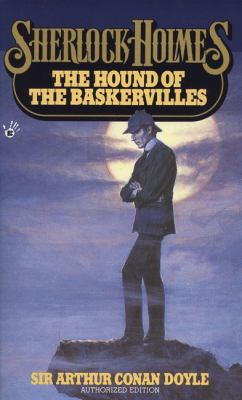
Despite the heroic send-off, the reading public did not react favorably to the story. Angry letters by the dozens poured into Conan Doyle's mailbox, many of them calling Conan Doyle a "murderer." Nonetheless, Conan Doyle refused to budge, and left Holmes definitively, and permanently, retired. At least, he did for eight years -- until a local country legend so gripped Conan Doyle's imagination that he resurrected Holmes in order to write the serialized "prequel" novel The Hound of the Baskervilles. (Hound was meant to take place before the events of "The Final Problem.") In 1903, Conan Doyle officially brought the character back to life (it turns out he'd never actually taken the plunge) in "The Adventure of the Empty House."

-- Like his character Dr. Watson, Conan Doyle served in the Army -- if unofficially. In 1900, during the second Boer War, Conan Doyle was desperate to enlist. When he was turned down due to age (and being somewhat out of shape), he volunteered as a medical doctor instead. His time spent in Africa was not easy, as he saw countless soldiers succumb not to battle, but typhoid fever. He was eventually knighted for his service to King and country -- although it's rumored that King Edward VII, an ardent Holmes fan, also knighted Conan Doyle in the hopes of encouraging him to write more stories about the famous detective. (The king, and countless other fans, would get their wish just a few years later.)


The Cottingley fairies photograph


-- One of the things which most fascinates me (and a lot of other people, fans and historians alike) is Conan Doyle's increasing fascination, throughout his life, with spiritualism and the occult. Spiritualism was (and is) the belief in communication with the spirits of the deceased. Determined to find scientific proof of an afterlife, Conan Doyle became more and more involved with the beliefs of what he called "Christian spiritualism," and spent the last years of his life touring the world to share the message of his cause.

One of the most baffling incidents of his life involved the infamous Cottingley fairies. In 1917, two English schoolgirls claimed that to have seen fairies in the field behind the family home. They had soon produced photographed evidence to back up their claim. Public attention soon followed. People were fiercely divided, with some insisting the girls were lying (despite a professional photographer examining the photos and declaring them in no way falsified), and others convinced the photos proved inarguable proof of the existence of the supernatural. A surprising number of people fell into the latter category -- including Arthur Conan Doyle. Conan Doyle contacted the family to hear more about the girls' story, and even wrote a (non-fiction) book entitled The Coming of the Fairies.

Years after Conan Doyle's death, one of the girls -- now in her sixties -- came forward to confess the incident as a hoax. The fairies had been paper cut-outs stuck onto hatpins. Many of Conan Doyle's fans see the incident as a humiliating blow: how could the creator of the brilliantly-rational character of Sherlock Holmes be duped by such obviously faked photos?  How could he believe the charlatans of the age who claimed to communicate with the dead?


But when looking at Conan Doyle's life, an alternate explanation begins to emerge. His first wife, Louisa, died in his arms in 1906, after years fighting against tuberculosis. World War I also struck a cruel blow to his family, claiming the lives of Conan Doyle's brother, two brothers-in-law, two nephews -- and his eldest son, Kingsley.

So it's hard, at least for me, to judge the creator of Sherlock Holmes as too illogical or unscientific in his beliefs. Losing as many loved ones as he did, it's easy to see why the drive to prove life after death was so appealing to him. It certainly doesn't make him a lesser author -- just a human one.

Which may be precisely why his stories and characters (and one character in particular) remain so influential and beloved to this day.


Some Recommended Reading:


Fiction:

-- The Exploits and Adventures of Brigadier Gerard

The adventures of Conan Doyle's D'Artagnan-like hero, the French soldier Gerard. These comical tales take place during the Napoleonic Wars.

-- The Lost World

Surely the inspiration for the title of Michael Crichton's Jurassic Park sequel, this early sci-fi adventure has Professor Challenger discovering a world of prehistoric animals still alive in the Amazon basin.

-- The Best Supernatural Tales of Arthur Conan Doyle

Like Edgar Allan Poe, Conan Doyle's talents for mystery and horror seem to go hand-in-hand. Here are some of Conan Doyle's most intriguing stories of a different sort of mystery.

-- The White Company & Sir Nigel

Conan Doyle always considered his historical fiction to be his most significant work. Here are two of his best historical novels, set during the Hundred Years' War.

-- The Maracot Deep

A short sci-fi novel about the lost city of Atlantis.

-- Micah Clarke

Another historical novel, this one a coming-of-age story set during the Monmouth Rebellion in England.

-- The Mystery of Cloomber

An odd little novel, first published in 1889, that hints at Conan Doyle's future fascination with the occult.


Non-Fiction:

-- Arthur Conan Doyle: A Life in Letters

A collection of Conan Doyle's correspondence, ranging from 1867 (when he was eight years old and writing his mum from boarding school) to 1920. Not to be missed.

-- The True Crime Files of Sir Arthur Conan Doyle

Combining his skills as a doctor, author, and the creator of the world's Greatest Detective,  Conan Doyle fought to clear two real-life people of crimes for which he'd felt they'd been unjustly accused -- and he succeeded.

-- The History of Spiritualism, Vol. 1

Focusing on the origins of the spiritualist movement, this makes a great read for anyone interested in the history of the Victorian and Edwardian fascination with spiritualism -- and its effect on the people and culture of the time.

-- Our African Winter

An intriguing slice from the life of Conan Doyle.

-- Through the Magic Door

The author takes a look at the books which have affected his writing and life.


Sherlock Holmes:

-- The Adventures and Memoirs of Sherlock Holmes

The first two collections of Holmesian short stories. Probably the best-plotted mysteries of Conan Doyle's tales. The final story is appropriately epic!

-- The Return of Sherlock Holmes

A must-read if only for the first book in the collection, The Empty House, which featured the then-shocking "return" of Sherlock Holmes.

-- The Hound of the Baskervilles

Although Holmes is not prominently featured, this superbly-plotted and appropriately spooky book is considered by many to be the first "contemporary" murder mystery.

-- The Valley of Fear

A lesser-known novel, it features the reappearance of Sherlock Holmes's greatest nemesis: Professor Moriarty.


-- Post by Ms. B

Thursday, April 5, 2012

On-Screen Sherlocks


I've become quite the Sherlock Holmes fan over the past couple of years -- although "fan" is, perhaps, too subtle a word. (It just sounds so much nicer than "obsessor," doesn't it?) My enthusiasm aside, however, it is an admittedly new interest. Despite previous attempts to try the books (or one of the myriad film adaptations), and despite my long-standing affection for the mystery genre, I could never quite seem to get hooked by Holmes.

That was until the theater release of Sherlock Holmes, the 2009 film starring Robert Downey, Jr. in the title role (and Jude Law as Dr. Watson). It turned out that this high-action, rough-and-tumble, steampunkified version of Sherlock Holmes was exactly what I needed to draw me to the character, and I haven't looked back since.

I've since then dove happily into the Holmes canon (the four novels and 56 short stories originally written by Sir Arthur Conan Doyle), as well as a number of pastiches (novels and short stories written by authors other than Conan Doyle about the great detective). I've also started exploring the myriad on-screen portrayals of Sherlock Holmes -- which, given their sheer number (the Guinness Book of World Records has repeatedly listed Holmes as "the most-portrayed movie character" of all time), is a project I'm happy to say won't be completed anytime soon.

So in honor of my first Holmes's birthday (Downey turned 47 yesterday), I thought I'd use the occasion to take a look at some of the best-known -- and the least-appreciated -- actors to bring life to the most famous of fictional detectives.


Jeremy Brett

Over seventy actors have portrayed Sherlock Holmes -- and yet, of those seventy, two in particular have been consistently regarded as the best. Brett is one of them.

Born in England, Brett would play the character of Sherlock Holmes for 41 episodes of the Granada Television series, which was produced and aired in intervals from 1984 through 1994. From the start, Granada was interested in producing a series that was as faithful to the original Conan Doyle stories as possible. Full sections of dialogue from the stories made it into the scripts verbatim, and costumes and even poses from the original Sidney Pagent artwork appeared onscreen.

After agreeing to take on the role, Brett studied the original stories and made notes on the character's quirks, tics, and more eccentric behaviors. The result was a portrayal of Holmes that many fans find to be definitive, reflecting the intense research and thought that Brett had put into the character.

-- Jeremy Brett as Sherlock Holmes on DVD


Arthur Wontner
 
Virtually forgotten today, Wontner was wildly popular as Holmes in his time, praised by critics and fans alike as "the perfect Holmes." One of the first actors to appear as Holmes after movies had gained the ability to "talk," Wontner's films were produced in the 1930s, and the first of these in particular was a box-office smash on both sides of the Atlantic.

Though the series appears slow-moving to modern eyes and ears, Wontner's portrayal -- and its cultural impact on the 30s -- should not be ignored. Perhaps the best praise to give his performance is to quote from a letter sent by Arthur Conan Doyle's widow, Lady Jean, who wrote to Wontner that she loved "your really splendid acting ... [and] masterly presentation of Sherlock Holmes."

-- Arthur Wontner as Sherlock Holmes on DVD


Ronald Howard


This 1950s TV series plays something like a Sherlock Holmes sitcom -- although, technically speaking, "family show" would be the better term. But there's a quirky, sometimes silly, entertaining humor to the series that differentiates it from most of the other Holmes adaptations.

The show was produced and filmed in Paris on a shoestring budget, with scripts that rather varied in quality. But Howard can still be lauded for performing one of the more faithful portrayals of the character. The series is also noteworthy for breaking from the then-tradition of portraying Holmes as a middle-aged professional at the height of his career -- presenting him instead as a thirtysomething who was still somewhat close to the beginning of his detective days. And to modern eyes, the occasional lapses into the ridiculousness can add to the quirky charm; when the series works, it works well.

-- Ronald Howard in The Complete Sherlock Holmes on DVD


Peter Cushing


Still perhaps best-known as Grand Moff Tarkin -- Darth Vader's partner-in-crime from the original Star Wars film -- Cushing was a lifelong fan of Sherlock Holmes who was eager to portray the detective as closely to the original stories as possible. First appearing as Holmes in the 1959 Hammer Film The Hound of the Baskervilles (with fellow Star Wars villain Christopher Lee as Sir Henry Baskerville), he'd resume the part a decade later in the then-latest BBC Holmes series.

Filming for the television series was rough, with the production schedule rushed and demanding. And yet, despite the difficulties, Cushing continued to strive for as accurate and well-researched a portrayal of the character as possible -- and he succeeded. After the series ended, he'd go on to appear as the character one final time, in a 1984 production entitled The Masks of Death.

Sadly, while the Hammer Film's Hound and Masks of Death are still available, all but five the Cushing episodes of the BBC series have been lost. But the ones that remain are as faithfully entertaining now as ever.

-- Peter Cushing as Sherlock Holmes on DVD


Benedict Cumberbatch

(That's Cumberbatch on the left, for those of you who don't watch the series ...)

A cell-phone-wielding Sherlock Holmes may seem like sacrilege to some fans. And yet, the idea of placing Sherlock Holmes in a modern-day setting is not a new one. The only difference is when, exactly, "modern day" is. For years, film, stage, and TV adaptations have been taking Holmes out of his original Victorian setting and placing him in the era in which the adaptation is taking place -- sometimes for artistic reasons, sometimes for financial ones.

First airing in England (and being shown here on PBS), the British TV series Sherlock is placed in the 21st century for reasons decidedly artistic. Cumberbatch plays Holmes with as dash of Dr. Gregory House to him -- an analytical, aloof sleuth who is interested in solving crime simply for the challenge of the puzzle, and who may sometimes be out to prove just how clever he is. His put-upon roommate, played by Martin Freeman, adds an important dash of humanity to this modern-day detective series.

With nods to and variations on the original Conan Doyle stories, the show is prized among fans for its cleverly worked plotlines and quotable humor. With a long wait for the third series to come out, now's a great time to catch up on what you've missed so far!

-- Series One of BBC Sherlock on DVD


Robert Downey, Jr.

Downey's quirky, rough-fighting Holmes is not every fan's cup of tea. However, despite the films' emphasis on action -- and some decided elements of advanced Victorian technology (a style of alternate history fiction known as the "steampunk" genre) -- the movies have drawn all of their inspiration from the original canon. From Holmes's fighting and boxing prowess to Watson's new wife (and the good doctor's gambling addiction!), the adherence to Conan Doyle's written details makes this adaptation of Holmes a version of the character that is inspired by the canon, not a departure from it.

Though not a physical match for the part, Downey easily captures Holmes's sardonic manners and fascination with the details of his cases (he "[plays] the game for the game's own sake"). I was drawn to Downey's balance of Holmes's aloof detachment with his honest compassion for the people around him -- and to the patience-trying, laughter-inducing, genuine friendship between Downey's Holmes and Law's Watson.

They're Guy Ritchie films, which means lots of action, a few explosions, and plenty of fancy camera work. But, at its heart, this film series is also a Sherlock Holmes story, and the director, writers, and actors never lose sight of that.

-- Guy Ritchie's Sherlock Holmes on DVD


Basil Rathbone

Of the two actors still regarded today as the "definitive Holmes," it is Jeremy Brett and Basil Rathbone who tie for the title.

Born in 1892, Basil Rathbone was first and foremost a stage actor who went on to appear in a plethora of classic films in the 30s:  Captain Blood, Anna Karenina, The Adventures of Robin Hood. But it was when he teamed up with Nigel Bruce to start making Sherlock Holmes pictures that his legacy was born.

He first appeared as the character in two box office blockbusters: The Hound of the Baskervilles and The Adventures of Sherlock Holmes. After the films, Rathbone and Bruce took to the radio, making some 200 episodes of a popular radio Holmes series. (Sadly, only about fifty of these radio plays remain.) In 1942, the two actors returned to the screen for a fresh series of Holmes pictures by Universal Studios -- at which point the series, both for concerns of budget and for a desire to keep the attention of "modern" audiences, was moved from its original Victorian setting and placed into the world of WWII London.

Despite the "B picture" quality of the budget allotted these "modern" Holmes movies, there's a quirky charm to them that only increases with time. Rathbone plays Holmes with a mixture of keen analytical focus and high good humor, adding a dash of humanity to the character that I feel other actors often miss. Nigel Bruce, while often criticized for his bumbling, fumbling Dr. Watson (who is certainly as unlike the Dr. Watson of the Conan Doyle stories as a character can get), is still undeniably charming, and the real-life friendship between Rathbone and Bruce shine through in Holmes's and Watson's interactions.

Downey's Holmes was my first on-screen introduction to the character and will always hold a special place in my heart. But Rathbone, I think, will always and forever be my Holmes -- just as he'll remain the quintessential, ideal Holmes for millions of fans to come.

-- Basil Rathbone as Sherlock Holmes on DVD


Honorable Mentions for other Movie Holmes:

Christopher Plummer
Murder by Decree
Holmes meets Jack the Ripper.

Nicholas Rowe
Young Sherlock Holmes
A teenaged Holmes and Watson team up at boarding school.

Michael Caine
Without a Clue
Turns out the real genius consulting detective ... is Dr. Watson.

Robert Stephens
The Private Life of Sherlock Holmes
A bit of a parody, this quirky film involves submarines, sea monsters, and a determinedly romantic Russian ballerina.

George C. Scott
They Might Be Giants
A rich man retreats into a fictional world -- in which he sees himself as Sherlock Holmes -- after the death of his wife.

Nicol Williamson
The Seven-Per-Cent Solution
Sherlock Holmes is coached through his neuroses and addictions by Dr. Sigmund Freud.


-- Post by Ms. B