Showing posts with label space exploration. Show all posts

Tuesday, March 31, 2015

6 Reasons Why "Interstellar" Was the Best Film of 2014


March 31 marks the release of Interstellar on DVD and Blu-ray. Directed by Christopher Nolan, this sci-fi film is set in a future in which the earth is being gradually overtaken by the Blight, a mysterious ailment that is destroying the planet's crops one by one. Cooper, a NASA pilot turned farmer, is trying to balance a job in which he has little interest with raising his two children, Tom and Murph (short for Murphy).

When Murph unlocks a mysterious puzzle that sends her and her father stumbling into an undercover NASA base, Cooper suddenly finds himself hired to undertake a seemingly impossible mission: follow the cosmic breadcrumbs out into the far reaches of interstellar space -- and find a new planet for humanity to inhabit before Earth becomes a barren wasteland. Joining the crew of Dr. Brand (the NASA scientist overseeing the mission), Cooper will pilot the ship that will take them farther than any human being has ever been before -- even as Cooper fights to get back home to his family.

Released last year, the film was a smash hit. As a sci-fi buff, it was the 2014 movie I was most excited for -- so I was elated when Interstellar turned out to be the weird, wild, wonderful, and wholly unique ride I had hoped it would be.

Haven't seen it yet?  Here's six reasons why you should give it a go:


1.) You haven't seen space like this before


Nolan named 2001: A Space Odyssey as one of the films that served as his inspiration for Interstellar, and it's easy to see that influence in the awe-inspiring shots of space that the Endurance crew travel through.

But since the release of the Stanley Kubrick classic, there's been a plethora of films set in outer space, from Apollo 13 to Gravity. What makes Nolan's take unique?  First, there's consultant Kip Thorne, a theoretical physicist whose expert advice and theories allowed the effects crews to offer a unique take on such typical sci-fi fare as wormholes and ice planets. Then there's Nolan's commitment to practical, physical effects over computerized effects whenever possible. Obviously, a sci-fi film like this one will demand the use of some CGI -- but with much of the action being made without the use of a computer, the film often has a more physical feel to it than similar genre offerings.

Best of all, for me, was the chance to see the film in IMAX. The larger-than-life screen packed an extra-powerful wallop, as sheer size helped bring to life the silent, lonely, terrifying, and beautiful emptiness of space. Never before has a film so effectively offered me a window into what a trip through outer space might really be like.

Speaking of:


2.) The alien worlds are actually alien


Being a Christopher Nolan fan girl, all it took were the words "Nolan" and "outer space" to pique my interest in Interstellar. But it wasn't until I caught the film's trailer that I realized I was in for something special. In the trailer, we're shown a scene in which the Endurance crew have landed on a watery world which is caught in the massive gravitational pull of a nearby black hole.

The crew looks out across the alien sea towards a mountain range in the distance:


Then the pilot, Cooper, gets a better look. And realizes it's not a mountain.

It's a wave.
Well, bummer.

Too often in science fiction, the alien worlds don't seem to be anything of the kind; they are, instead, thinly veiled versions of our own home planet. But Interstellar seemed to kick things up a notch, delivering alien worlds that feel alien in their features, geology, and weather.

This is made all the more ironic by the fact that Nolan was filming in real, natural, outdoor locations (with a bit of CGI thrown in later), but that only adds to the effect of bizarre worlds that are still very physical and real.


3.) These archetypal characters are truly archetypes


The characters in Christopher Nolan stories are often thrown into extraordinary circumstances -- navigating the worlds of other people's dreams or fighting crime behind a rather unusual mask. But despite their otherworldly surroundings, the characters remain relatable Everymen, with recognizable and understandable motivations.

While the characters of Interstellar are searching for a way to build a future for humanity and save them from a dying planet, they are also motivated by more personal reasons. Cooper is looking to find a way back to his family. So, in her way, is Dr. Brand, the NASA scientist in charge of the expedition. Murph, Cooper's daughter, finds her own way of searching for the father who had to leave her behind to save her.

Woven into the vastness of space and time is a theme of the timelessness of family, making these characters and their archetypal motivations something relatable and familiar, no matter how weird or wild their surroundings.


4.) It keeps you guessing


In a world of sequels, prequels, and reboots, it's become the truly rare film that has a wholly original story to tell. Of the top-grossing films of 2014, Interstellar was the only movie in the top ten that was not a sequel or adaptation.

I spent the entirety of the film utterly unsure of where the story might be going. While it seemed reasonable to think that the good guys would triumph, I hadn't the foggiest idea of what they might do to get there, and how the hints and clues sprinkled throughout the film would lead to a solution. From ticking clocks to alien contact, the story was intriguing, unsettling, and, ultimately, full-circle. But never in a way I saw coming.

Which leads me to:


5.) It's "A Wrinkle in Time" for adults


Well, to be fair, Madeleine L'Engle's classic YA novel can be enjoyed by any reader of any age. But the fact remains that I couldn't help but be reminded of A Wrinkle in Time while watching the final act of Interstellar. The film ultimately ties together ideas of space, time, and the way in which love and family can transcend those realms -- which is more or less precisely what L'Engle did in her own sci-fi adventure over fifty years ago.

There's nothing overtly linking Nolan's space adventure to L'Engle's. But just as A Wrinkle in Time opened my nine-year-old mind to worlds I had never before considered -- while also telling a story about the unbreakable bonds of love and family -- so, too, did Interstellar achieve the same feat. It's a sci-fi adventure film, but it's also a tale that resonates on the most personal of levels -- making it the rare story that broadens the limits of imagination and tells an important truth, all at the same time.


6.) There's a snarky robot


I could watch this all day.

And then there's TARS -- the sarcastic, snarky, good-natured, and uniquely-designed robot, used by the Endurance crew to help them on their expedition.

Because what's a sci-fi story without a snarky robot?


Request "Interstellar" on DVD from the Catalog

Request "Interstellar" on Blu-ray from the Catalog

Request "The Science of Interstellar" by Kip Thorne from the Catalog

Request "Interstellar: Beyond Time and Space -- Inside Christopher Nolan's Sci-Fi Epic" by Mark Cotta Vaz from the Catalog

Request the Hans Zimmer soundtrack from the Catalog


-- Post by Ms. B 

Thursday, July 10, 2014

Curiouser and Curiouser

The Curiosity rover takes a "selfie"


When you're a resident of Mars, anniversaries work a bit differently.

For our cosmic next-door neighbor, a Martian year -- one complete orbit around the sun -- takes 687 days. So it's an all-more-impressive milestone to hear from NASA that the latest Mars rover, Curiosity, celebrated the end of its first Martian year just this past June.

Curiosity joins the ranks of such other NASA robot rovers as Sojourner, Spirit, and Opportunity; their missions are to boldly go where we humans just can't (at least not yet).

So in celebration of Curiosity's first Martian anniversary, let's take a look at one of our closest planetary neighbors:


-- How far is it from Earth to Mars?  It's tricky. Mars has an elliptical orbit, which means it is closer or farther away from Earth depending on the time of year. The distance varies from 39 million to about 240 million miles.

-- Mars is roughly double the size of our moon ... and half the size of Earth. (As measured by each sphere's radius.)

-- Though a Martian year is nearly twice the length of a year on Earth, a Martian day is much closer to a day on Earth: about 1.03 Earth days (or about forty minutes longer).

-- Mars has two moons, Phobos and Deimos (named after the sons of an Italian god of war).

-- There's no oxygen on the surface of Mars, but there is also, essentially, no air at all. With only a scant bit of atmosphere on the planet, most gases simply float into outer space.


A Curiosity photo of the Martian landscape


-- There's plenty of water on Mars, which is one reason scientists think the planet may have once harbored life. It is, however, frozen into the ice caps at the northern and southern ends of the planet. The ice does occasionally melt during the "summer" seasons.

-- The first satellite to capture a picture of the surface of Mars was Mariner 4. In 1965, Mariner 4 captured 22 photographs from just over 6,000 miles away, revealing a crater-covered landscape.

-- Olympus Mons, the biggest volcano ever discovered in our solar system, is nearly the size of Texas. Its primary crater is 40 miles across.

-- There have been four American rovers sent to Mars (Sojourner, Spirit, Opportunity, and Curiosity), and all four were successfully landed and communicated back to Earth (although Sojourner lasted a scant two months).


-- The USA isn't the only country to get spacecraft to Mars. Russia was the first country to get a manmade craft to Mars, landing two rovers (Mars 2 and Mars 3) in 1971. The probes sent back 60 pictures of the surface, taken while orbiting the planet. A British rover known as Beagle 2 was also launched in 2003, though it was lost upon landing on Christmas Day.


An earlier picture from the Opportunity rover


For More:

-- Happy Anniversary! On Mars, Curiosity Rover Has Done a Lot in a Long Year - from CNN.com. Check out this overview of Curiosity's accomplishments in its first Martian year.

-- Mars Rovers [video] - from National Geographic. Some mini-documentary videos looking into the difficulties of landing on and navigating the Martian terrain.

-- How Big is Space? - from the BBC. An interactive (and rather scaled-down) look at how far our nearest neighbors truly are.

-- How Far is it to Mars - Another interactive look at the distance from Earth to Mars.

-- Mars on NPR - Articles on the science and discovery of the Red Planet.

-- NASA's Mars Page


News from the Red Planet:

-- Mystery Light on Mars Spotted by Curiosity - from Discovery News.

-- NASA Rover on Mars Sees Mercury Cross the Sun's Face - from Space.com.

-- Software Bug Found on Mars Curiosity Rover - from the Telegraph. A surprising development (though it's yet to prove a threat to the mission).

-- China Bound for Mars in 2020 - Curiosity may gain a new friend, as China moves ahead with plans to expand their own space program with a rover to Mars.


From the Catalog:

Non-fiction:

-- Mars by Linda T. Elkins-Tanton

-- The Smithsonian Book of Mars by Joseph M. Boyce

-- Managing Martians by Donna Shirley, with Danelle Morton

-- Ultimate Mars Challenge [DVD] - PBS documentary on Curiosity

-- Mars Rising [DVD] - documentary on the challenges of a manned mission to Mars


Fiction:

-- The Martian Chronicles by Ray Bradbury

-- War of the Worlds by H.G. Wells

-- A Princess of Mars by Edgar Rice Burroughs

-- Mars, Inc.: The Billionaire's Club by Ben Bova

-- Red Planet Blues by Robert J. Sawyer


-- Post by Ms. B

Tuesday, September 25, 2012

[GUEST POST] The Space Shuttle: Thirty Years of Space Exploration

This week, "New @ MPL" is proud to showcase the writings of local teens from MPL's very own Teen Writing Group. (Our Teen Writing Group meets every Monday afternoon at the Library.)

Today, enjoy this entry from Allen H., sharing some of his in-depth knowledge about the history of the Space Shuttle, and its role in our space program:


One-hundred thirty-five missions.  One-hundred thirty-three successes, two failures.  These are just a small number of the many statistics that the five space shuttle orbiters -- Columbia, Challenger, Discovery, Atlantis, and Endeavour -- have played a part in.

First launched in 1981, the space shuttle was the first reusable spacecraft.  Prior to this launch, however, there were approach and landing tests.  A sixth shuttle, a prototype called Enterprise, flew these tests.  It was carried on the back of a modified Boeing 747 and jettisoned off the back to test the landing feature of the space shuttle.  At an altitude of 300 feet, the shuttle would lower its landing gears and gently touchdown on a runway.  There were a number of runways the shuttle could land at: Kennedy Space Center Shuttle Landing Facility, Edwards Air Force Base, and White Sands Space Harbor, just to name a few.

During the thirty-year campaign, the shuttle has seen many great accomplishments.  One of the most notable was the deployment, and subsequent repair of, the Hubble Space Telescope.  After the launch of the Hubble Space Telescope, it was discovered that the main mirror was ground to the wrong specifications, making the pictures blurry.  NASA was faced with two options: leave the telescope in its state, or send a space shuttle to repair it.

The Hubble telescope in orbit

Finally clearing a shuttle mission to fix it, NASA put together an elite crew, who had all been to space.  They conducted multiple spacewalks and even did back-to-back spacewalks.  After the repairs, Hubble started to fulfill its promise of peering into the past and uncovering the origins on the universe.  This mission proved that NASA could use the space shuttle to its full potential.

After the initial repair, Hubble has been serviced several times -- the most recent, and final, in 2009, when Space Shuttle Atlantis flew the STS-125 mission.

After the success of the repairs, NASA got involved in an international project: the International Space Station.  Partnering with the Russian Space Agency, European Space Agency, and countless others, construction was started on the space station.  The orbiting outpost was constructed on opposite sides of the world and then put together for the first time in space.  Crews are rotated by Russian Soyuz, and, at times, the space shuttle.  The space shuttle also carried most of the heavy cargo to the station, being the only space vehicle that could lift enormous payloads.  Having been completed in 2011, the space shuttle was retired at the conclusion of the last flight.

A spacewalk outside the International Space Station

Success was not met without failure, however.  During the thirty-year career, two space shuttle missions ended in tragedy.  On January 28th, 1985, space shuttle Challenger broke up 73 seconds after liftoff.  The accident resulted in the death of all seven astronauts, including the first teacher in space, Christa McAuliffe.  Space shuttle Discovery would fly the return-to-flight mission in 1988.

The second failure happened on February 1st, 2003.  Space shuttle Columbia was returning from a science mission.  Sixteen minutes before landing, the space shuttle broke apart, killing all seven astronauts.  The subsequent investigation showed that a piece of foam struck the orbiter during the ascent that made a hole in the underside of the shuttle.  This caused it to lose the thermal protection and break apart during the high temperatures of reentry.  Space shuttle Discovery again flew the return-to-flight mission in 2005.

Even with these failures, NASA continued to move forward.  Eileen Collins said it best: “We want to explore. We're curious people ... We believe in what we're doing. Now it's time to go.”  NASA has made major security improvements, including requiring the shuttle to perform heat shield inspections (which include flipping 360 degrees on flights to the Space Station), as well has having a secondary method of returning the astronauts from space.  After these requirements, NASA has not experienced any major problems with a spacecraft.

In July of 2011, the space shuttle was retired from flight, with these words from Chris Ferguson at the final landing: “Mission complete, Houston. After serving the world for over 30 years, the space shuttle found its place in history. It's come to a final stop.”  The International Space Station is complete, the space shuttle retired; now it is time to move on.  Back to the moon, and then -- to Mars.

The space shuttle Endeavour


-- Post by teen volunteer Allen H.


(For more on the history of the space shuttle, check out Space Shuttle: The First 20 Years - detailing the astronauts' experiences in their own words.)

Thursday, December 1, 2011

DragonLady


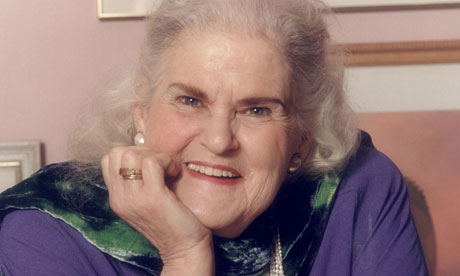
Before Christopher Paolini and Eragon, there was Anne McCaffrey and the dragonriders of Pern.

In 1967, Analog magazine published the novella Weyr Search. The novella would eventually serve as the basis for McCaffrey's first Pern book, Dragonflight -- kicking off a series that includes over 20 novels and two short story collections. Weyr Search tells the story of Lessa, a young woman living on the colonized planet of Pern, who is picked by the dragonriders to be a Candidate for the new queen dragon. If she's chosen (by the dragon, not the riders) to actually become a rider herself, she'll become the most powerful person on the planet, telepathically bonded to a queen dragon who is virtually unstoppable. And yet, it's a dangerous time to be the only queen rider on Pern, because something is returning to the skies ... something that only the dragonriders can stop ...


McCaffrey said that she came up with the idea for the Pern series by asking herself, "What if dragons were the good guys?" Before McCaffrey, the dragons in most fantasy and sci-fi series followed the model of J.R.R. Tolkien's Smaug, the dragon (and evil antagonist) of The Hobbit. McCaffrey was one of the first modern authors to imagine a world where dragons were the heroes instead of the villains. But it wasn't just dragons that benefited from the "good press" they received in McCaffrey's science fiction tales.

Weyr Search would give Anne McCaffrey the distinction of being the first woman to win either a Hugo or Nebula award (which are awards given to authors of science fiction and fantasy). She'd win both, in 1968, for the novella. (Author Kate Wilhelm also won a Nebula that year for her short story The Planners.) But in addition to presenting dragons in a positive light, McCaffrey also brought another rarity of the time to her sci-fi stories: strong female characters.


With characters like Ripley from the Alien films, Sarah Connor from Terminator, and Dana Scully from The X-Files, it's easy to forget that engaging, well-developed female characters are still a relatively new phenomenon in the fictional worlds of sci-fi. And in the late 60s, such characters appeared far less frequently. But in her stories of Pern, as well as in books like The Ship Who Sang and Crystal Singer, McCaffrey presented female characters that were strong, capable, flawed, changing, and -- above all -- human. Rightly known for her inventive story devices (read more about the "brainships" in The Ship Who Sang) and skill at worldbuilding (her world of crystal singing being almost as engaging as Pern), she's also beloved as a writer for her characters. In a time when few were writing about female characters as anything but shallow stereotypes, McCaffrey tried to write her female characters as real people -- and she succeeded.


When I was in high school, I was a big McCaffrey fan, and a huge Pern nut. Looking back on it now, it's not hard to see why McCaffrey's dragon stories appealed so much to me (and to millions of other fans; McCaffrey's books routinely topped the best-seller lists). Who wouldn't want a super-intelligent dragon as their best friend? There's always an element of cool escapism to sci-fi and fantasy, and just as readers of J.K. Rowling's Harry Potter series might imagine the fun of being a wizard, McCaffrey's intricately-detailed sci-fi worlds offer a similar window of imagination.

And yet, like all great sci-fi and fantasy, McCaffrey's stories go beyond mere escapism. Take away the unicorns and dragons, and you're left with intently human stories about characters who are struggling to overcome obstacles and help each other. McCaffrey's worlds are about escapism, but her characters  inspire her readers. To young female readers in particular, the Pern books provide characters to both relate to and admire, in a field where such characters were once severely lacking.

McCaffrey passed away last week at the age of 85, but Pern will continue on, both in the novels she wrote and in the Pern stories still being written by her son Todd McCaffrey. And her fans -- myself included -- will remain grateful for the wonderful worlds she took us to.


-- Post by Ms. B