Showing posts with label birthday biographies. Show all posts

Thursday, April 3, 2014

From His Point of View

"You never really understand a person until you consider things from his point of view ... 'til you climb inside of his skin and walk around in it." 
-- Atticus Finch ("To Kill a Mockingbird")

Gregory Peck (April 5, 1916) is one of America's finest actors and also happens to be one of my all-time favorite actors as well. He almost always played men of conviction and compassion, which I found very appealing even at a young age.

Peck's career took off in 1945, when he starred in Alfred Hitchcock's Spellbound co-starring Ingrid Bergman. The 1950s saw numerous box office successes, such as The Gunfighter, The Snows of Kiliminjaro and Moby Dick. His final acting appearance came in 1998's Moby Dick mini-series, starring as Father Mapple (he played Captain Ahab in the 1956 version).

Throughout his illustrious career, Peck starred in many memorable and noteworthy films. Below are a few of my personal favorites.


-- To Kill A Mockingbird (1962)


Gregory Peck won a Best Actor Academy Award for his masterful performance as crusading lawyer Atticus Finch. Based on Harper Lee's novel, the film tells the story of Finch, his daughter Scout and son Jem in 1930s Alabama. 


-- Roman Holiday (1953)


A fun and sweet romantic comedy showcases the wonders of Rome through the eyes of a naive princess (Audrey Hepburn) and a slightly cynical journalist (Peck). 


Peck stars as Captain Mallory, who is unexpectedly put in charge of destroying German cannons on an Aegean island.  This film, also starring David Niven and Anthony Quinn, is a fast-paced and entertaining World War II thriller. 


In order to get to write an expose on anti-Semitism in post-war New York City, a journalist (Peck) poses as a Jew. This assignment begins to take a toll on this widower and father in many of his relationships. Gentleman's Agreement won the Best Picture Academy Award in 1948. 


--Post by Tracy

Thursday, March 20, 2014

Ron Howard: From Opie to Richie to Academy Award Winner


There are few people who do not recognize that adorable face. That is Ron Howard when he was playing Opie on The Andy Griffith Show. Even if you weren't a kid back in the 60s it's a pretty good chance you still have seen at least one episode of this show. It's an American classic. It ran for eight seasons on CBS. But maybe you were a child of the 70s and know Ron Howard from Happy Days where he played all round good guy, Richie Cunningham. Happy Days ran for 10 seasons on ABC and made Howard a household name to a new generation.


Now Ron Howard is most well known as a director of feature films, which began while he was still acting. His first directing job was for Grand Theft Auto (1977) while he was still on Happy Days. He's also become a very successful producer of films and television shows.

In honor of his recent 60th birthday (March 1st), I'm going to share a few of my favorite Howard films.


 -- Apollo 13 ( 1995)


It's 1970 and only one year since the landing of Apollo 11 on the moon. NASA continues its mission to explore space and has sent up Jim Lovell, Fred Haise and Jack Swigert to fulfill the next phase. Unfortunately, these trips don't seem to interest the American public in quite the same way anymore. That is until Jim Lovell utters the phrase "Houston, we have a problem." Ron Howard takes us along on a roller coaster ride with the astronauts, their families and the men who eventually bring them safely home.


-- Frost/Nixon (2008)


The year is 1977 and it's three years since Richard Nixon was forced to resign as President of the United States. David Frost was a well known, but not necessarily well respected, television personality in England. Both men wanted to change how the world saw them.

The film, based on a successful West End play, brings the interview, along with the preparations on both sides, to magnificent life. Howard manages to show these two fascinating personalities as more than just characters and we see how much was at stake for both of these men. Frost/Nixon was nominated for Best Picture and Best Director at the 2009 Academy Awards but lost on both counts to Slumdog Millionaire.


-- Rush (2013)


The 1970s was a magical time for Formula One Racing. There were big personalities along with big drama and unfortunately, big crashes. One of the biggest personalities was Englishman, James Hunt. Another big personality, although quite different from Hunt, was Austrian Niki Lauda. Their drive and determination to win the F1 title, no matter the costs, is wonderfully shown in Howard's most recent directing job. He manages to recreate the excitement and danger of racing at that time. This is more than just a "racing" movie.

-- A Beautiful Mind (2001)


The mathematical and Nobel Prize winner, John Nash, is masterfully portrayed by Russell Crowe in this Academy Award winning film. The Winner for Best Picture and Best Director highlights Howard's ability to make difficult, and at times unlikable, people relatable. We get to see Nash struggle with schizophrenia but in the end manage to have a fulfilling life and win the Nobel Prize in Economics in 1994.


From the Catalog:

-- The Andy Griffith Show [Actor]

-- Happy Days [Actor]

-- The Music Man [Actor]

-- Arrested Development [Producer]

Other films and shows


--Post by Tracy

Wednesday, March 5, 2014

Keep the Faith


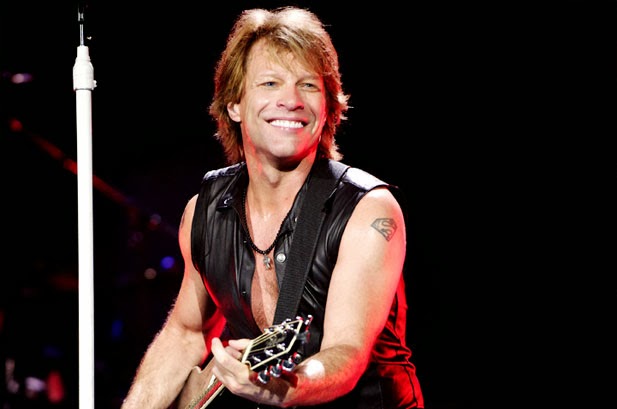
It's funny. Despite being a child of the 80s, I don't, as a rule, like 80s music. And yet I didn't just manage to make an exception for this particular group -- they actually happen to be my very favorite band.

If you're a Bon Jovi fan, you get where I'm coming from.


There's kind of a lot of fans


Bon Jovi is not a "Favorite Band" pick that often wins you a lot of respect in serious music circles. But, to be fair to my musical tastes, they don't always get the credit they deserve. They've long since transcended their roots as an 80s hair band, and it's a mark of their talents as songwriters and performers that they've stayed relevant for nearly three decades.

For those of us who are fans, their apparently timeless appeal is easy to understand. Their songs are admittedly simple, but they're also infused with a real energy, making for tunes that are flat-out catchy fun. Their music's also packed with undefeatable optimism. Their lyrics have a message, and it's generally one of hope (you can't be a cynic and a Bon Jovi fan at the same time; it's a mathematical impossibility). In my experience, no one leaves a Bon Jovi concert in a bad mood. (And I've been to quite a few concerts.)

Lead singer Jon Bon Jovi recently celebrated his birthday (March 2), so that's exactly the excuse I need to talk a bit Bon Jovi. Allow me to recommend to you my top five album picks:


-- Slippery When Wet


Despite being their third album, 1986's Slippery When Wet was the album that catapulted Bon Jovi to success. Small wonder: the album contains the three songs that Bon Jovi is arguably best known for: "Livin' on a Prayer," "You Give Love a Bad Name," and "Wanted Dead or Alive."

The last song, which compares the life of a rock star to the life of a cowboy, is an incredibly catchy earworm with an unforgettable hook -- but it also has some interesting commentary on the world of rock 'n' roll and celebrity culture. It's the band's biggest singalong concert performance (with Jon Bon Jovi often bringing the audience in to take over for a verse), as well as their undeniable signature piece.


-- Have a Nice Day


Released in 2005, this ninth offering from the band is, at least to me, something of a turning point in Bon Jovi's musical sound.

In addition to the catchy song from the title, there's "Novocaine," "Last Man Standing" (a futuristic sci-fi piece on the music industry -- really!), "Story of My Life," and "Welcome to Wherever You Are" (my favorite song on the album).

This album's also notable for the song "Who Says You Can't Go Home,"  which appears in two different versions -- once as a solo for Jon, and a second version sung as a duet with Jennifer Nettles (one half of the country-singing duo Sugarland). While the duet version only made it to the 5th slot on Billboard's US Top 40, it made Bon Jovi history by hitting Billboard's #1 spot on the Hot Country Songs list.


-- Lost Highway


After the runaway success of "Who Says You Can't Go Home," it probably seemed like a no-brainer for Bon Jovi to try their hand at a full album's worth of country-inspired sound. This follow-up to Have a Nice Day is clearly influenced by the genre of country music, giving a different flavor to the band's unique sound.

While I am, admittedly, not particularly a fan of much country music, I was pleasantly surprised to find this release quickly becoming another one of my favorites. Much to my surprise, the songs I like best -- "Whole Lot of Leavin'," "Any Other Day," "We Got It Going On" (done as a duet with country music duo Big & Rich) -- are the ones that are most clearly a mix of Bon Jovi's rock roots and a newer, country music influence. The title song, "Lost Highway," is a great driving tune.


-- Greatest Hits: The Ultimate Collection


I'm absolutely positive it's cheating to include this album -- a 2-disc compilation of, well, what it says on the tin. But it's hard to deny the draw of this 2010 release, which dips into such albums as Crush, New Jersey, and Keep the Faith to pull together all their best-loved songs into one complete set. In addition to the three biggest hits from Slippery When Wet, we also get such fantastic classics as "It's My Life," "Blaze of Glory," "Someday I'll Be Saturday Night," "Bad Medicine," and "Keep the Faith" (that last's a particular favorite of mine).

 There's also a handful of new tunes in the bonus tracks. (One of them, "The More Things Change," is one of my very favorite Bon Jovi songs.) You can't beat that for a single album!


-- The Circle


"The Circle," Bon Jovi's eleventh studio album, is a unique album for me. While it is, in many ways, a return to the band's rock roots, there's a freshness to much of the music that makes the album stand out.

Many of the songs are clearly influenced by current events (the album was released in 2009). Such songs as "Work for the Working Man" and "Brokenpromiseland" bring to mind the aftermath of the economic crisis; "Bullet" and "Happy Now" seem to reference the fears of the time.

But the best song of the album (and, to my mind, the best Bon Jovi song there is) is the wholly unusual "When We Were Beautiful." A surprisingly poignant piece, the song has the strong hook and typical structure one might expect from a Bon Jovi tune -- but the sound itself is unique. It's fitting for a song that looks both to the past and towards the future, making it a whole new kind of signature performance for the band.


From the Catalog:

-- Music albums by (or featuring) Bon Jovi

-- Bon Jovi: The Crush Tour [DVD]

-- Lost Highway: The Concert [DVD]

-- Bon Jovi: Live at Madison Square Garden, July 15, 2008 [DVD]

-- Bon Jovi: When We Were Beautiful - Conversations with Phil Griffin - a book about the band


-- Post by Ms. B

Tuesday, December 10, 2013

Chairman of the Board


Chairman of the Board. Ole' Blue Eyes. The Voice. The Sultan of Swoon.

Whatever you choose to call him, Frank Sinatra was a one of a kind performer. Born December 12, 1915 in Hoboken, New Jersey, Frank Sinatra, is considered by many to be the greatest entertainer of the 20th century. His career spanned seven decades and included acting as well as singing. He was a member of the infamous Rat Pack and was swooned over by the first teeny boppers, then known as bobby soxers. There isn't much that Frank Sinatra did not achieve in his long and illustrious career.


Here are some highlights:

1940 -- Joins The Tommy Dorsey Band as principal singer.

1942 -- Started making young girls "swoon" after leaving Tommy Dorsey Band to perform as a soloist, one of the first singers to do break out on his own.

1943-1946 -- Had 17 hit singles on Columbia Records.

1941 -- Made his first film appearance in Las Vegas Nights.

1950 -- Record sales begin to slump, as does his reputation, when his relationship with actress Ava Gardner is revealed.

1953 -- Signs with Capital Records which will start the pinnacle of his recording years. He and conductor Nelson Riddle begin recording full length concept albums.

1954 -- Comeback is official after his Oscar winning appearance in From Here to Eternity.

1960 -- After many successful years at Capital Records Sinatra decides to start his own record company, Reprise Records, the first major artist-owned label. This period also was the start of his Rat Pack days with Dean Martin, Sammy Davis, Jr., Peter Lawford and Joey Bishop. They performed together on stage and in such films as Ocean's 11 and Robin and the 7 Hoods.

1965-1970 -- Once again Sinatra reimagined himself through the last half of the decade with a successful television special (A Man and His Music) and recording songs with a more diverse sound. This produced such hits as "Strangers in the Night" and his signature song, "My Way".

1970-1980 -- Sinatra announced his retirement from show business in 1971, but of course that wasn't to last. He continued performing and recording with a variety of musicians from around the world. This is also the time when he records "Theme from New York, New York", the defining song of his career.

1990-1998 -- There was one last final comeback when a generation of young people discovered the Rat Pack and once again made them hip. This was followed in 1993 by an album, Duets, which paired him with many of the top performers of the day covering many of Sinatra's own hits. He continued to tour well into his 70s with his last concert in 1995. Frank Sinatra passed away on May 14, 1998.


From the Library collection:

Music: Check out our large selection of Frank Sinatra tunes, covering many decades of songs.

Films: Check out the wide selection of films, videos and television appearances from different times in Sinatra's career.

Books: Check out the many biographies (authorized and unauthorized) of Ole Blue Eyes.

-- Post by Tracy

Tuesday, November 26, 2013

Astonish the Rest


Still remembered as one of our greatest humorists, Mark Twain is among the best-known and best-loved authors in American history. Born on November 30, 1835, he was named Samuel Clemens -- "Mark Twain" was a pen name he'd permanently choose after first trying out such names as "Thomas Jefferson Snodgrass" and "Josh."

Best known for such classics as The Adventures of Tom Sawyer and The Adventures of Huckleberry Finn, Twain's writings are celebrated to this day for their wit, fun, and forthright wisdom. So let's give thanks to one of our favorite authors by taking a closer look at the life and times of Mark Twain:


- Samuel Clemens chose his pen name based on the phrase used by Mississippi River steamboat crews to announce that the water was at least 12 feet deep -- and, therefore, safe enough to travel.

- He encouraged his younger brother, Henry, to also become a steamboat pilot. Henry was eventually killed when a boiler on his boat exploded -- an event which Twain claimed to have seen in a dream before it happened.

- While growing up, Twain's family once owned 19 cats at the same time. (Twain was prone to finding colorful names for his cats, including Sin, Sour Mash, and Famine and Pestilence.)

- Though there were some drawbacks to using it -- it only typed in capital letters, and you had to use a foot pedal to advance to the next line -- Twain purchased his first typewriter in 1874 for $125.

- A mark of his fame: he once received a letter from a fan, who wrote down for the address: "Mark Twain, God Knows Where." (That was enough for the postal service!)


- The author put The Adventures of Huckleberry Finn on hold while he invented and patented his very own memory game. (See it here!)

- Twain asked that all his unfinished manuscripts be burned when he died. (No chance of someone coming along to finish his unfinished stories!)  One unpublished work remained, however: his autobiography, mostly written by dictation, which he left with strict instructions that it was not to be published until a century after he died. His request was (mostly) honored -- and the first two (of three) volumes were published in 2010 and 2013.

- Halley's Comet (named after English astronomer Edmond Halley) passes through Earth's vicinity once every 75 years, give or take. When Twain was born, the Comet was visible in the night sky, a fact which Twain was quite proud of:

"I came in with Halley's Comet in 1835. It is coming again next year, and I expect to go out with it. ... The Almighty has said, no doubt: 'Now here are these two unaccountable freaks; they came in together, they must go out together.' Oh, I am looking forward to that." 

Twain proved right; when he passed away in 1910, the Comet had just emerged from the far side of the Sun.


Some words of wisdom from Twain:

"It is by the goodness of God that in our country we have those three unspeakably precious things: freedom of speech, freedom of conscience, and the prudence never to practice either of them."

"There are two times in a man's life when he should not speculate: when he can't afford it, and when he can."

"The human race has one really effective weapon, and that is laughter."

"The proper office of a friend is to side with you when you are in the wrong. Nearly anybody will side with you when you are in the right."

"A sin takes on a new and real terror when there seems a chance that it is going to be found out."

"All you need is ignorance and confidence; then success is sure."

"Always do right. That will gratify some of the people, and astonish the rest."

"When in doubt, tell the truth."


On the web:

The Official Web Site of Mark Twain

- Mark Twain Biography - from Biography.com

- Mark Twain House and Museum - the official site for the Connecticut museum.

"The Eternal, Charming Chatter of the "'Autobiography of Mark Twain'" - from the New Yorker.

"Fenimore Cooper's Literary Offenses" - In my favorite Twain piece, the author reviews The Last of the Mohicans and the other books in James Fenimore Cooper's Leatherstocking series.


At the Library:

- From the Catalog - Twain's books and audiobooks, as well as filmed adaptations of his works, available through the Library Catalog.

- The Autobiography of Mark Twain - Volumes 1 and 2 now available from the Library Catalog.


-- Post by Ms. B

Thursday, July 25, 2013

All For One


I love The Three Musketeers.

That is to say, I love the classic novel The Three Musketeers, by Alexandre Dumas. And, if you've read or seen any version of the story, you'll know that the book is actually about four Musketeers. There's the experienced trio of Athos, Porthos, and Aramis. But there's also the headstrong, determined, quixotic D'Artagnan, who has just left home and family and is on a quest to join the Musketeers.

D'Artagnan first meets his future friends when he makes it to Paris and promptly manages to insult three different people in the space of a few minutes. Each man challenges D'Artagnan to a duel, and D'Artagnan, never one to back down from a challenge (his father told him not to!), schedules the duels back-to-back-to-back. When he arrives at the meeting place for Duel #1, he quickly realizes that the three men he's fighting in turn are all friends -- and that, moreso, they are all Musketeers.

The duels never take place; the four of them become too busy fighting off the Guards of Cardinal Richelieu (who have arrived to arrest them for illegal dueling). D'Artagnan may be young and rash, but he proves his bravery and honor when he assists the three Musketeers in overpowering the Guards. The trio decides to take D'Artagnan under their wings, and what follows is a high-rollicking adventure tale packed with action, intrigue, and broad, sweeping romance.

Dumas would go on to write two sequels to The Three Musketeers: Twenty Years After and Ten Years Later. (The third novel, Ten Years Later, is so lengthy that it's often published as three separate volumes: The Vicomte de Bragelonne, Louise de la Valliere, and The Man in the Iron Mask.) The Three Musketeers and The Man in the Iron Mask remain the most-read works from Dumas's complete "D'Artagnan Romances" cycle, and have inspired numerous stage and film adaptations.


While the D'Artagnan Romances are, of course, historical fiction, it's interesting to note that they were historical fiction even at the time of their publication. The Musketeers' tales are all set in the seventeenth century, but Dumas himself was writing them in the nineteenth, with The Three Musketeers first appearing in serialized installments in 1843. That first novel was written by Alexandre Dumas and a collaborator, Auguste Maquet, a history teacher and fellow author (if one of less acclaim, by far, than Dumas, who was already a celebrated playright when he wrote Musketeers).

Dumas and Maquet did some homework for their tale, and the D'Artagnan Romances are based on a real-life figure. Charles de Baatz d'Artagnan, born in 1623, became the capitaine lieutenant of one of King Louis XIV's two Musketeer companies. He was a lifelong soldier who would go on to be appointed governor of Lille, and he died in battle in Hollan in 1673.

The Memoirs of Charles D'Artagnan were written by another real-life Musketeer (though not, unfortunately, by Charles D'Artagnan himself), and it was these memoirs that served as much of the inspiration for Dumas's novels. The other three Musketeers -- Athos, Porthos, and Aramis -- were also all real-life figures, who receive mention in the D'Artagnan memoirs. How much of these "memoirs" are factual is a matter of some debate, but what's certain is that both D'Artagnan and the Musketeers were figures who really existed.

The Musketeers themselves were formed by King Louis XIII of France, a combination of soldier and personal royal bodyguard. Louis armed his personal guards with a newly developed flintlock, muzzle-loading riffle -- the musket (hence the company's name). The Musketeers of history were variously disbanded and reassembled throughout the next two hundred years by various members of French royalty, before finally being permanently dissolved in the time of Napoleon.


A monument to the Four Musketeers in Southern France


Of course, in the end, the lasting appeal of D'Artagnan and the three Musketeers lies not in their factual history, but rather in what they've come to represent.

From the beginning, the Musketeers have had a glamorous appeal. King Louis XIII was something of a romantic, and he had a fondness for the by-gone days of chivalry. (It's what made him so reluctant to actually enforce any of those anti-dueling laws he kept enacting -- seeing as dueling itself was, in theory at least, a method of "defending one's honor.") The Musketeers themselves were career soldiers who did not include noble blood as an entry requirement to their ranks; you became a Musketeer through your own actions and merits, not by merit of your birth.

Dumas himself seemed entranced by the romantic chivalry of the Musketeers, writing about them two hundred years after their real-life creation. Audiences since then have responded to his books in kind, taking the stories to heart for their action, adventure, and chivalry.

Even in medieval times (where we think of the concept originating), chivalry was generally far more of a theory than a practice. There wasn't much more of it in the seventeenth century. So rather than harkening back to a better, nobler past, D'Artagnan and his friends represent a world of bravery, courtesy, and honor that's never really existed outside the pages of a book.

Or, at least, one that has not existed yet. It's true that the fun and adventure of Dumas's Musketeer tales is undoubtably a primary reason for the stories' staying power. And yet, the ability of story to inspire should never be overlooked. People would not keep reading these books if they did not see some appeal in the ideals of courage, honor, and friendship that Dumas wove throughout his stories. Hopefully, that appeal will prove inspirational to Dumas's readers. The honorable world of the Musketeers may not be in our past -- but perhaps it may be in our future.


Alexandre Dumas, born on July 24, 1802

From the Catalog:

-- The Three Musketeers
-- Twenty Years After
-- Ten Years Later
* The Vicomte de Bragelonne
* Louise de la Valliere
* The Man in the Iron Mask

-- All books by Alexandre Dumas
-- Film adaptations of The Three Musketeers
-- Film adaptations of The Man in the Iron Mask


(non-fiction)

-- D'Artagnan, The Ultimate Musketeer: A Biography by Geoffrey F. Hall and Joan Sanders.
-- Ã‰minence: Cardinal Richelieu and the Rise of France by Jean-Vincent Blanchard.
-- Books on King Louis XIII
-- Books on King Louis XIV


-- Post by Ms. B

Tuesday, May 14, 2013

The Land of Oz Redux

Our thanks to MPL librarian Sally Michalski for today's Birthday Biography!


While most people know the Land of Oz from the 1939 movie The Wizard of Oz, there was a time, before radio and television, when the children of the world were caught up in the wonderful Land of Oz in print. Oz was the Harry Potter series of its time.  It was a craze.

Lyman Frank Baum, a man who could not find his place in the real world, loved to tell stories to his children.  Finally, about 1899, he was persuaded to put his stories on paper. He engaged W.W. Denslow as the illustrator of his imaginary Land of Oz that they tried to get published, but no one would take them on. Finally, the Geo. M. Hill Company agreed to publish the book, but Baum and Denslow had to pay for the binding and color illustrations themselves.

The first 1900 edition was a printing of 5,000 books and was quickly sold out.  Two other printings followed, and between April and November of that year, 60,000 copies had been sold.

The Wonderful Wizard of Oz was such a success that L. Frank Baum, as he preferred to be known, went on to write other children’s books about other children -- but not Dorothy.

He got letters from children begging him to write another story about Dorothy and the Land of Oz, and finally he said that he'd only write another Oz tale when he had received a thousand letters. And he got them.

The second book, The Marvelous Land of Oz, was once again a hit, but Dorothy wasn’t in it. The children clamored for more -- but this time with Dorothy, please.  Ever after, every Oz book Baum wrote had Dorothy taking part.

I read these books as a child who frequented my local library. It was a strong emotional pull that took me directly to the bottom shelf of a stack, kneeling on a corrugated rubber runner hoping against hope that there was yet another Oz book I hadn’t yet read. I loved the characters, and I’m not just talking about the Tin Woodsman and the Cowardly Lion.  I am talking about such high falutin’ characters as H. M. Wogglebug, T. E. (or Highly Magnified Wogglebug, Thoroughly Educated). Another favorite character was the Patchwork Girl, who was the only person of color in Munchkinland.

There were oodles more, each one more interesting than the last. I couldn’t stop reading them.

As a child, I loved the stories as stories themselves.  I grew up to be a collector of Oz books, because I still can’t get them out of my system. As time went on, I began to see the man behind the stories.  Frank Baum kept popping out in his opinions, his politics, and his thoughts about new-fangled inventions.

In Ozma of Oz, published in 1907, a new character is introduced.  Her name is the Princess Langwidere -- whose name is close to languid, which means unwilling to exert oneself.  Baum portrays the Princess Langwidere in this fashion, as she must lean on her maid for support as she travels from one room to the other or from one closet to the next.

Langwidere is a princess of the Kingdom of Ev.  She does not rule, but spends much of the royal treasury. The princess cannot be recognized by her face, because she is very vain and has thirty heads, one for every day of the month.  This princess has a waiting room that is surrounded with mirrors, even on the ceiling, and the floor is silvered so that every object in the room is reflected. A vain and flighty person is the Princess Langwidere.

Baum pokes fun at the suffragettes in The Marvelous Land of Oz, published in 1904.  A girl named General Jinjur raises an army of four hundred pretty girls.  The army is going to attack the Emerald City because “[the City] has been ruled by men for long enough.”

Jinjur’s army is dressed in silk uniforms with green blouses and multicolored skirts. (The skirts have panels of blue, red, yellow, and purple.  Depending on what Oz country the girl is from, she wears the color of that country in front.) Each girl has a pair of knitting needles in her bun that she uses as a weapon. When they arrive at the gates of the Emerald City, the Guardian of the Gate is surprised to be attacked, and says, “Good gracious, what a nonsensical idea! Go home to your mothers, my good girls, and milk the cows and bake the bread.” The army then attacks him with their knitting needles and he runs off in search of help.

Next, Jinjur sits on the throne in the Emerald City and begins eating caramels. The men of Oz are doing housework and minding children, and are worn out from the work.  The Scarecrow, who was the reigning King of Oz, is asked, “Why don’t you send her back to her mother where she belongs?” Another asks, “Why don’t you shut her up in a closet until she behaves herself, and promises to be good?” A third says, “Or give her a good shaking.”

In Ozma of Oz (1907), Jinjur is seen again.  On another trip to the Emerald City, Dorothy and her gang stop to beg some milk from a pretty maid.  Ozma sees that it is Jinjur who explains, “I’ve married a man who owns nine cows, and now I am happy and contented and willing to lead a quiet life and mind my own business.”

In all, L. Frank Baum wrote 14 Oz books and numerous other titles for children.  When he died in 1919, Ruth Plumley Thompson took up the stories with The Royal Book of Oz (a posthumous honor to Baum) and, in total, wrote 19 more books about Oz. John R. Neal, the second illustrator of the original Baum series, wrote four Oz books.  Jack Snow wrote two and Rachel Cosgrove wrote one, as did Eloise Jarvis McGraw and her daughter.  There are other Oz books beyond these, but they are not considered canon.

The land that Frank Baum created is still very much with us today.  Not only is The Wizard of Oz movie with Judy Garland a staple for children, but recently Oz, the Great and Powerful was produced as the latest addition to the story of Oz.  I am happy to report that I think this new movie carried through the personality of the Wizard, although I could have done without the sexy witches.

A first edition of The Wonderful Wizard of Oz is very valuable today. There are websites that have first editions of The Wonderful Wizard of Oz from $6,000 to $100,000. For myself, I've found that writing a blog plot can be expensive.  In doing this little exercise, I just had to purchase a copy of John R. Neill’s posthumously published book The Runaway in Oz. One can never have too many Oz books.

Happy Birthday, L. Frank Baum -- 157 years old this May 15. You enriched my childhood with imagination and a sense of wonder.

-- Post by Sally Michalski


For more reading:

- Introducing the Girls of Oz
Sally Michalski's website, with more information about the female characters of Baum's Oz books.


All about the rare collectibles of Oz.


References: 

- Baum, L. Frank, The Marvelous Land of Oz: A Sequel to the Wizard of Oz, ill. John R. Neill (New York: William Morrow & Co., c1904).

- Baum, L. Frank, Ozma of Oz, ill. John R. Neill  (Chicago: The Reilly & Lee Co., c1907).

- Betty Lee Johnson, “The World of Oz Remains Wonderful To this Day,” Antique Week, 3 February 1992.

- Daniel P. Mannix, “ The Father of the Wizard of Oz,” American Heritage, December. 1964.


(All illustrations by John R. Neill.)

Wednesday, May 8, 2013

The Boy Who Grew Up


If you don't know the story of J.M. Barrie, you still know the story of Peter Pan, the Boy Who Never Grew Up. Peter Pan and his crew of Lost Boys, his sidekick Tinker Bell, his arch-nemesis Captain Hook, the mermaids and fairies, the "Indians" and pirates, and the Darling children that he introduces to the world of Neverland -- like Robin Hood and King Arthur, or Odysseus and Hercules, Peter Pan and his story have become a part of our cultural mythology. Even if you've never seen the films, watched the plays, or read the books, you know the name "Peter Pan."

But to look behind the pirates and fairies and see what the classic tale is truly about, you need to know a little bit more about the author behind its creation: J.M. Barrie.

James Matthew Barrie was born on May 9, 1860. His father, a weaver, struggled to support the large family (James was the third son and youngest child). His mother, Margaret, who had a strong interest in literature and art, helped bring about her son's determination to become a writer. Her influence, unfortunately, was far-reaching in other respects: when James's older brother, David, died in a skating accident at age thirteen, James took is upon himself to help his mother over the loss. When Margaret took to bed for the remainder of her life in grief over the loss of her favorite child, six-year-old James played the part of his older brother -- even wearing David's old clothes -- to try and repair his mother's grief.


James Matthew Barrie


Barrie was only seventeen when his first play was performed: Bandolero, the Bandit, presented at the Dumfries Academy of which Barrie was a student. He graduated in 1882 from Edinburgh University, finding employment first as an editor for the Nottingham Journal, then as a journalist in London. He was a well-financed novelist and playwright by the time he married (his wife was Mary Ansell, who appeared in one of Barrie's plays). It was at about this time that Barrie began taking long walks through Kensington Gardens, and it was there that he met the Davies family: father Arthur and mother Sylvia, and their five children: George, Jack, Michael, Nicholas ... and Peter.

The Davies children became an instant family for the childless Barrie, who spent countless hours entertaining the boys with his games and elaborate stories. (They'd also eventually become his wards, when first Arthur, and then Sylvia, both died at young ages.)

Peter Pan first came to life as part of one such story for the Davies children. The character made his first written appearance within Barrie's novel The Little White Bird, which was published in 1902. Two years later came the release of the three-act play Peter Pan.

The classic play is so much a part of our storytelling history that it's something of a shock to realize how much of a gamble the production truly was. Success was by no mean a given with this elaborately fantastical story of flying actors, dogs and crocodiles, pirates and fairies and shadows. Barrie grew increasingly nervous about several elements of the play -- including the sequence in which Tinker Bell, Peter Pan's fairy sidekick, drinks from a poisoned goblet and dies. Peter then turns to the audience and asks them to clap if they believe in fairies, the sound bringing Tinker Bell back to life. On opening night, Barrie had instructed the orchestra to begin clapping if the audience did not -- but his concern was unwarrented. The audience burst into wild applause, beginning a tradition that continues in performances of the play to this day.


From Arthur Rackham's illustrations for "Peter Pan in Kensington Gardens"


The pop culture portrayals of films like Finding Neverland, as well as our own understanding of the myth of Peter Pan, make it tempting to see J.M. Barrie himself as the model for the Boy Who Never Grew Up. But it's also been noted that Barrie gave his eternally youthful hero the name of one of his charges. Barrie reserved his own first name to share with a different character: Captain James Hook. Captain Hook's injury -- his missing right hand -- may have been given in reference to the crippling pain Barrie experienced in his own right hand (a condition which was exacerbated by his time spent writing). 

And Captain Hook's greatest enemy may have been a reference to Barrie's own. It's not just any crocodile which remains in eternal pursuit of Hook -- it's a crocodile that has swallowed a clock. Hook is forever chased by Time itself -- a fitting metaphor, perhaps, for Barrie's own view on the tragedies of mortality.


The Peter Pan statue in Kensington Gardens


The story of Peter Pan is thought of as a children's tale, but that is not, perhaps, quite right. The story, while whimsical and fantastic, has a darker element. Peter Pan, the Boy Who Never Grew Up, is an almost tragic figure: so consumed with thoughts of himself, he cares for no one else. Indeed, he not only cares for no one else: the effects of Neverland mean that he cannot remember anyone else. (Wendy and her brothers must continually remind Peter who they are, as it continues to slip his mind.) Peter may live eternally youthful, but Barrie himself seems to understand that never growing up would be more of a curse than a blessing.

Still, the whimsical world he created for Peter and the Lost Boys remains, for most of us, a symbol of the innocence, fun, and magic of childhood. Neverland seems destined to remain such a symbol for centuries to come. "And thus it will go on," wrote Barrie himself, at the end of his novel, "so long as children are gay and innocent and heartless."


Dustin Hoffman as Captain Hook and Robin Williams as Peter Pan


Books:

The Annotated Peter Pan - The original text by J.M. Barrie, with notes and annotations all about the classic story.

Capt. Hook: The Adventures of a Notorious Youth by J. V. Hart - The childhood of James Hook!

Peter and the Starcatchers by Dave Barry and Ridley Pearson - A fun, action-packed prequel series to the original novel.

Peter Pan in Scarlet by Geraldine McCaughrean - The "authorized" sequel to the original story. 

Muppet Peter Pan - The Muppets meet Peter Pan in this fun and kid-friendly graphic novel adaptation.


Films:

Peter Pan, or The Boy Who Wouldn't Grow Up - A classic production of the musical version, starring Cathy Rigby.

Hook - This movie answers the question: what if Peter Pan grew up?  Starring Robin Williams as Peter Pan and Dustin Hoffman as Captain Hook.

Neverland - A miniseries that serves as a prequel of sorts to the traditional story.

Peter Pan - This 2003 film release returns to the stage tradition of having the same actor play both Mr. Darling and Captain Hook. A whimsical, dark adaptation that keeps in the spirit of the novel.

Finding Neverland - Stars Johnny Depp as J.M. Barrie, recounting his meeting of the Davies family and how that meeting led to the story of Peter Pan.


-- Post by Ms. B

Tuesday, April 23, 2013

All the World's a Stage

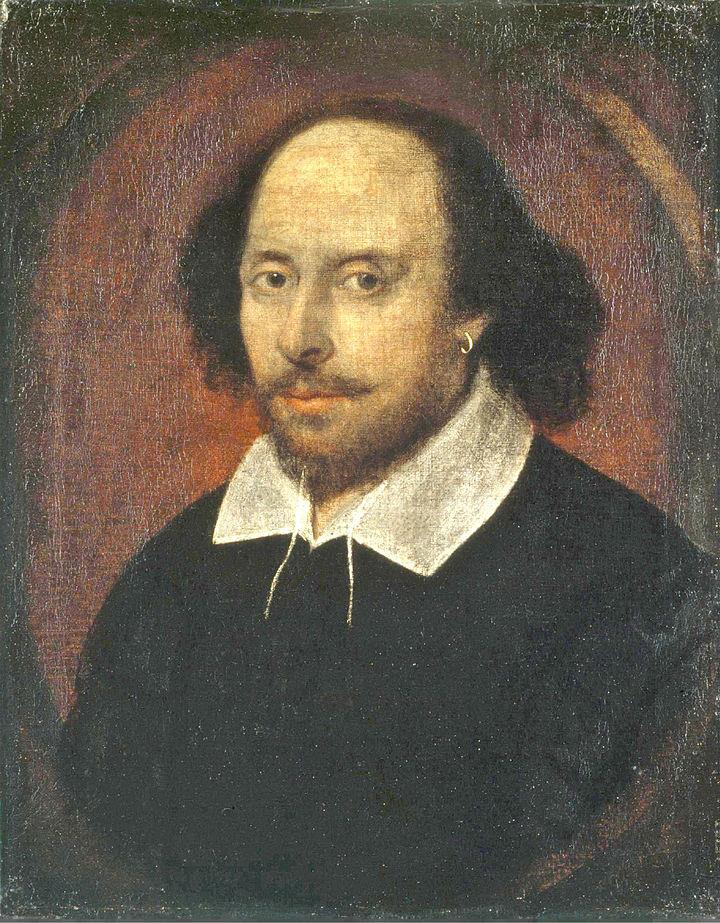
The Chandos Portrait of William Shakespeare. 
(Or not of William Shakespeare. There's some debate. Sort of a lot, actually.)


He's the most famous author in English literature, and yet we know almost nothing about him. We don't know what order he wrote his plays in. We don't know how he actually spelled his name: in the half a dozen signatures he left behind, he never spelled his name the same way twice (and, point of fact, he never actually spelled it "Shakespeare"). We don't know who his friends were, where he traveled (did he ever leave England?), what he was doing when he shot to fame as a highly successful playwright. He left behind almost a million written words, but only fourteen of them are written in his own handwriting. 

April 23 is, by tradition, agreed to be both the day of William Shakespeare's birth (in 1564), and the day of his death (in 1616). While some of that may not be completely accurate -- we're not so sure about that birthday (we just know he was baptized on April 26) -- it has left April 23 as the day to recognize Shakespeare. 

So in honor of the Bard, let's take a look at a few different ways you can experience the stories of William Shakespeare for yourself.


The Droeshout engraving:
 Another portrait of William Shakespeare. Probably. Unless it's not.


Five Ways to Experience William Shakespeare


1. On the Page


Most Shakespeare fans will inform you that Shakespeare is meant to be seen, not read. While that's technically true (plays are written to be performed, after all), there's something to be said for reading the plays on your own -- at your own pace, with your own interpretations. 

Of course, if, like me, you haven't read any Shakespeare since college, the idea of reading and getting some sense out of such dialogue as, "If music be the food of love, play on; Give me excess of it, that, surfeiting, The appetite may sicken, and so die. That strain again! it had a dying fall ... Enough; no more: 'Tis not so sweet now as it was before." -- well, it's a bit intimidating, is what I'm saying.

Enter Simply Shakespeare and Shakespeare Made Easy. These series take the entire, original text of various Shakespeare plays and provide a line-by-line translation into "modern" English. The Shakespeare text is presented on the left-hand pages; the modern version sits across on the right side. It affords you the chance to read the original text -- but, when a particular passage or turn of phrase leaves you baffled, you can look across to the page opposite for a helping hand. (Turns out the above passage -- from Twelfth Night's Duke Orsino -- has the lovesick Duke begging his musicians first to play on, then to stop the music, seeing as he finds music, like love, to change its tune.)


2. With Your iPod


Prefer to experience the Bard through performance?  You might consider trying one of the plays as an audiobook.

Shakespeare's works are all available as audio plays, with your choice of dozens of different full-cast productions for each play. Highly recommended are the Archangel Shakespeare productions, starring A-list Shakespeare actors. Or try Essential Shakespeare Live Encore: The Royal Shakespeare Company in Performance, a "Shakespeare sampler" with key scenes and monologues from various plays, which includes performances by such actors as Judi Dench, Ben Kingsley, Ian McKellen, Jonathan Pryce, Patrick Stewart, and David Tennant.

All these and more are available on cassette tape, CD, and even Playaway. It's the perfect way to experience a Shakespeare play on the go.


3. On the Screen


Of course, it's still a fantastic experience to see a Shakespeare play being performed before your eyes. And the on-screen variations of Shakespeare's plays could take up a blog entry in their own right. Recordings of live performances, modern adaptations and reworkings, movie-star-studded casts, made-for-TV efforts ... the list goes on and on. 

Want Shakespeare adapted for modern times?  Try this loose adaptation of The Taming of the Shrew. Or how about a modernized setting with the original dialogue still in place?  Go with this Royal Shakespeare Company production of Hamlet. Looking for a more traditional presentation?  There's Kenneth Branagh's esteemed production of As You Like It. And, if you'd like to see as "authentic" a version as you can get, try one of the live productions recorded on set at Shakespeare's Globe Theatre in London.

(And, if you'd like to get the full movie-theater experience, check out the Joss Whedon-directed production of Much Ado About Nothing, due out in theaters June 7.)


4. In the Park 


Of course, for the truly ultimate "Shakespeare experience," a live performance is the way to go. And, while we may be a long way from the Globe Theatre in London, Pittsburgh has their very own Shakespearean venue: Shakespeare in the Parks.

Started in 2005, Pittsburgh Shakespeare in the Parks got their start performing As You Like It in Frick Park, as directed by the group's founder, Jennifer Tober. The company of cast and crew grew alongside the performances' popularity, and the group has been offering free performances of Shakespeare plays in Frick, Mellon, and Kennard parks every autumn ever since.

This September, performances of Romeo and Juliet will be running every weekend afternoon. Keep updated on their progress and announcements by checking out their website or following them on Facebook.


5. In Space


We're big fans around here of Doctor Who, the long-running British sci-fi series about the alien Doctor, his human Companions, and his little blue-box spaceship that travels the galaxies through space and time. As a time traveler, the Doctor's met more than his fair share of historical celebrities. And in the third season of the newly-returned show, the Doctor takes his pal Martha for a night out at the theater ... the original Globe Theater, that is, for the premiere performance of Love's Labour’s Lost. Being Doctor Who, it's only a matter of time before the Doctor and Martha end up meeting the Bard himself -- not to mention battling alien witches and encountering Queen Elizabeth I, all while making some truly clever references to Harry Potter.

It's basically the best episode of Doctor Who ever.


Doctor Who isn't the only sci-fi series to make use of Shakespeare references. After hiring esteemed Shakespearean actor Patrick Stewart to play the part of ship's captain, it was probably inevitable that Star Trek: The Next Generation would make good use of quoting the Bard whenever possible. Captain Picard (Stewart) is an avowed Shakespeare fan who keeps a battered copy of The Complete Works of Shakespeare in his ready room, and monologues and plot threads aplenty from the Shakespeare canon have found their way into the series.


Captain Picard's Shakespeare book


From preserved folios to modern adaptions to futuristic references -- it seems that Shakespeare is, indeed, truly timeless. And maybe the reason for Shakespeare's enduring popularity is as much a mystery as the man himself.


Then again, surely it must have something to do with the Bard's unparalleled ability to reveal the timeless truths of what it is to be human. As the Doctor put it: 
"Genius. [Shakespeare]’s a genius -- THE genius. The most human Human that’s ever been."


For more on the life of William Shakespeare, check out Bill Bryson's awesome book 


-- Post by Ms. B