
Whenever people ask me what sort of music I listen to, I never know how to answer. Because after Bon Jovi and the Monkees, the answer to my favorite type of music is: film scores.
I'm not talking about the soundtracks from musicals (though, admittedly, I'm a big fan of musicals, too). I'm also not talking about the kinds of albums that include a collection of pop songs that were featured in a film. I'm talking about the score of the movie itself: the background music that plays during the film. Such music -- which is largely instrumental -- probably makes up 50-60% of my CD collection (not to mention taking up the same amount of space on my iPod).
I think there's probably a few reasons why I'm such a fan of motion picture scores, as opposed to other type of music, but I think the biggest reason is this: I'm drawn to music that tells a story. A movie's score is an essential part of the viewing experience -- after the actors and the director, I think a film's composer probably has the biggest impact on the finished products. A movie's music can set the scene, highlight characterization, change a scene's mood, and invoke real emotion in the audience. And the best composers, I think, produce scores that strike the same emotional chords not just when you're watching the movie, but when you're listening to the music on its own.
If you've never listened to a movie score before, give it a try! Here are a few of my favorite composers to get you started:
-- Danny Elfman

He's probably best known as director Tim Burton's go-to composer. But musician Danny Elfman crops up as the mind behind the music for a surprising number of well-known (and non-Burton) projects, including Good Will Hunting, Mission: Impossible, Spider-Man and Spider-Man 2, Men in Black -- and the theme song for the TV show The Simpsons.
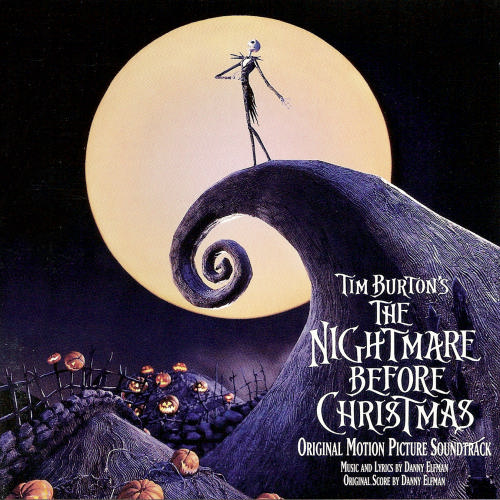
Of course, Elfman's best-known work is his numerous collaborations with director Burton. To date, nearly all of Burton's films feature Elfman's music, including Pee-Wee's Big Adventure, Beetlejuice, Batman, Edward Scissorhands, Sleepy Hollow, Charlie and the Chocolate Factory, Alice in Wonderland, and -- my favorite -- the songs and score for the animated musical The Nightmare Before Christmas (for which Elfman also sang many of the songs). Elfman's punchy, catchy, slightly-offbeat melodies are perfect for Burton's weird and wild filmmaking, and it's hard to imagine Burton's movies without Elfman's music behind them.
Born in Texas in 1953, Elfman spent much of his childhood in L.A. but eventually moved to France, where he became a member of a theater group. He next spent some time in Africa, but came down with malaria and had to return to the states. At which point his brother, who had just completed a film called The Forbidden Zone, asked Danny to create the soundtrack. He put together a group of musicians for the job, and after the project was over, the group remained together as the band Oingo Boingo. One of the band's biggest fans was a young Tim Burton -- the rest is history.
Listen to a clip of Elfman singing from The Nightmare Before Christmas
-- Jerry Goldsmith

Any Trekkie is rather honor-bound to be a Jerry Goldsmith fan. Goldsmith scored the music for five of the Star Trek movies -- including the original, Star Trek: The Motion Picture. (The new theme Goldsmith came up with for The Motion Picture was so well-loved by show-creator Gene Roddenberry that it would be reused as the series theme song for Star Trek: The Next Generation.)
To me, many of Goldsmith's scores have a sweeping, epic, almost operatic quality (which makes him quite a fitting choice for a Star Trek composer!). One of my personal favorites is his score for First Knight, the 1995 movie starring Sean Connery as King Arthur. The film had its flaws, but the soundtrack was not one of them: it's rich and fresh-sounding themes make the music of "Camelot" come alive.
Jerry Goldsmith was born in Los Angles, California, in 1929. He first started his career as a clerk at CBS, but quickly moved on to work as a composer, first for radio, than television shows, then TV films and mini-series. His first film score came in 1957, for Black Patch -- and he went on to score over 180 films.
In addition to his work for Star Trek, he was influential in other areas of sci-fi as well, scoring such films as Planet of the Apes, Alien, and the Twilight Zone movie. But his work went well beyond the arena of sci-fi, and the films he scored included Patton, Chinatown, Under Fire, Total Recall, Medicine Man, Basic Instinct, Mulan, and The Omen -- the latter of which earned him an Academy Award. He passed away in 2004, at the age of 75.
Listen to the theme song from Star Trek: The Next Generation
-- Hans Zimmer

I wonder, sometimes, if Zimmer would still be my all-time favorite score composer if he hadn't happened to score several of my favorite films. Zimmer is behind the music for the Pirates of the Caribbean, Dark Knight, and Guy Ritchie Sherlock Holmes films -- the three movie franchises I happen to love best.
You don't have to be a fan of the films to appreciate his music, however. Nowhere is this more evident than in At World's End, the third film in the Pirates series. While many fans had a strong dislike of the movie (though I wasn't one of them!), the score was almost universally praised for its emotion, scope, and sweeping themes. Time after time, Zimmer creates scores that are as vast and varied as the movies he writes them for. Best of all, his music is catchy -- filled with thematic melodies that will stick with you long after the credits have finished rolling.
Zimmer was born in 1957 in Frankfurt, Germany. By age three, he had begun playing the piano; at six, he'd decided to become a composer. He moved to England in 1971, and started his music career writing commercial jingles. His first score was for the 1982 film Moonlighting, and his works include the music for Rain Man, Thelma and Louise, A League of Their Own, The Preacher's Wife, Gladiator, Pearl Harbor, Mission: Impossible 2, Hannibal, The Da Vinci Code, and countless others.
Listen to a clip from the score for Pirates of the Caribbean: At World's End
-- John Williams

Star Wars. Richard Donner's Superman. E.T. The Extra-Terrestrial. Indiana Jones. Jaws. Close Encounters of the Third Kind. Jurassic Park. Harry Potter. It's easier to name the iconic musical themes that Williams hasn't written than to remember all the ones he has.
John Williams is responsible for creating most of the best-known, and most-loved, movie themes of the last thirty-odd years. The majestic looming of Darth Vader's Empire "march," the heroic fanfare of Superman's theme, the ominous two notes of the approaching shark in Jaws or the sweet five-note greeting of Close Encounters -- they're probably familiar to you even if you've never seen the film in question. His themes pop with mood and character, creating atmospheres of emotion unparalleled in film scoring.
Born in 1932, Williams is a New York City native. He worked as a jazz pianist in night clubs and Hollywood film studios, before he was contracted in the late 1950s by Revue Studios to write themes for television. His first film score was for the 1959 picture Daddy-O. Since then, he's written the scores for over a hundred movies, and has won Oscars, Grammys, Emmys, and Golden Globes.
Listen to a clip of the Star Wars theme


