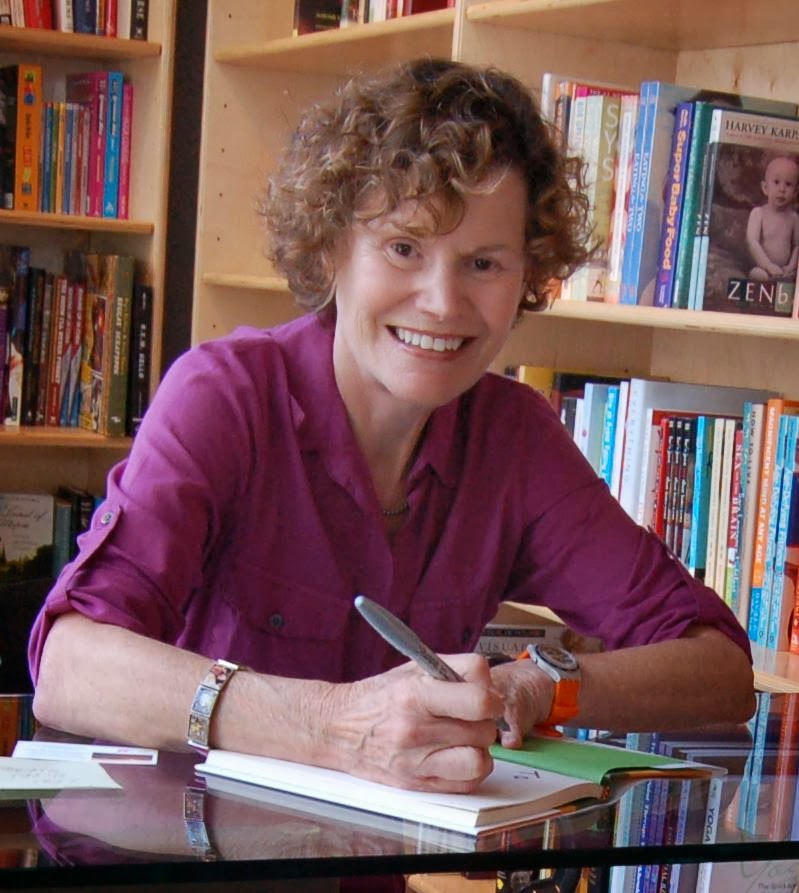
Showing posts with label authors. Show all posts

Friday, March 27, 2015

4 Story Endings That Are Better Than The Story


With the final film in Peter Jackson's Hobbit trilogy just out on DVD -- and the recent celebration of Tolkien Reading Day -- it got us thinking about story endings. Finding the perfect ending to a story can be a hard nut to crack, especially as many people would happily debate just what it is, exactly, that constitutes a "perfect ending" to their favorite shows and series.

Still, when a story wraps up on exactly the right note, it's a moment of satisfaction for the book-lover or film buff that has few equals. Read on to see four of our favorite, most powerful endings.

(Minor spoilers ahead.)


-- Fight Club (the film)

"Advertising has us chasing cars and clothes, working jobs we hate 
so we can buy stuff we don't need to impress people we don't like."

When Fight Club was first released, I went out of my way to avoid seeing it. A movie about a bunch of guys beating each other up didn't sound like my type of flick, to say the least. But then I was assigned the film as part of a college class syllabus, and I found myself stuck with watching Fight Club whether I wanted to or not.

There wasn't much to recommend it to my sensibilities, either, as I watched the Narrator (our unnamed main character) have his typical, materialistic, button-down life interrupted by Tyler Durden, a nihilistic anarchist who starts up underground "fight clubs" as a way to connect men back to real meanings in their lives. Of course, when you're convinced that there is no meaning, such a plan is bound to be twisted, and the Narrator is caught up in a plan of increasingly horrible and dangerous consequences.

That is, until the story's end, when we discover who Tyler Durden really is -- and what our Narrator can do to defeat him. With Tyler's message ultimately rejected and destroyed, our Narrator is free to live a new life with his gal-pal Marla -- "new life" being rather more literal than normal. Tyler's true identity was a sucker-punch of an ending that I never saw coming, and it gave me an appreciation for a film I thought I'd never even watch.

Request Fight Club from the Catalog


-- Star Trek: The Next Generation (the series)

"That is the exploration that awaits you. Not mapping stars and 
studying nebulae, but charting the unknown possibilities of existence."

The last two seasons of Star Trek: The Next Generation rarely reached the heights of excellent storytelling as seen in earlier episodes. But then came "All Good Things …," the two-parter series finale, in which Captain Picard is ordered to take the Enterprise to investigate an unusual spacial anomaly. Unfortunately, his orders are complicated when he abruptly finds himself time-jumping six years into the past (when the Enterprise was just about to undertake its first voyage) -- and some 25 years in the future, when he's retired and his crew has gone their separate ways. Splintered between three timelines, things look even worse for Picard with the return of Q, an all-powerful alien adversary who delights in picking on Picard whenever possible.

But this time, Q's motives seem to be about more than making things entertainingly difficult. In fact, Q is insisting that Picard is on the verge of making a decision that will wipe out all of humanity -- leaving Picard struggling to solve the puzzle across three different timelines before it's too late. What makes this episode so incredible, for me, is that the solution is unlocked for Picard in the same instant it's unlocked for the audience -- and it's a mind-blowing answer that could only work within the limitless bounds of the sci-fi genre.

It's worth mentioning that I'm not entirely alone in my assessment as to the power of this story. The two-parter earned the 1995 Hugo Award (given annually for the best science fiction and fantasy works and achievements of the previous year) for Best Dramatic Presentation.

Request Season 7 of Star Trek: The Next Generation from the Catalog


-- The Graduate (the film)


"One word: plastics."
"How exactly do you mean 'plastics,' sir?"


"Mrs. Robinson, are you trying to seduce me?"  It's the most famous line of the classic 1967 film, but The Graduate is about so much more than a recent college grad falling under the spell of an older woman. Benjamin Braddock has spent the last four years slaving away to earn his college degree, but now that he's got it, he's at a loss to find his next step. Utterly confused as to what he ought to try next or what he wants to do with his life, he drifts without purpose -- ultimately finding himself in the arms of Mrs. Robinson, the wife of his father's law partner.

As Benjamin continues to drift listlessly, his parents pressure him to ask out Elaine, the Robinsons' daughter. Ben does what he can to get out of it, but eventually finds himself all but forced to take Elaine out for the evening. Initially determined to be as terrible to her as possible (and, therefore, end any chances of a second date), Ben slowly begins to realize he actually likes her. Here, at last, is a person with whom he can be wholly himself.

Elaine feels the same -- at least until she finds out that Ben has been romantically involved with her own mother. Horrified, Elaine dumps Ben immediately, leaving Ben determined to reunite with Elaine -- a future with her being the only future he can see for himself.

The last third of the movie strikes many fans as romantic (or stalker-lite, depending on your perspective), as Ben tracks down Elaine before he loses her forever. But while the film has a nominally happy ending, the last shot suggests that these new adults are still as uncertain about their future as ever -- which is precisely the feeling that most new graduates can relate to best.

Request The Graduate from the Catalog


-- Secret Window, Secret Garden (the book)

"You know, the only thing that matters is the ending. 
It's the most important part of the story, the ending."

When writer Mort Rainey retreats to his summer home on Tashmore Lake, he's just trying to get a little peace of mind (and some fresh writing inspiration) in the aftermath of a messy divorce. So when John Shooter shows up on Mort's doorstep and accuses him of plagiarizing one of Shooter's stories, Mort finds himself with one too many problems to handle.

At least the fix to Shooter's accusation seems easy enough. All Mort has to do is prove he committed no such plagiarism. But when Shooter's insanity starts escalating, the stakes grow increasingly personal -- and Mort suddenly discovers there's no easy way out after all. Especially when Mort discovers that Shooter is not at all who he claimed to be.

I discovered this story on audiobook, and listened to the rip-roaring, nail-biting ending while driving home alone at night in the middle of a deserted country road. Rarely have I had a more terrifying -- or pleasing -- horror story experience. Don't miss it!

Request Secret Window, Secret Garden from the Catalog


-- Post by Ms. B 

Thursday, March 19, 2015

A TOAST TO SIR TERRY


British fantasy author Sir Terry Pratchett passed away last week at the age of 66. He was best known and loved for his Discworld series, which started life as a satirical spoof of the fantasy genre but went on to become a work of rich worldbuilding and unique storytelling in its own right. Consisting of over 40 books, the novels were clever, captivating, fresh, poignant -- and always, always funny.

As a massive fantasy fan, the Discworld books were breaths of fresh air to me in my high school and college days. They were fantasy novels that had something new, fascinating, and hilarious to say. It's been years since I've picked up a Discworld novel, but I still remember my fondness for the world and characters that Sir Terry created.

Here are a few of my favorites:


- The Color of Magic

Pratchett fans will often recommend that newcomers not pick up The Color of Magic, the first book in the Discworld series. Indeed, the novel has a much different flavor from future installments in the series, serving as more of a straight-up satire of the fantasy genre than a solid, standalone fantasy tale. Still, if, like me, you're well-versed in the tropes of epic fantasy, this is the satire for you.


- Pyramids


By this, the seventh novel in Pratchett's series, the Discworld had become a unique fantasy realm in its own right. Pratchett still had fun shaking up his stories by drawing on a variety of tropes and influences, however, and here we get a story heavily influenced by Ancient Egyptian culture (and, to a lesser extent, the fairy tales of the Arabian Nights). Teppic is the young prince of Djelibeybi (sound it out, you Doctor Who fans) who has spent the last few years being educated … by the Assassins Guild. When he returns home to reclaim his throne, complications, as can be expected, ensue -- particularly involving the local pyramids, which are magically constructed to control the flow of Time itself.


- Maskerade

This eighteenth entry in the series features the Witches -- Granny Weatherwax and Nanny Ogg -- and newcomer Agnes Nitt, who they hope to make their coven's new protege. But Agnes is off in the town of Lancre for a job at the local Opera House, and promptly finds herself in the middle of a story not so unlike The Phantom of the Opera ... (This one is extra-delightful if you're familiar with that musical; watch especially for Pratchett's take on Christine, who ends all of her sentences with double exclamation points.)


- Monstrous Regiment

Pratchett excelled in writing complex, relatable female characters. Here we're introduced to Polly Perks, who disguises herself as a man and enlists as a soldier to track down her brother (without him, she'll lose all claim on the family business). Luckily for Polly, she's fully accepted by her fellow soldiers -- but it turns out she's not the only one with a secret to hide.


- The Last Hero: A Discworld Fable


Lavishly, beautifully illustrated by Paul Kidby, this Discworld novella stars my favorite character of the series. Rincewind is a wizard (well, actually a "WIZZARD," if his hat is anything to go by). He only knows one spell, and seems to spend the majority of his time running away from all the various people, things, and circumstances that are constantly conspiring to kill him. Reluctantly teaming up with Leonard of Quirm and Captain Carrot Ironfoundersson, Rincewind finds himself on a mission to stop a hoard of elderly barbarians from killing the gods themselves.


- Good Omens

The Apocalypse. Four Horsemen on motorcycles. A misplaced Antichrist (who is kind of fond of the human race). A book of prophecy. An angel and a demon who actually get along. All co-written with Neil Gaiman. It's not Discworld, but it's my favorite Pratchett novel all the same. Don't miss it.


- Interesting Times

… well. Maybe Good Omens is my second-favorite Pratchett read. This story probably takes the true top spot, as we follow Rincewind the Wizzard as he encounters Cohen the Barbarian, meets up with an old tourist friend, and gets involved in a rebellion against an empire being controlled by a villainous Grand Vizier (aren't they always villainous?). He's only on his unlikely mission because he's determined to earn back his title as a right and proper Wizard -- but with Fate and Luck literally playing a game for the rebellion's outcome, Rincewind's got his work cut out for him.

There is a curse. They say:
"May You Live In Interesting Times."


Browse the works of Terry Pratchett from the Catalog

- ARTICLE: Terry Pratchett's Discworld Might Be the Highest Form of Literature on the Planet

- ARTICLE: Neil Gaiman on Terry Pratchett

- ARTICLE: 50 Terry Pratchett quotes


-- Post by Ms. B 

Tuesday, December 9, 2014

Honorable Mentions


Charles Dickens is rightly remembered for such beloved classics as Great Expectations and Oliver Twist -- but his most famous work remains A Christmas Carol. First published on December 17, 1843, the story tells the tale of the miserly Ebenezer Scrooge, and the three Christmas ghosts who appear throughout Christmas Eve night to warm his heart -- and save his soul. It's been adapted dozens of time for stage and screen, and has become an undeniable staple of the holiday season.

But did you know that A Christmas Carol wasn't Dickens's only ghost story?  Dickens actually wrote a variety of stories featuring ghosts -- some of which, like The Signal-Man, could be considered outright horror thrillers. (The title character of The Signal-Man works on the railway, and is haunted by a specter who appears before him every time a terrible event is to occur.)

Dickens is not the only author whose own wild success actually overshadowed some of his lesser-known efforts. Here are five more authors whose littler-known works are still undeniably worthwhile:


~ Louisa May Alcott's Thrillers


She's best remembered for writing titles that might now be considered part of the "young adult" genre -- classics like Little Women and Eight Cousins. But Louisa May Alcott wrote several stories for older audiences, usually under the pen name "A. M. Barnard" -- and many of those works were not only thrillers, but stories that dealt with radical issues of nineteenth-century sexism and the constraints of society and culture.

Her most critically-acclaimed work is, arguably, the thriller novella Behind a Mask. The story details the life of Jean Muir, a character with a shady past (she was formerly an actress, a considerably more scandalous profession in the nineteenth century) who has reached her thirtieth birthday still a spinster. And then she finds one last chance to fulfill society's expectations of her: she takes the job of governess in a house with two unmarried sons and one unmarried uncle. She means to adopt the mask of a "little woman" herself -- appearing the perfect example of a polite, respectable young lady (she wins her place as governess with a feigned fainting spell in front of the family) until she ensnares a husband. But Jean's motives are far more clever, and downright manipulative, than what you'd see from the March sisters -- though this may not stop you from rooting for her!

Request Behind a Mask from the Catalog


~ Edgar Allan Poe's Detective Stories


Sherlock Holmes is the name we remember, but C. Ausguste Dupin got there first. While Conan Doyle drew on several inspirations for his Sherlock Holmes character (including his med-school professor Dr. Joseph Bell), he was always quick to praise Edgar Allan Poe for his detective stories that paved the way for Sherlock Holmes. ("Where was the detective story," Conan Doyle once asked, "until Poe breathed the breath of life into it?")

Poe is remembered as the master of horror, but he actually wrote in a wide variety of genres, including science fiction and detective stories. In the latter category, he produced three short stories: Murders in the Rue Morgue, The Mystery of Marie Roget, and my personal favorite, The Purloined Letter. The stories star Dupin, an amateur detective (although the word "detective" had not yet been invented) who assisted the police in a trio of bizarre investigations. He's accompanied in his adventures by our unnamed narrator, who serves as Dupin's closest friend and our window into Dupin's world.

Request the Dupin stories from the Catalog


~ Conan Doyle's Historical Fiction


Most Sherlock Holmes fans already know about Arthur Conan Doyle's love-hate relationship with his most famous fictional creation. While Conan Doyle ultimately seemed to be fond enough of his consulting detective (and also loved writing about the adventures of Professor Challenger in such tales as The Lost World), he always considered his best and most important works to be his historical fiction.

Such historical works include extensively-researched novels like The White Company and Sir Nigel, both set during the Hundred Years' War between the royal houses of England and France. There was also Micah Clarke, a coming-of-age story set in seventeenth-century England that details the religious and political tension of the time; and a series of comical short stories about Brigadier Gerard, a soldier in the French Army during the Napoleonic Wars, who Conan Doyle used to comment on the stereotypes and prejudices that the British and French had for one another.

Request The White Company from the Catalog

Request Sir Nigel from the Catalog

Request Micah Clarke from the Catalog

Request the Brigadier Gerard stories from the Catalog


~ Agatha Christie's Love Stories


Agatha Christie remains the best-selling novelist of all time, beloved for her classic mysteries like And Then There Were None and Murder on the Orient Express, as well as such characters as Hercule Poirot and Miss Marple. But while she has come to be affectionately known as "the Queen of Crime" due to her incredible skills in the mystery genre, she also wrote half a dozen novels of a different sort entirely.

Using the pen name "Mary Westmacott," Christie wrote a series of romance and family stories, referring to them as "bitter-sweet stories about love." The books enjoyed modest success -- much to Christie's delight, as the novels succeeded under their own merits and not due to her name being on the cover (her identity as Westmacott would remain hidden for nearly two decades). She wrote the Westmacott books throughout her life, telling stories that focused not only on romance, but on family relationships between parents and children or between siblings. The results were among the works she was most proud of.

Read an essay about "Mary Westmacott" written by Rosalind Hicks, Christie's daughter

Request Westmacott books from the Catalog


~ Michael Crichton's Medical Thrillers


Before he was a best-selling author of such novels as The Andromeda Strain and Jurassic Park, Michael Crichton was a med student. But while he was earning his MD from Harvard Medical School, Crichton had his first publishing success, writing under the pen names "Jeffery Hudson" and "John Lange."

He published ten mystery thrillers that sold well enough to help pay his way through med school -- no mean feat, as any pressed-for-time med student could tell you. While Crichton viewed them mostly as pulpy entertainment ("I write them fast and the reader reads them fast and I get things off my back," he explained in a 1969 interview), they showcased his skill at engaging characters and tightly-plotted storylines, not to mention a love of research and accuracy. Though Crichton successfully graduated with his MD, it's not surprising to know he turned to writing full-time -- always incorporating his love of science into his stories.

Read more about Michael Crichton's "med school" thrillers

Request A Case of Need from the Catalog


-- Post by Ms. B 

Tuesday, November 11, 2014

Eight Writing Tips from YALLFest 2014


This past weekend saw the fourth annual Charleston Young Adult Book Festival -- or YALLFest, as it's come to be known. Sponsored by the Blue Bicycle Books shop of Charleston, South Carolina, the event was a two-day spectacular of lectures and panels from sixty young adult book authors.

This Teen Services Librarian was lucky enough to attend the festivities. It was a great chance to delve into the latest teen reading trends and get a bit of an insider's scoop on up-and-coming projects. It was also a marvelous opportunity to hear all about the process of what each author puts into their writing -- how they find their ideas, portray their characters, and tell their stories to their audiences.

So read on for eight writing tips from the authors themselves. (And if you'd like to give their books a try, just click on their names for a full list of their titles in the Catalog!)


1. Don't write what you know -- write what you like. Don't worry about what genre it should be classified as, or what you feel you ought to be writing about. Just tell the story you want to tell. You'll figure it out:

"I know [my latest book, Atlantia] is science fiction because I did so much dang research on underwater cities and underwater welding ... that's not even in the final book." -- Ally Condie

"I just threw in everything I like [to read about]!" -- Alexandra Bracken


2. Let your characters do the misdirection for you. Trying to figure out how to write a juicier mystery, or add more plot twists to your thriller?  That's what untrustworthy characters are for:

"It's about misinformation. There's a ton of information [the characters] can access [in their technologically-advanced world], but a lot of it is lies. You can circumvent the power of the internet with misdirection." -- Kami Garcia

"Have your characters lie. It makes the scenes more interesting. Have them leave something out, and it makes the plot more interesting." -- Scott Westerfeld


3. Vary your characters. A diversity of characters makes for a more interesting story -- and that means diversity both of personality and of background:

"That 'too' is what makes a character. If we can't make a character too rude or too cold or too difficult, we'll have boring books. ... Make the character 'relatable' and 'believable' over 'likable.'" -- Leigh Bardugo

"There's not just one type of kick-butt heroine. It's just [female characters] with agency. Also, have more than one [female character] -- then you'll get different kinds of characters!" -- Leigh Bardugo


4. Write strong characters. And remember that "strong" doesn't just mean physically tough and unfailingly infallible:

"A kick-butt character is one who may not start with power, but learns to find strength." -- Alexandra Bracken

"Resilience: a character may temporarily fall apart, but then they put themselves back together and fix the problem." -- Sarah Fine


5. Don't let fame go to your head. If you make it to the big time, remember to stay humble:

"It was very demoralizing to do the red carpet next to [Bones actress] Emily Deschanel, who is thirty years younger and like six feet taller." -- Kathy Reichs

"I write with my mommy, I"m 36 years old. I'm the coolest guy in the room!" -- Brendan Reichs


6. Don't worry about the movie. For writers and readers, it's important not to worry about the film version too much:

"Fans think they want it just like the book, but that doesn't work." -- Gayle Forman

"The book will always be there for you to experience. I look at the film as a way to experience the book again in a new way." -- James Dashner


7. Let yourself write how you write. Everyone has a different method that works for them:

"I'm a Seat-of-the-Panters; I write by the seat of my pants. About halfway to two-thirds of the way through, I have a panic attack [trying to figure out what happens next]. Then I stop and outline the rest of the way backwards." -- Scott Westerfeld

"I do a very detailed outline during revision." -- Alexandra Bracken

"I cannot outline. I always fail. For [one book], I wrote 17 outlines. Number 16 was called Help Me, Jesus. Number 17 was called Jesus Can't Help You." -- Libba Bray


8. Don't preach, just tell. 

"I think our job is to pose questions. Part of the challenge of the reader is to make up their own minds." -- Leigh Bardugo


Hollywood Squares -- Author Edition


-- Post by Ms. B

Friday, February 14, 2014

The Books of Blume


On February 12, author Judy Blume celebrated her 76th birthday. Known primarily for such young adult novels as Iggie's House; Deenie; Then Again, Maybe I Won't; and Forever, Blume has written novels for children, tweens, and teenagers -- and used them to address a variety of real-life issues.

Tackling such topics as puberty, religion, sexuality, racism, bullying, and family dynamics, Blume's books have frequently found themselves on the list of challenged titles in school and public libraries around the country. But it's also her realism and honesty about the trials and triumphs of growing up that's made her a best-selling author for over forty years.

So in honor of her birthday, I'm highlighting five of my personal favorite Blume reads. Enjoy!


Tales of a Fourth-Grade Nothing


Blume's Fudge books have long been among her most popular titles. The series stars nine-year-old Peter Warren Hatcher, who's got one little problem in life: his two-year-old brother, Farley, aka Fudge. (Hey, if your name was "Farley," you might go by "Fudge," too.)

Tales of a Fourth-Grade Nothing kicks off the four-book series with tales of Fudge destroying homework, making a flying attempt from the playground jungle gym, going on a hunger strike, and mimicking Peter's every move. But when Peter's pet turtle goes missing (and you'll never guess where), it takes the whole family to make things right. 


-- Get Tales of a Fourth-Grade Nothing from the Catalog

-- Get the audiobook on CD or cassette Catalog


Are You There, God?  It's Me, Margaret


The title's been famous enough to be referenced by episode titles of South Park and The Venture Bros., and has been satirized by authors Chuck Palahniuk and Chelsea Handler. Blume's book takes its title from the main character, who uses the phrase to kick off her conversations with God.

With a Christian mother and a Jewish father, sixth-grader Margaret is trying to navigate both her own spiritual beliefs, as well as the trials and tribulations of puberty. From physical changes to emotional ones, the book takes an honest look at the process of growing up -- including learning how to voice your own opinions.


-- Get Are You There, God?  It's Me, Margaret from the Catalog

-- Get the audiobook on CD or cassette from the Catalog


Blubber


Fifth-grader Linda is the most picked-upon member of Mrs. Minish's class, and when she gives a science report on whales, her nickname is sealed. Everyone bullies her -- well, maybe not Jill, but Jill's not much worried about sticking up for Linda, either.

When Jill and her best friend play a prank on a cranky neighbor and end up caught, everyone's convinced it's "Blubber" who tattled on Jill. The whole class promptly puts Linda on trial for her "crime," leaving Jill to make some hard decisions about whose side she should really be on. With Jill as our narrator, this book becomes not just about bullies and their victims, but also about the problem with standing on the sidelines -- and deciding whether or not to stand up for someone.


-- Get Blubber from the Catalog

-- Get the audiobook on CD or cassette from the Catalog


It's Not the End of the World


Published in 1972 -- when divorce was not yet legal in all states -- sixth-grader Karen has decided she's never going to get married. After all, everybody knows that marriage makes you miserable: just look at her parents for the proof. But despite their constant fighting, their announcement of an impending divorce still shocks Karen to her core.

Karen tries everything she can think of to keep her parents together, from faking an illness to sending anniversary cards. Her dad moves out. Her older brother (briefly) runs away. Her mother announces they're moving. Karen can't stop the changes -- but she can, at least, find a way to realize that things will eventually get better. Though the divorce laws are different now, this book remains timeless.


-- Get It's Not the End of the World from the Catalog

-- Get the audiobook on CD from the Catalog


Otherwise Known as Sheila the Great


This light, humorous read shares the same sense of fun as the Fudge books -- which makes sense, since Sheila is Fudge's older cousin. While Fudge (and Peter) view Sheila as a pest, here we meet a character who uses the appearance of cocky self-confidence to mask her various fears: she's terrified of spiders, dogs, and swimming, to name but a few. 

Despite a summer vacation that involves all three of her worst phobias, Sheila's convinced she's got the world fooled ... until she and her friends set to work making slambooks for each other. Realizing her friends have a different opinion of her than she realized, Sheila's eventually inspired to start chipping away at her fears -- with surprising results.


-- Get Otherwise Known as Sheila the Great from the Catalog

-- Get the audiobook on CD or cassette from the Catalog


-- Post by Ms. B

Tuesday, November 26, 2013

Astonish the Rest


Still remembered as one of our greatest humorists, Mark Twain is among the best-known and best-loved authors in American history. Born on November 30, 1835, he was named Samuel Clemens -- "Mark Twain" was a pen name he'd permanently choose after first trying out such names as "Thomas Jefferson Snodgrass" and "Josh."

Best known for such classics as The Adventures of Tom Sawyer and The Adventures of Huckleberry Finn, Twain's writings are celebrated to this day for their wit, fun, and forthright wisdom. So let's give thanks to one of our favorite authors by taking a closer look at the life and times of Mark Twain:


- Samuel Clemens chose his pen name based on the phrase used by Mississippi River steamboat crews to announce that the water was at least 12 feet deep -- and, therefore, safe enough to travel.

- He encouraged his younger brother, Henry, to also become a steamboat pilot. Henry was eventually killed when a boiler on his boat exploded -- an event which Twain claimed to have seen in a dream before it happened.

- While growing up, Twain's family once owned 19 cats at the same time. (Twain was prone to finding colorful names for his cats, including Sin, Sour Mash, and Famine and Pestilence.)

- Though there were some drawbacks to using it -- it only typed in capital letters, and you had to use a foot pedal to advance to the next line -- Twain purchased his first typewriter in 1874 for $125.

- A mark of his fame: he once received a letter from a fan, who wrote down for the address: "Mark Twain, God Knows Where." (That was enough for the postal service!)


- The author put The Adventures of Huckleberry Finn on hold while he invented and patented his very own memory game. (See it here!)

- Twain asked that all his unfinished manuscripts be burned when he died. (No chance of someone coming along to finish his unfinished stories!)  One unpublished work remained, however: his autobiography, mostly written by dictation, which he left with strict instructions that it was not to be published until a century after he died. His request was (mostly) honored -- and the first two (of three) volumes were published in 2010 and 2013.

- Halley's Comet (named after English astronomer Edmond Halley) passes through Earth's vicinity once every 75 years, give or take. When Twain was born, the Comet was visible in the night sky, a fact which Twain was quite proud of:

"I came in with Halley's Comet in 1835. It is coming again next year, and I expect to go out with it. ... The Almighty has said, no doubt: 'Now here are these two unaccountable freaks; they came in together, they must go out together.' Oh, I am looking forward to that." 

Twain proved right; when he passed away in 1910, the Comet had just emerged from the far side of the Sun.


Some words of wisdom from Twain:

"It is by the goodness of God that in our country we have those three unspeakably precious things: freedom of speech, freedom of conscience, and the prudence never to practice either of them."

"There are two times in a man's life when he should not speculate: when he can't afford it, and when he can."

"The human race has one really effective weapon, and that is laughter."

"The proper office of a friend is to side with you when you are in the wrong. Nearly anybody will side with you when you are in the right."

"A sin takes on a new and real terror when there seems a chance that it is going to be found out."

"All you need is ignorance and confidence; then success is sure."

"Always do right. That will gratify some of the people, and astonish the rest."

"When in doubt, tell the truth."


On the web:

- The Official Web Site of Mark Twain

- Mark Twain Biography - from Biography.com

- Mark Twain House and Museum - the official site for the Connecticut museum.

- "The Eternal, Charming Chatter of the "'Autobiography of Mark Twain'" - from the New Yorker.

- "Fenimore Cooper's Literary Offenses" - In my favorite Twain piece, the author reviews The Last of the Mohicans and the other books in James Fenimore Cooper's Leatherstocking series.


At the Library:

- From the Catalog - Twain's books and audiobooks, as well as filmed adaptations of his works, available through the Library Catalog.

- The Autobiography of Mark Twain - Volumes 1 and 2 now available from the Library Catalog.


-- Post by Ms. B

Tuesday, November 12, 2013

One Hit Wonders


There are not too many people who have not seen the film Gone With the Wind or even read the novel of the same name by Margaret Mitchell. But I'm not sure how many people know that Mitchell never wrote another novel in her life. She was a first time novelist with the publication of GWTW in 1936. The book was met with mostly positive reviews and record setting sales.

Mitchell was overwhelmed by the success and the intrusion of her and her husband's privacy. That success led to Mitchell's constant involvement in copyright issues, translations and piracy. Also, her and her husband's ill health meant she didn't have time to write another novel. And in 1949 Mitchell was struck by a car on her way to see a movie. She never regained consciousness and died five days later.

More than 30 million copies have been sold of Gone With The Wind in the more than 75 years since the book was first published. Not too many books can claim that stat!

Amazingly, there are many other very successful authors who never wrote more than one novel in their lifetime. Here are few of them:


Harper Lee -- The infamously reclusive author of To Kill A Mockingbird has not spoken about her only novel or why she has never written another. It's been reported that she was working on a second novel in the 1960s, but it was never publsihed.

Emily Bronte -- Wuthering Heights would be Bronte's only novel since she died in 1848, a year after its publication. The Bronte siblings, and fellow authors, (Charlotte, Anne, Emily and brother Branwell) lived a very sheltered life in Northern England, which led to their rich imaginations.

J.D. Salinger -- Another reclusive author, Salinger wrote many short stories and novellas. But after the publication of Catcher in the Rye, Salinger chose a life of anonymity over publishing any more of his writings.

Boris Pasternak -- After failing to find a publisher in the Soviet Union, Pasternak looked to the west to have his novel, Doctor Zhivago published in 1957. This caused quite a fury in his homeland. His health declined soon after and he passed away in 1960.

Anna Sewell -- One of the most beloved children books, Black Beauty, was the only novel written by Sewell. Not until she was in her late fifties did Sewell put her love of horses into this story which would be published only a short time before her death in 1878. It is still one of the most popular books of all time.


-- Post by Tracy

Tuesday, October 15, 2013

NYCC 2013


October. It's a month that means changing leaves, fall festivals, Halloween ... and New York Comic Con.

Since its inception in 2006, New York Comic Con has become the premiere event of the East Coast for all things Geek Culture. Featuring comic book artists and writers -- as well as actors, authors, directors, and animators -- NYCC allows fans of comics, science fiction, fantasy, and other genres to connect with the creators behind their favorite stories. (Not to mention featuring sneak peeks and new announcements about upcoming comic, film, and TV projects!) The event is held at the Jacob Javits Center, and the tickets sold out faster than ever this year; for the last two years, attendance has topped 100,000 people.

Guests this year included William Shatner, Patrick Stewart, Seth Green, Sylvester Stallone, David Duchovny and Gillian Anderson, Sigourney Weaver, actors from "Game of Thrones" and "The Walking Dead," comics legend Stan Lee, authors R.L. Stine and Lemony Snicket, and "Doctor Who" star John Barrowman. Opportunities to see the stars live and in person abounded (as they always do), with panels, autograph sessions, and photo ops spread throughout the weekend. (I waited in line to meet Barrowman, although the longest line for an autograph -- don't ask me why -- was one of the original Power Rangers. Go figure.)

I've been a faithful New York con-goer for years now (see last year's wrap-up here), and this October was no exception. This was an exceptionally crazy, crowded, fun year at NYCC, and I'm already excited for October 2014!  For those of you who weren't able to make it to the fun this year, here's my report from the front lines:

The con floor. Did I mention "crowded?"


Thursday evening featured panels specifically geared to kick off the con with some proper entertainment. The Comedy Mutant crew (featuring Janeane Garofalo, Brian Posehn, and other comedians) put on a two-hour comedy set on the Javits Center's main stage. Thursday also offered a sneak peek of the Exhibit Hall, giving Thursday con-goers a chance to browse and shop at the tables and booths in an atmosphere that was merely "moderately crowded" (since, by the weekend, the numbers would swell to "severely, impossibly crowded").

I spent Thursday evening at the Empire Stage, where special sneak peeks of upcoming fall television premieres were being screened. First on the list was the pilot episode of Almost Human. Set in the near future, the premise sees a snarky (and rather embittered) LAPD detective paired with an android partner. Half crime procedural, half sci-fi series, the pilot made for a fun, unique ride, and I'm already excited for the show to premiere this fall (Monday, November 4, 8 pm on FOX).


If you missed the panel, there were Almost Human posters plastered across the subway -- which were quite cool to see for a sci-fi fan


Speaking of television: astrophysicist Neil deGrasse Tyson was on hand to discuss his involvement with a new 13-episode series: "Cosmos: A Spacetime Odysessy," debuting Spring 2014 on FOX. It's something of a "sequel" to the iconic science series "Cosmos: A Personal Voyage," which was narrated by astronomer and author Carl Sagan and aired over thirty years ago on PBS. 

Tyson was there alongside executive producer/writer Ann Druyan (who oversaw the original "Cosmos") and executive producer/director Brannon Braga (who has worked on both the "Star Trek" franchise as well as "24"). The new series will explore the history of humanity's quest to discover the origins and mysteries of, well, the cosmos. 

Dr. Tyson will be hosting the new series, which he -- like his fellow panelists -- hopes will inspire people to be curious and persistent in their search for the truth. He sees curiosity as a natural trait: "A scientist is a kid who never grows up." Druyan spoke quite elegantly about her belief in the importance of the new series inspiring emotion as well as intellectual interest in their viewers: "To be human is to fully think and fully feel -- not one at the expense of the other."

Braga may have put it best while explaining his own hopes for the new "Cosmos." "It's the story of our place in the universe -- and how we came to find it."


From Tyson, on the casual weirdness of a comic con: "My fear is that aliens will come and land at Comic Con, and no one will notice!"


Cast and crew members from "The Walking Dead" were on hand again this year to show sneak peeks of the upcoming fourth season, which premiered on Sunday at 9 p.m. on AMC. (You can read more about the Walking Dead panel here.) Actors Gillian Anderson and David Duchovny were also in attendance to talk about "The X-Files," which celebrates its 20th anniversary this year. (Get the highlights of that panel here.)


This year marks Superman's 75th "anniversary" as a comic book character


My personal highlight of the con was William Shatner's panel, which took place on Sunday afternoon. The Star Trek and Boston Legal actor took to the stage by himself, talking a bit about his new album before fielding questions from the audience.

As a Trekkie, I'm predisposed to like William Shatner, who played Captain Kirk in the original Star Trek series nearly fifty years ago. ("It's hard to believe it's been almost fifty years since the show first aired," gushed one fan, prompting Shatner to reply, "You think it's hard for you to believe it ...") But Shatner was genuinely delightful, entertaining with stories from throughout his career: coming down with food poisoning the morning of his Broadway debut, or getting to sing a duet with Paul McCartney. There were a few stories about his Star Trek cast mates, including Leonard Nimoy, who played Spock. ("Leonard was particularly susceptible to practical jokes ...")

He also had some words of wisdom for budding actors -- or, indeed, anyone with artistic dreams: "You just do what you think is good, and hope it's what [the audience] thinks is good." He wrapped up the afternoon with thoughts on the appeal of science fiction and the excitement of scientific discovery, which seem to come out of the same place: curiosity. "It's hardwired into humans -- curiosity. It's the attempt to explain to ourselves the mystery that's out there."

It was a nice note on which to end the weekend's festivities. Here's to next year!


Iron Man is also a good note to end on.


-- Post by Ms. B