Monday, December 5, 2011

St. Nicholas (or is he Santa Claus?)


I love Santa Claus and I'm not ashamed to admit it! Over the years, I've been slowly collecting Santa Clauses of all types and sizes which always go on display at my house for Christmas. My collection includes Santas from many different nationalities and I'm intent on getting more!

But until I met my husband in 1998 I was not that aware that not every one who celebrates Christmas believes that Santa Claus brings their presents. In Germany, where my husband is from, the Christ Child brings presents for all of the good boys and girls on Christmas Eve.

So where does St. Nicholas fit into this?

St. Nicholas of Myra was born in 3rd century Turkey to wealthy parents, but was orphaned at a young age. He was a devout Christian who become Bishop of Myra. Tales of his benevolence and goodness, especially when it concerned children, spread throughout the area. The date of his death, December 6th, is now celebrated through out the world by the giving of gifts, following his example of generosity.

To find about more about the life of Saint Nicholas and how his life and the story of Santa Claus are related check out these titles:


And some books for the kids:


The Real Santa Claus by Marianna Mayer

The Gift From Saint Nicholas by Dorothea Lachner


And for even more information be sure to check out these sites:


Nicholas of Myra: The Story of Saint Nicholas (this is the official site for a film now in production)


-- Post by Tracy


Thursday, December 1, 2011

DragonLady


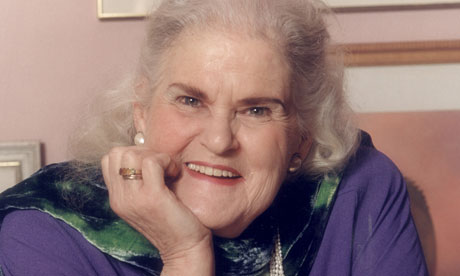
Before Christopher Paolini and Eragon, there was Anne McCaffrey and the dragonriders of Pern.

In 1967, Analog magazine published the novella Weyr Search. The novella would eventually serve as the basis for McCaffrey's first Pern book, Dragonflight -- kicking off a series that includes over 20 novels and two short story collections. Weyr Search tells the story of Lessa, a young woman living on the colonized planet of Pern, who is picked by the dragonriders to be a Candidate for the new queen dragon. If she's chosen (by the dragon, not the riders) to actually become a rider herself, she'll become the most powerful person on the planet, telepathically bonded to a queen dragon who is virtually unstoppable. And yet, it's a dangerous time to be the only queen rider on Pern, because something is returning to the skies ... something that only the dragonriders can stop ...


McCaffrey said that she came up with the idea for the Pern series by asking herself, "What if dragons were the good guys?" Before McCaffrey, the dragons in most fantasy and sci-fi series followed the model of J.R.R. Tolkien's Smaug, the dragon (and evil antagonist) of The Hobbit. McCaffrey was one of the first modern authors to imagine a world where dragons were the heroes instead of the villains. But it wasn't just dragons that benefited from the "good press" they received in McCaffrey's science fiction tales.

Weyr Search would give Anne McCaffrey the distinction of being the first woman to win either a Hugo or Nebula award (which are awards given to authors of science fiction and fantasy). She'd win both, in 1968, for the novella. (Author Kate Wilhelm also won a Nebula that year for her short story The Planners.) But in addition to presenting dragons in a positive light, McCaffrey also brought another rarity of the time to her sci-fi stories: strong female characters.


With characters like Ripley from the Alien films, Sarah Connor from Terminator, and Dana Scully from The X-Files, it's easy to forget that engaging, well-developed female characters are still a relatively new phenomenon in the fictional worlds of sci-fi. And in the late 60s, such characters appeared far less frequently. But in her stories of Pern, as well as in books like The Ship Who Sang and Crystal Singer, McCaffrey presented female characters that were strong, capable, flawed, changing, and -- above all -- human. Rightly known for her inventive story devices (read more about the "brainships" in The Ship Who Sang) and skill at worldbuilding (her world of crystal singing being almost as engaging as Pern), she's also beloved as a writer for her characters. In a time when few were writing about female characters as anything but shallow stereotypes, McCaffrey tried to write her female characters as real people -- and she succeeded.


When I was in high school, I was a big McCaffrey fan, and a huge Pern nut. Looking back on it now, it's not hard to see why McCaffrey's dragon stories appealed so much to me (and to millions of other fans; McCaffrey's books routinely topped the best-seller lists). Who wouldn't want a super-intelligent dragon as their best friend? There's always an element of cool escapism to sci-fi and fantasy, and just as readers of J.K. Rowling's Harry Potter series might imagine the fun of being a wizard, McCaffrey's intricately-detailed sci-fi worlds offer a similar window of imagination.

And yet, like all great sci-fi and fantasy, McCaffrey's stories go beyond mere escapism. Take away the unicorns and dragons, and you're left with intently human stories about characters who are struggling to overcome obstacles and help each other. McCaffrey's worlds are about escapism, but her characters  inspire her readers. To young female readers in particular, the Pern books provide characters to both relate to and admire, in a field where such characters were once severely lacking.

McCaffrey passed away last week at the age of 85, but Pern will continue on, both in the novels she wrote and in the Pern stories still being written by her son Todd McCaffrey. And her fans -- myself included -- will remain grateful for the wonderful worlds she took us to.


-- Post by Ms. B

Tuesday, November 22, 2011

Don't Know Much About History


American History


In time for Thanksgiving, here's a few of our favorite -- and somewhat unusual -- books about the history of our country ...


Dave Barry Slept Here: A Sort of History of the United States by Dave Barry.

"In the words of a very wise dead person, 'A nation that does not know its history is doomed to do poorly on the Scholastic Aptitude Test.'" So says Dave Barry, with the sort of wry wit that has made him a beloved humor writer for close to thirty years. While not nearly as historically accurate as another of his history-heavy books, Dave Barry Slept Here is an always-amusing journey through the history of our country ... or, at least, through the typical American history textbook.


The Wordy Shipmates by Sarah Vowell.

Speaking of humor, it doesn't get much more humorous than Sarah Vowell, a journalist who manages to write researched, accurate books about history while also keeping her sense of humor firmly intact. The Wordy Shipmates is one of my favorite Vowell reads, exploring as she does the Puritan roots of our nation by discussing the little-known rift between the Plymouth Puritans and the Massachusetts Bay Colony Puritans.


The Pirate Coast: Thomas Jefferson, the First Marines, and the Secret Mission of 1805 by Richard Zacks.

The promise of a pirate story might be enough to pique your interest. But Zack's book is also a little-known chapter from Thomas Jefferson's history: implementing America's first covert operation. The plan was to replace the Bashaw of Tripoli with the ruler's brother, in the hopes that the new Bashaw would be more sympathetic to our new nation. Jefferson would send disgraced diplomat William Eaton -- with eight Marines (and a few hundred mercenaries) -- to achieve the objective. The mission was impossible -- but the results, quite surprising.


Poisons of the Past: Molds, Epidemics, and History by Mary Kilbourne Matossian.

This one might be the most unusual of the lot, particularly for a listing of American history reads. And, indeed, the chapters in this book do not deal solely with American history. But there is a section in which Matossian makes an intriguing case for a scientific explanation for the Salem Witch Trials: mold. Ergot is a type of fungi that can grown on rye -- and, if ingested, can cause ergotism in humans. Symptoms of ergotism can include temporary blindness, burning sensations, visions, and suffering from "fits" -- all of which fit the pattern of those claiming to be under the thrall of witchcraft. Mastossian makes an intriguing and surprising case for one of the darker moments in our nation's early history.


John Adams by David McCullough.

Perhaps the most comprehensive biography on one of our most unusual Founding Fathers (and later president). There's also a miniseries starring Paul Giamatti and Laura Linney.


-- Post by Ms. B

Thursday, November 17, 2011

Give Thanks


It's easy to overlook Thanksgiving, nestled as it is between Halloween and the winter holidays. Most shops swap out the Halloween decorations for the Santas and snowmen without using the time in between to spread a bit of Thanksgiving cheer.

But as far as I'm concerned, Thanksgiving has always been worth a little attention. While not as flashy as the holidays that bookend it, the fourth Thursday in November has always been a time for family to me. And, let's be honest, a time for food. Lots and lots of food. (In particular, pie. My mother makes a mean pumpkin pie.)

As we prepare to give thanks for our family, friends -- and food, food, food -- check out some of these films to get you in the Thanksgiving mood. The mad dash of December will come soon enough (even sooner than usual this year), so take a moment to relax and enjoy a few of these Thanksgiving treats.

And have a happy holiday.


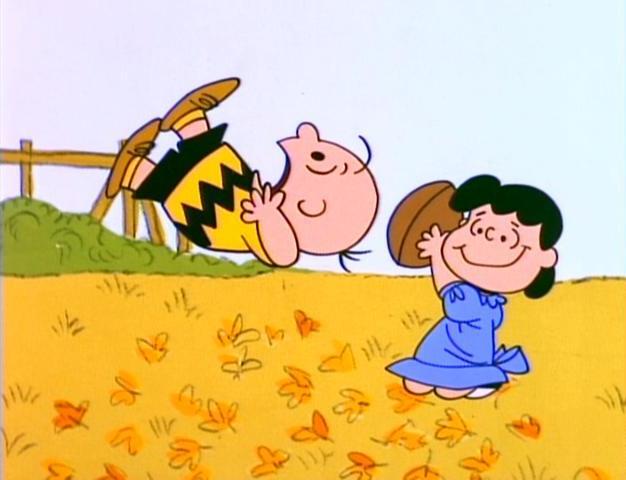
A Charlie Brown Thanksgiving

While the Peanuts' Christmas special gets more of the attention, this Thanksgiving special is a classic in its own right. There's food, family, friends -- and, of course, football.


Holiday Reunion

All Mitch Snider wants is a traditional Thanksgiving dinner with his entire family in attendance. Unfortunately, his long-lost (and completely nutty) relatives turn to be more than anybody bargained for.


Hannah and Her Sisters

A must-watch Thanksgiving movie for any Woody Allen fan.


An Old-Fashioned Thanksgiving

Based on the short story by Louisa May Alcott.


A film about the Native American man credited with bringing about the first Thanksgiving.


Home for the Holidays

Holly Hunter, Robert Downey, Jr., and Anne Bancroft star in a tale of grown children returning home to answer the age-old question: can you ever truly go home again?


Pieces of April

Opinions clash in this politically-minded family as they try to find some common ground during the holiday. Starring Katie Holmes.


American Son

A powerful film about a young man home on Thanksgiving holiday leave from the Marines -- before shipping off to serve in Iraq.


Dutch

Dutch Dooley offers to give his girlfriend's son a ride cross-country as they both travel home for Thanksgiving, figuring it's a chance to get to know the kid better. Easier said than done.


Planes, Trains and Automobiles

Steve Martin and John Candy star in this classic comedy about a man who just wants to get home in time for Thanksgiving dinner -- and the guy who won't stop getting in his way.


The House of Yes

Parker Posey and Freddie Prinze, Jr. star in this raunchy Thanksgiving comedy.


Son-in-Law

A too-cool college student spends the Thanksgiving holiday at a classmate's family farm. A fish-out-of-water comedy.


Nobody's Fool

A gruff grandfather gets a chance to bring his son and grandson back into his life during the Thanksgiving season. Starring Paul Newman.


Garfield's Thanksgiving

Thanksgiving is not the ideal time for anybody to go on a diet ... particularly not Garfield!


Miracle On 34th Street

Though traditionally a Christmas film, the action kicks off in the aftermath of Macy's Thanksgiving Day Parade.


-- Post by Ms. B

Tuesday, November 15, 2011

Dead & Loving It


This Friday marks the release of what is sure to be one of the most popular movies of the year: the fourth installment in the Twilight Saga, Breaking Dawn: Part 1. Taking a cue from the blockbuster Harry Potter series, the final novel in the Twilight series has been broken into two feature-length films, with Part 2 due out next year.

A young adult series that's become popular with readers of all ages, most know that the Twilight series tells the story of an ordinary high school girl who falls in love with a not-so-ordinary classmate -- a classmate who just so happens to be a vampire. There's also a pack of local werewolves, a band of evil vampires out for revenge, and even a scene or two of vampire baseball (see the first installment for more about that). But while Meyer's vampiric series is renowned in its own right for its devoted fanbase, it's also ushered in a fresh wave of vampire fiction, on the printed page as well as the screen. From Sookie Stackhouse's Bill and Eric (in the decidedly for-adults HBO series True Blood) to Mitchell, the vampire hero of the British television program Being Human, vampires are all the rage.

Edward Cullen -- the dark, handsome, and brooding vampiric hero of Meyer's Twilight series -- is on his way to becoming one of the iconic vampire characters of fiction. It makes him the latest in a long line of iconic vampire (or vampire-hunting) characters who have made their own (bite)marks on the genre of paranormal fantasy fiction for several centuries.

But before you buy your tickets for Friday's premiere, let's take a look at some of the characters Edward shares the spotlight with:


Buffy Summers: The character was the star of a somewhat ill-conceived movie before returning in proper form (and with a new actress) in her own television series (and, now, a comic book). Subverting the trope of the helpless high school cheerleader who gets eaten by the monster before the first commercial, Buffy is the Slayer -- the Chosen One of her generation whose destiny it is to stop vampires (and all other manner of supernatural creatures) throughout her seven onscreen seasons. Aided by her friends and her Watcher (the latter being one of the coolest librarians in fiction), Buffy kicks vampire butt to keep her new hometown of Sunnydale safe.


Lestat de Lioncourt: The vampiric main character of Anne Rice's Vampire Chronicles, Lestat first appears in the novel Interview With the Vampire (he'd later be portrayed by Tom Cruise in the film version). Born in the eighteenth century, known for his charism and defiance, Lestat is the quintessential vampire anti-hero -- making him popular with readers and movie-goers the world over.


Barnabas Collins: The late-60s gothic soap opera Dark Shadows did not start off as a supernatural show; ghosts and other paranormal elements were not introduced until the series had already been running for six months. The character of Barnabas Collins was brought in by producers as a last-ditch attempt to save the show from flagging ratings, and he proved to be the breakout character the series needed to stay alive. Posing as a long-lost relative from England, the 200-year-old vampire moves into the Collinwood estate -- though he slowly transforms from a threat to the Collins family into their protector. (Look for the Tim Burton/Johnny Depp Dark Shadows film coming out next year.


Dave of The Lost Boys: With a title referencing the "lost children" of J.M. Barrie's stories of Neverland, The Lost Boys features a teenage vampire gang, led by Kiefer Sutherland's character Dave. Intended to be a vampire version of The Goonies, the film was credited for its successful blend of horror and comedy ... with classic results.


Dracula: Arguably the character that started the modern vampire craze, Bram Stoker's title character first appeared in a 1897 novel. Partially inspired by Vlad the Impaler, Dracula has not only become a staple of popular culture (appearing in books, films, TV shows, stage, comics, and countless other incarnations), but has defined our standard idea of a vampire -- with bats, wooden stakes, garlic, and sunlight all a part of his vampiric mythology. Although he's been portrayed by more actors than any other character in the history of horror fiction, Bela Lugosi's version of the character from the 1931 film remains a recognized classic.


-- Post by Ms. B

Friday, November 11, 2011

Time And Relative Dimensions


On November 22, 1963, President Kennedy was assassinated in Dallas, and the world was changed forever. What if you could change it back? Stephen King’s newest novel, entitled 11/22/63, tells the story of Jake Epping, a thirty-five-year-old high school English teacher who is presented with the opportunity to alter history. Jake's friend Al, who runs the local diner, shares with Jake a secret: Al's restaurant contains a portal to the year 1958. So begins Jake's trip back in time -- to the world of Elvis, sock hops, big American cars ... and JFK. It's the world of troubled loner Lee Harvey Oswald, and of high school librarian Sadie Dunhill -- both of whom will have an impact on Jake's life in a way that transgresses all the ordinary rules of time.


King's novel is being touted as a fascinating look into America in the 50s and 60s, as well as being a thrilling page-turner with a great premise and fully-realized characters. It's also King's first real foray into that sub-genre of science fiction known as time travel, which got me thinking about time travel stories in general.

Since H.G. Wells arguably invented the genre with his classic story The Time Machine (see below for a link), time travel stories have flourished on the printed page as well as in movie theaters and on television screens. So while you're waiting for your reserved library copy of 11/22/63, check out these other great stories about traveling through time:


Doomsday Book by Connie Willis.

Here's a novel about someone presented with the chance not to alter the course of history -- but rather to study it. Kivrin will be traveling to the fourteenth century to observe one of the deadliest eras in human history: the Black Death sweeping through Europe. While on the surface, the assignment seems easy -- she'll just receive her modern-day inoculations and be on her way -- things get complicated when a crisis leaves her stranded in the past. While her instructors try desperately to get her back, Kivrin is left to struggle her way through one of the most harrowing periods of the Middle Ages. A different sort of time travel story, this novel places less emphasis on flashy technology and action sequences, and more on the unfolding of character growth and development.


Night Watch: A Novel of Discworld by Terry Pratchett.

Pratchett's infamous Discworld series has been renowned for years for its sharp humor and witty satire of the typical fantasy tropes. But as the series has continued its grown into a fine (and funny) fully developed story of its own, with fully-developed characters and fresh ideas of Pratchett's own. This particular installment in the series stars the put-upon leader of the Watch, Sam Vimes, as he's dragged back in time to serve as a mentor ... to his younger self. And it's up to the two Vimes to deal with a revolution -- which, for the elder Vimes, has already happened.


Pastwatch: The Redemption of Christopher Columbus by Orson Scott Card.

Most famous for his young adult sci-fi series about Ender Wiggin and his fellow classmates from Battle School, Card has also written a number of other science fiction and fantasy titles. This book, the first in a planned series, follows a group of future scientists sent back in time to observe Colombus's westward exploration. They find out more than they bargained for when they discover that Columbus is acting under the orders of another group of scientists -- these from an alternate future -- who were sent back to try and prevent their own terrible timeline from coming to pass. The scientists from our own timeline send back three agents to various turning points in history, trying to find an outcome for history that won't result in the genocide of the Native American people -- but the agents will never know if they succeed. Sound confusing?  It is, but Card pulls off the the twisting, turning plot-tangle with aplomb.


Yesterday's Enterprise - from Star Trek: The Next Generation.

Trials and Tribble-ations - from Star Trek: Deep Space Nine.

The various Star Trek series -- there are five in total -- are full of episodes about time travel and alternate timelines. Here are two of the most famous: in Yesterday's Enterprise, the crew of the starship Enterprise suddenly find themselves in an alternate timeline where dead crewmates haven't died, the Federation is at war with the Klingons -- and only one person on board knows anything has changed. And in Trials and Tribble-ations, the DS9 crew travels into the past to the time of Captain James T. Kirk, in an episode with such plot twists (and with an impressive use of CGI technology used to place DS9 actors onto the bridge of Captain Kirk's Enterprise) that the story would be nominated for a Hugo award.


Time Traveler: A Scientist's Personal Mission to Make Time Travel a Reality by Ronald L. Mallett, with Bruce Henderson.

A non-fiction read about time travel? Not as far-fetched as it sounds. Dr. Ronald Mallett, a Pennsylvania native (who is also one of the first African-American theoretical physicists), writes about his discovery of the basic equations that he believes are needed to one day develop a working time machine. Interwoven with his personal journey about his life and family (he first became interested in the concept of time travel after losing his father at the age of ten), this book is both science thesis and memoir -- and truly original.


Time Travel Classics:

The Time Machine by H.G. Wells.
Wells's classic novel has been adapted into audiobooks, radio plays, and films.

Doctor Who - the series.
This classic British television series -- about an alien called the Doctor and his time-traveling blue police box -- was recently updated for modern audiences.

Back to the Future - Complete Movie Trilogy.
Join Michael J. Fox and Christopher Lloyd in the famous film trilogy about an ordinary high schooler and his mad scientist friend traveling into the past and future as they try to keep their own timeline intact.

A Connecticut Yankee in King Arthur's Court by Mark Twain.
A nineteenth-century man is transported back in time to the land of Camelot.

Terminator - film.
A cyborg assassin is sent back in time to kill the mother of future rebel leader John Connor -- before Connor can even be born.

A Wrinkle in Time by Madeleine L'Engle.
Though not having quite as much time travel as its three sequels, the first novel in L'Engle's YA, sci-fi, time-traveling quartet is easily the best of the lot.

Peggy Sue Got Married - film.
A fainting spell at her high school reunion send Peggy Sue back in time to her senior year of high school -- and gives her another chance at getting her future "right."


-- Post by Ms. B

Tuesday, November 8, 2011

"Amazing things do happen, I know, but always to someone else ..."


Today marks the release of Inheritance by Christopher Paolini. It's the fourth and final novel in Paolini's young adult fantasy series, which began in 2003 with the blockbuster book Eragon.

Even if you're not a fan of fantasy books -- or young adult novels in general, for that matter -- you've probably heard about Paolini, who garnered national attention for being fifteen years old when he started writing the book Eragon. Home-schooled (and finishing his high school courses at age 15), Paolini wrote Eragon and then had the book published by Paolini International, his parents' publishing company. To promote Eragon, he toured dozens of schools and libraries, talking to audiences about writing -- and about his book.

While people were reading Eragon, the book would probably not have seen the popularity that it did had the stepson of author Carl Hiaasen not picked up a copy from a Montana bookstore (where Paolini lives). Hiaasen's stepson read the book and loved it, prompting Hiaasen to bring the book to the attention of a major publishing house, Alfred A. Knopf. Knopf promptly published the book the following year, and Eragon would go on to become a national best seller, bringing on three more books (Eldest and Brisingr, as well as Inheritance) and even a film adaptation.

Some praise the Inheritance series as an epic tale by an author whose talent belies his years. Others say the series relies too heavily on plot points seemingly derived from Star Wars and Lord of the Rings. But regardless of opinion, there's no denying the accomplishment of a best-selling teenage author -- though, surprisingly enough, Paolini was hardly the first.


The Young Visiters: or, Mr. Salteena's Plan by Daisy Ashford.

That misspelled title is not a typo. It is, instead, the work of Ashford, who wrote her amusing classic about life for the upper crust in nineteenth century England ... when she was just nine years old. The book was originally published with a forward by J.M. Barrie, and was enjoyed as such a satiric work of wit that many accused Barrie of having written it himself. Daisy Ashford was a real person, however, and she really did write this novella on her own -- along with several other works, before retiring from writing in her teens.


Amelia Atwater-Rhodes

Atwater-Rhodes was only fourteen when she published her first novel, and as since gone on to publish a book every year. She was writing about teens and vampires five years before the first Twilight book was released, and is known for her independent main characters and the strong fantasy elements in her novels.


Gordon Korman

I've been a fan of Korman -- and of Jeremy Bloom, Korman's middle-school poet character -- for years. What I didn't know is that Korman completed his first book at the age of 12, as part of an English assignment, and was published when he was 15. I wonder now if Ms. Terranova, the put-upon English teacher of The D- Poems of Jeremy Bloom, might not be based on the real-life teacher who apparently helped inspire Korman to become an author.


Zlata's Diary, by Zlata Filipovic.

Everyone knows Anne Frank, a teenage girl who kept a diary of her experiences in Amsterdam during the Holocaust, hiding with her family from the Nazi occupation. While Zlata Filipovic's story has a far happier ending than that of Anne Frank's, Filipovic has been called "the Anne Frank of Sarajevo," as she used her diary to record her experiences living in wartorn Sarajevo. Her diary is a fascinating, heartbreaking look into the life of an average teenager trying to live as normal a life as she can in a world torn apart by war.


Don't Get Perconel With a Chicken by H. Allen Smith.

Not all young writers' work ends up on the best-seller list. Still, you should check out this hilarious collection of poems, short stories, letters, and vignettes, all written by kids and teens. (Be sure to check out the limerick summing up the entire myth and legend of King Arthur.)


-- Post by Ms. B