Thursday, December 15, 2011

"And Then What Happened?" - Part II: Preferring Pastiches


In our last entry, I discussed the curious phenomenon of having a new writer come in to finish the incomplete manuscript or unfinished series of an author who had passed away before being able to finish the work themselves. While such books can often prove quite popular with some fans, others will often complain that the writing style of the new author is too different, that the characters don't feel the same, or that the book goes in a direction the original author never would have intended. (I admit I tend to distrust such sequels and continuations myself.)

But there is a different type of book "sequel" that I'm much more fond of -- the pastiche.

The word "pastiche" technically means "an artistic work that imitates the style of a previous work." In the case of literature, it refers to any book which is written in the style of (or perhaps in homage to) a story which has come before. Often, the authors of pastiches are not only writing a new story with classic characters, but are also trying to match the style and cadence of the original author's writing.

I tend to use the word "pastiche" to refer to those new stories that feature classic characters, written by someone other than their original author. There's an inherent difference, to me, in writing a story using fictional characters that are old enough to have become a part of our literary culture's history, rather than completing the work of an author who has only recently passed away. Sherlock Holmes, Alice in Wonderland, and Peter Pan are characters who have become a part of our collective unconscious -- they are characters people know and recognize even if they've never read the story or seen the film in which those characters originally appeared. Writing the further adventures of Holmes intrigues me in a way that a Michael Critchon "sequel" cannot -- simply because the classic characters have become larger than life. Large enough, in fact, that they seem to exist outside the boundaries of their original printed pages. So why not write new stories about them?

Sherlock Holmes pastiches are, by far, the most popular. After you check out the new movie, you might want to try a few of these unauthorized Holmes "sequels." And, if Arthur Conan Doyle isn't for you, take a look at some of our other classics pastiches:


Sherlock Holmes


The Beekeeper's Apprentice by Laurie R. King.

The popular Mary Russell books by Laurie R. King tell the story of a young woman who starts off as a protege to the retired Sherlock Holmes, going on to eventually become his partner ... and his wife. While the series never quite hit the right note with me personally -- my "version" of Sherlock Holmes is not the marrying type -- many love this series for the relationship between these two characters.


Sherlock Holmes in America edited by Martin H. Greenberg, Jon L. Lellenberg, and Daniel Stashower.

A collection of stories, from a variety of authors, featuring Holmes and Watson sleuthing their way across America. (It's not as far-fetched as it sounds, given original author Doyle's known appreciation for the U.S.) An intriguing premise with some real story gems.


Dust and Shadow: An Account of the Ripper Killings by Dr. John H. Watson by Lyndsay Faye.

A number of books feature the famous fictional detective becoming entangled with the infamous, real-life serial killer. This novel is one of the best. Not to be missed.


The Improbable Adventures of Sherlock Holmes edited by John Joseph Adams.

Ghosts. Curses. Aliens. Shapeshifters. Dinosaurs. Is there a rational explanation for the weird and wild encounters in this collection of short stories, or do Holmes and Watson uncover the real thing? A must-read for anyone who's a fan of genre crossovers. (There's a tale by Stephen King, to boot!)


The Disappearance of Sherlock Holmes by Larry Millett.

This high-action thriller -- taking place once again in America -- might be of particular interest to anyone who's a fan of the Guy Ritchie film adaptations.


The Seven-Per-Cent Solution: Being a Reprint From the Reminiscences of John H. Watson, M.D. by Nicolas Meyer.

Dr. Sigmund Freud attempts to council Sherlock Holmes through his various neuroses and addictions. A fascinating character study into the mind and heart of Sherlock Holmes. Robert Duvall and Alan Arkin star in the film adaptation.


Other Pastiches


An Assembly Such as This: A Novel of Fitzwilliam Darcy, Gentleman by Pamela Aidan.

The first in a trilogy, Aidan retells Jane Austen's classic novel Pride and Prejudice through the eyes of Mr. Darcy.


Ahab's Wife: Or, The Star-Gazer by Sena Jeter Naslund.

Drawing from a brief mention the Captain makes of his beloved young wife, Naslund spins a completely new tale out of Herman Melville's Moby-Dick. Though titled "Ahab's Wife," the story belongs to Una, the wife of the mad sea captain. A national bestseller.


Alice Through the Needle's Eye by Gilbert Adair.

This "third" book is meant to follow Lewis Carroll's original stories Alice in Wonderland and Through the Looking Glass. As a big fan of the Alice books, I was pleasantly surprised to find how closely Adair manages to capture Carroll's original wit and tone, even while crafting a completely new tale for Alice.


Peter Pan in Scarlet by Geraldine McCaughrean.

For decades after the usual expiration date, the Great Ormond Street Hospital has held the rights to J.M. Barrie's original story Peter Pan and Wendy. (Barrie had willed the copyright -- and all related royalties -- to the hospital.) In 2004, McCaughrean was chosen as a contest winner by the Hospital to write the first "official" sequel to the original Peter Pan story.


Cosette: The Sequel to Les Miserables by Laura Kalpakian.

More romance novel than sprawling epic, Kalpakian writes an unusual sequel to Victor Hugo's revered saga. More for those who like dramatic historical romance, than for fans of Hugo's original tale.


Dracula, My Love: The Secret Journals of Mina Harker by Syrie James.

Although Dracula The Un-Dead got most of the attention for being written by Bram Stoker's great-grandnephew, this companion book by James should not be missed by anyone who's a fan of vampires and romance. Twilight readers, take note.


-- Post by Ms. B

Tuesday, December 13, 2011

"And Then What Happened?" - Part I: Solving the Mystery Of Edwin Drood


I'm a big Michael Crichton fan. Jurassic Park was the first "grown-up" novel I ever read, which I'd been inspired to pick up because I'd fallen completely in love with the movie version when it was released. The "Jurassic Park" movie was the Star Wars of my generation, a film which became a smash-hit primarily because it was absolutely unlike anything we had ever seen before.

I'd been as wowed as the rest of the world by the lifelike "dinosaurs" of the film version. But Crichton's original book enchanted me in a different way: I was captivated by the way Crichton wrote his sci-fi. With stories about time travel and artificial intelligence, it's true that -- at quick glance -- Crichton's sci-fi devices aren't much different from what you'd encounter in a typical episode of Star Trek. What always made Crichton's sci-fi writing unique, to me, was the way he'd take the scientific advancements of the day and push them a few fictional steps forward. There was scientific reasoning behind his cloned dinosaurs -- and, while scientists will point out that his fictionalized scientific process wouldn't quite work, the science of Crichton's work still always holds some basis in reality. It makes for fascinating reading.

So I was crushed when Crichton passed away three years ago at the age of 66. He left behind a completed manuscript hidden in the recesses of his computer hard drive (Pirate Latitudes) -- and an unfinished techno-thriller about microbiology and nanotechnology.

This unfinished novel was about a third of the way completed, with notes, outlines, and extensive research on the rest of the story also left behind. This led to Crichton's publisher approaching author Richard Preston with a request: to finish the last two-thirds of Crichton's final novel according to the notes Crichton had left behind. Which led to the publication of Micro.

Which leaves me, as a Crichton fan, with one very important question: do I read a Crichton book that isn't really by Crichton?


Micro is not the first time that fans of a particular author find themselves trying to decide if they want to read the next chapter in a story when that chapter's been written by someone else. From Douglas Adams to Robert Jordan, from Robert B. Parker to Frank Herbert, dozens of popular authors who have died before penning the official "end" of their current project have had their novels and series finished out or continued on by someone else. (This is a somewhat different phenomenon from the "pastiche," which is a topic we'll be getting to in the next entry.) And, as you might expect, reactions of fans and critics alike can be -- at best -- mixed.

Often, fans find it more reassuring if the new writer picking up the reins of the story has been approved by the original author. Anne McCaffrey had already handpicked her son, Todd, to continue writing her Dragonriders of Pern series before she passed away. Robert Jordan, author of the popular Wheel of Time series, did not choose his successor -- but Harriet, Jordan's wife and editor, did. Having an author-approved (or relative of the author-approved) replacement often goes a long way towards quelling fans' doubts about the newcomer's ability to produce a worthy sequel.

And, of course, as the saying goes, your mileage may vary. Eoin Colfer was already well-known as the author of the hugely popular Artemis Fowl young adult series when he was commissioned to write another book in the classic science fiction series The Hitchhiker's Guide to the Galaxy. The Hitchhiker's Guide series -- books best described as being science fiction comedy -- is a cult classic of stories that started life as a radio comedy broadcast that Adams only later turned into a series of novels. (In keeping with typical Hitchhiker's Guide logic, Adams's five-book series is often referred to as the "Hitchhiker's trilogy.")

While it's true that Adams had always intended on writing a sixth book in the series, he hadn't left behind a half-finished manuscript or a pile of notes and outlines for Hitchhiker's Guide. (Adams did leave behind an unfinished manuscript, but it was for the Dirk Gently book The Salmon of Doubt, which was eventually published in its fragmented form.) Contrast that with Robert Jordan, who left behind complete outlines and copious notes for his Wheel of Time series that replacement author Brandon Sanderson could faithfully follow. This might explain why Jordan's fans felt more satisfied with Jordan's replacement than Adams's fans felt towards Adams's own (as measured by reviews left at Amazon.com and Goodreads.com). Jordan's fans at least have the reassurance that Sanderson is taking the story in a direction the original author not only approved of, but came up with himself. While any Hitchhiker's fan, if choosing to read And Another Thing..., is left with the question: "Is this really a Hitchhiker's book?"


So. Should "replacement" authors be brought in to finish a popular series if an author passes away before the books are completed? Or should creative works be left alone once their creator is gone?

The answer, of course, will always vary from fan to fan, both for book series and for stories beyond the printed page. (Plenty of Trekkies will swear that Star Trek actually got better after the passing of original series creator Gene Roddenberry.) Whether it's a good idea to continue the story beyond what the original creator created is a question fans will debate back and forth forever ... or as long as publishers and production studios keep bringing in newcomers to keep the old stories going.

As for me, I tend to be mistrustful of books that have been finished up or continued on by someone other than the original creator. It's more than outlines and plot points that make up my favorite reads -- it's the life and personalities the author breathes into the characters, and the themes each author touches on, and the style of the writing itself. Those are things I don't think can easily be recreated, no matter how much a newcomer-writer may love the original author's work.

Still, all the same -- I may give Micro a try. I'm intrigued enough by the premise to give a whirl. But then again, that particular book isn't so close to my heart. If Richard Preston ever writes another Jurassic Park book, I'm afraid I'll definitely be out.


-- Post by Ms. B

Thursday, December 8, 2011

The Most Wonderful Time of the Year


December is a month jam-packed with holidays. Christmas, Hanukkah, and Kwanzaa are all well-known celebrations at this time of year, celebrated by families the country and world over.

But December is chock-full of other, lesser-known holidays, anniversaries, and celebrations. From Festivus to Bacon Day, here's a look at some of the other special days in December that you've never heard of before:


December: Bingo's Birthday Month
The game of Bingo was created into its modern form by Edwin S. Lowe in 1929. (An older form of the game dates back several centuries.) Lowe, a toymaker, would also develop Yahtzee.

December 3: Anniversary of the First Heart Transplant
Dr. Christiaan Barnard, a South African surgeon, performed the world's first successful heart transplant at Cape Town in 1967.

December 5: Krampuslauf (or Krampus Day)
An Austrian holiday celebrated as being the day before St. Nicholas's Day. In Austrian folklore, the Krampus is a devilish companion of St. Nicholas's who is out to scare bad children. Kids are encouraged to throw snowballs at the Krampus (played by someone, usually a young man, in a Krampus costume).


December 10: Melvil Dewey's Birthday
Born in 1851, Dewey was an American librarian. He was also the inventor of the Dewey Decimal System, which many libraries (including our own) still use to sort and organize their non-fiction book collection.

December 11: The United Nations' International Mountain Day
Mountains cover a quarter of the Earth's total land surface, and are home to 12% of the world's population. The UN General Assembly uses this declared holiday to help raise awareness of the importance of mountains and mountain communities, to highlight the opportunities and considerations to be taken for mountain development, and to build partnerships for positive change to the world's mountain and highland regions.

December 12: Bonza Bottler Day
Elaine Fremont invented Bonza Bottler Days in 1985 to ensure that every month had at least one holiday. How do you know when it's this month's Bonza Bottler Day? Easy -- it's the date of the month that has the same number as the month itself. (January 1, February 2, March 3 ...) "Bonza" means "super" or "fantastic" to Australians.


December 15: Cat Herders Day
If you can say that your job -- or your life! -- is like trying to herd cats, than this is the day to celebrate! (Er ... or not.) Created by Thomas and Ruth Roy, this is one of the many humorous holidays they've invented (and popularized) to celebrate the "unsung" joys (or at least humor) of everyday life.

December 17-23: Saturnalia
Perhaps the earliest December holiday? The Ancient Romans used this week-long festival to honor Saturnus, the god of agriculture. It was a time of celebration after the work of seasonal harvesting and wine-making. (Like a few other December holidays, gifts were even exchanged.)

December 21: Yalda
Celebrated on the longest night of the year (at least in the North Hemisphere), this Iranian holiday has an Indo-Iranian origin. Light and Goodness are said to spend this long night struggling against Darkness and Evil. People are encouraged to stay up all night -- telling stories, eating special food, and waiting to see the sun appear triumphant with the dawn.

December 23: "Festivus"
"A Festivus for the rest of us!" This humorous holiday was invented for an episode of Seinfeld and is meant to be celebrated by anyone who wants to enjoy the holiday season without getting bogged down in all the holiday pressure and commercialism. Charlie Brown might approve.

December 23: Humanlight Celebration
Started by the New Jersey Humanist Network in 2001, this holiday is meant to celebrate humanist values: tolerance, compassion, empathy, honesty, free inquiry, reason, rationality, and more.

December 26: Junkanoo
Celebrated with, among other things, a street parade, this day of sound and spectacle may put you in mind of Mardi Gras. Celebrators wear colorful costumes and play instruments (often homemade) in many towns across the Bahamas. (The largest parade generally takes place in the capital city of Nassau.)


December 30: Bacon Day
A particularly specific gift-giving occasion! Created in 1998, it's been celebrated in many cities the county over. Celebrate with a party and serve ham, pork rinds -- or even facon.


Happy Holidays!


-- Post by Ms. B

Monday, December 5, 2011

St. Nicholas (or is he Santa Claus?)


I love Santa Claus and I'm not ashamed to admit it! Over the years, I've been slowly collecting Santa Clauses of all types and sizes which always go on display at my house for Christmas. My collection includes Santas from many different nationalities and I'm intent on getting more!

But until I met my husband in 1998 I was not that aware that not every one who celebrates Christmas believes that Santa Claus brings their presents. In Germany, where my husband is from, the Christ Child brings presents for all of the good boys and girls on Christmas Eve.

So where does St. Nicholas fit into this?

St. Nicholas of Myra was born in 3rd century Turkey to wealthy parents, but was orphaned at a young age. He was a devout Christian who become Bishop of Myra. Tales of his benevolence and goodness, especially when it concerned children, spread throughout the area. The date of his death, December 6th, is now celebrated through out the world by the giving of gifts, following his example of generosity.

To find about more about the life of Saint Nicholas and how his life and the story of Santa Claus are related check out these titles:


And some books for the kids:


The Real Santa Claus by Marianna Mayer

The Gift From Saint Nicholas by Dorothea Lachner


And for even more information be sure to check out these sites:


Nicholas of Myra: The Story of Saint Nicholas (this is the official site for a film now in production)


-- Post by Tracy


Thursday, December 1, 2011

DragonLady


Before Christopher Paolini and Eragon, there was Anne McCaffrey and the dragonriders of Pern.

In 1967, Analog magazine published the novella Weyr Search. The novella would eventually serve as the basis for McCaffrey's first Pern book, Dragonflight -- kicking off a series that includes over 20 novels and two short story collections. Weyr Search tells the story of Lessa, a young woman living on the colonized planet of Pern, who is picked by the dragonriders to be a Candidate for the new queen dragon. If she's chosen (by the dragon, not the riders) to actually become a rider herself, she'll become the most powerful person on the planet, telepathically bonded to a queen dragon who is virtually unstoppable. And yet, it's a dangerous time to be the only queen rider on Pern, because something is returning to the skies ... something that only the dragonriders can stop ...


McCaffrey said that she came up with the idea for the Pern series by asking herself, "What if dragons were the good guys?" Before McCaffrey, the dragons in most fantasy and sci-fi series followed the model of J.R.R. Tolkien's Smaug, the dragon (and evil antagonist) of The Hobbit. McCaffrey was one of the first modern authors to imagine a world where dragons were the heroes instead of the villains. But it wasn't just dragons that benefited from the "good press" they received in McCaffrey's science fiction tales.

Weyr Search would give Anne McCaffrey the distinction of being the first woman to win either a Hugo or Nebula award (which are awards given to authors of science fiction and fantasy). She'd win both, in 1968, for the novella. (Author Kate Wilhelm also won a Nebula that year for her short story The Planners.) But in addition to presenting dragons in a positive light, McCaffrey also brought another rarity of the time to her sci-fi stories: strong female characters.


With characters like Ripley from the Alien films, Sarah Connor from Terminator, and Dana Scully from The X-Files, it's easy to forget that engaging, well-developed female characters are still a relatively new phenomenon in the fictional worlds of sci-fi. And in the late 60s, such characters appeared far less frequently. But in her stories of Pern, as well as in books like The Ship Who Sang and Crystal Singer, McCaffrey presented female characters that were strong, capable, flawed, changing, and -- above all -- human. Rightly known for her inventive story devices (read more about the "brainships" in The Ship Who Sang) and skill at worldbuilding (her world of crystal singing being almost as engaging as Pern), she's also beloved as a writer for her characters. In a time when few were writing about female characters as anything but shallow stereotypes, McCaffrey tried to write her female characters as real people -- and she succeeded.


When I was in high school, I was a big McCaffrey fan, and a huge Pern nut. Looking back on it now, it's not hard to see why McCaffrey's dragon stories appealed so much to me (and to millions of other fans; McCaffrey's books routinely topped the best-seller lists). Who wouldn't want a super-intelligent dragon as their best friend? There's always an element of cool escapism to sci-fi and fantasy, and just as readers of J.K. Rowling's Harry Potter series might imagine the fun of being a wizard, McCaffrey's intricately-detailed sci-fi worlds offer a similar window of imagination.

And yet, like all great sci-fi and fantasy, McCaffrey's stories go beyond mere escapism. Take away the unicorns and dragons, and you're left with intently human stories about characters who are struggling to overcome obstacles and help each other. McCaffrey's worlds are about escapism, but her characters  inspire her readers. To young female readers in particular, the Pern books provide characters to both relate to and admire, in a field where such characters were once severely lacking.

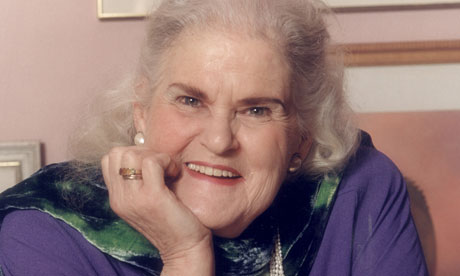
McCaffrey passed away last week at the age of 85, but Pern will continue on, both in the novels she wrote and in the Pern stories still being written by her son Todd McCaffrey. And her fans -- myself included -- will remain grateful for the wonderful worlds she took us to.


-- Post by Ms. B

Tuesday, November 22, 2011

Don't Know Much About History


American History


In time for Thanksgiving, here's a few of our favorite -- and somewhat unusual -- books about the history of our country ...


Dave Barry Slept Here: A Sort of History of the United States by Dave Barry.

"In the words of a very wise dead person, 'A nation that does not know its history is doomed to do poorly on the Scholastic Aptitude Test.'" So says Dave Barry, with the sort of wry wit that has made him a beloved humor writer for close to thirty years. While not nearly as historically accurate as another of his history-heavy books, Dave Barry Slept Here is an always-amusing journey through the history of our country ... or, at least, through the typical American history textbook.


The Wordy Shipmates by Sarah Vowell.

Speaking of humor, it doesn't get much more humorous than Sarah Vowell, a journalist who manages to write researched, accurate books about history while also keeping her sense of humor firmly intact. The Wordy Shipmates is one of my favorite Vowell reads, exploring as she does the Puritan roots of our nation by discussing the little-known rift between the Plymouth Puritans and the Massachusetts Bay Colony Puritans.


The Pirate Coast: Thomas Jefferson, the First Marines, and the Secret Mission of 1805 by Richard Zacks.

The promise of a pirate story might be enough to pique your interest. But Zack's book is also a little-known chapter from Thomas Jefferson's history: implementing America's first covert operation. The plan was to replace the Bashaw of Tripoli with the ruler's brother, in the hopes that the new Bashaw would be more sympathetic to our new nation. Jefferson would send disgraced diplomat William Eaton -- with eight Marines (and a few hundred mercenaries) -- to achieve the objective. The mission was impossible -- but the results, quite surprising.


Poisons of the Past: Molds, Epidemics, and History by Mary Kilbourne Matossian.

This one might be the most unusual of the lot, particularly for a listing of American history reads. And, indeed, the chapters in this book do not deal solely with American history. But there is a section in which Matossian makes an intriguing case for a scientific explanation for the Salem Witch Trials: mold. Ergot is a type of fungi that can grown on rye -- and, if ingested, can cause ergotism in humans. Symptoms of ergotism can include temporary blindness, burning sensations, visions, and suffering from "fits" -- all of which fit the pattern of those claiming to be under the thrall of witchcraft. Mastossian makes an intriguing and surprising case for one of the darker moments in our nation's early history.


John Adams by David McCullough.

Perhaps the most comprehensive biography on one of our most unusual Founding Fathers (and later president). There's also a miniseries starring Paul Giamatti and Laura Linney.


-- Post by Ms. B

Thursday, November 17, 2011

Give Thanks


It's easy to overlook Thanksgiving, nestled as it is between Halloween and the winter holidays. Most shops swap out the Halloween decorations for the Santas and snowmen without using the time in between to spread a bit of Thanksgiving cheer.

But as far as I'm concerned, Thanksgiving has always been worth a little attention. While not as flashy as the holidays that bookend it, the fourth Thursday in November has always been a time for family to me. And, let's be honest, a time for food. Lots and lots of food. (In particular, pie. My mother makes a mean pumpkin pie.)

As we prepare to give thanks for our family, friends -- and food, food, food -- check out some of these films to get you in the Thanksgiving mood. The mad dash of December will come soon enough (even sooner than usual this year), so take a moment to relax and enjoy a few of these Thanksgiving treats.

And have a happy holiday.


A Charlie Brown Thanksgiving

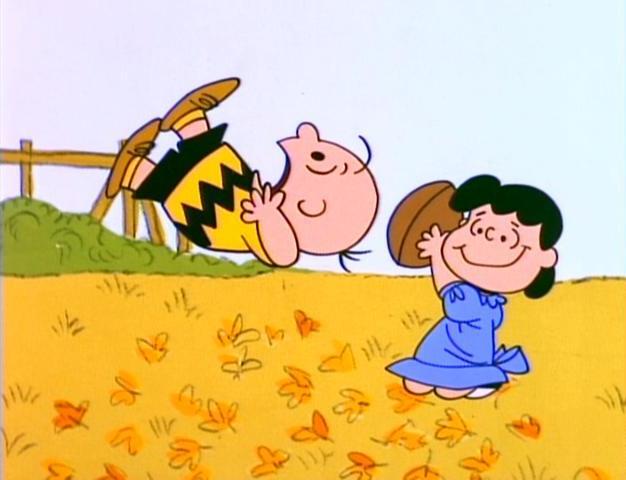
While the Peanuts' Christmas special gets more of the attention, this Thanksgiving special is a classic in its own right. There's food, family, friends -- and, of course, football.


Holiday Reunion

All Mitch Snider wants is a traditional Thanksgiving dinner with his entire family in attendance. Unfortunately, his long-lost (and completely nutty) relatives turn to be more than anybody bargained for.


Hannah and Her Sisters

A must-watch Thanksgiving movie for any Woody Allen fan.


An Old-Fashioned Thanksgiving

Based on the short story by Louisa May Alcott.


A film about the Native American man credited with bringing about the first Thanksgiving.


Home for the Holidays

Holly Hunter, Robert Downey, Jr., and Anne Bancroft star in a tale of grown children returning home to answer the age-old question: can you ever truly go home again?


Pieces of April

Opinions clash in this politically-minded family as they try to find some common ground during the holiday. Starring Katie Holmes.


American Son

A powerful film about a young man home on Thanksgiving holiday leave from the Marines -- before shipping off to serve in Iraq.


Dutch

Dutch Dooley offers to give his girlfriend's son a ride cross-country as they both travel home for Thanksgiving, figuring it's a chance to get to know the kid better. Easier said than done.


Planes, Trains and Automobiles

Steve Martin and John Candy star in this classic comedy about a man who just wants to get home in time for Thanksgiving dinner -- and the guy who won't stop getting in his way.


The House of Yes

Parker Posey and Freddie Prinze, Jr. star in this raunchy Thanksgiving comedy.


Son-in-Law

A too-cool college student spends the Thanksgiving holiday at a classmate's family farm. A fish-out-of-water comedy.


Nobody's Fool

A gruff grandfather gets a chance to bring his son and grandson back into his life during the Thanksgiving season. Starring Paul Newman.


Garfield's Thanksgiving

Thanksgiving is not the ideal time for anybody to go on a diet ... particularly not Garfield!


Miracle On 34th Street

Though traditionally a Christmas film, the action kicks off in the aftermath of Macy's Thanksgiving Day Parade.


-- Post by Ms. B